
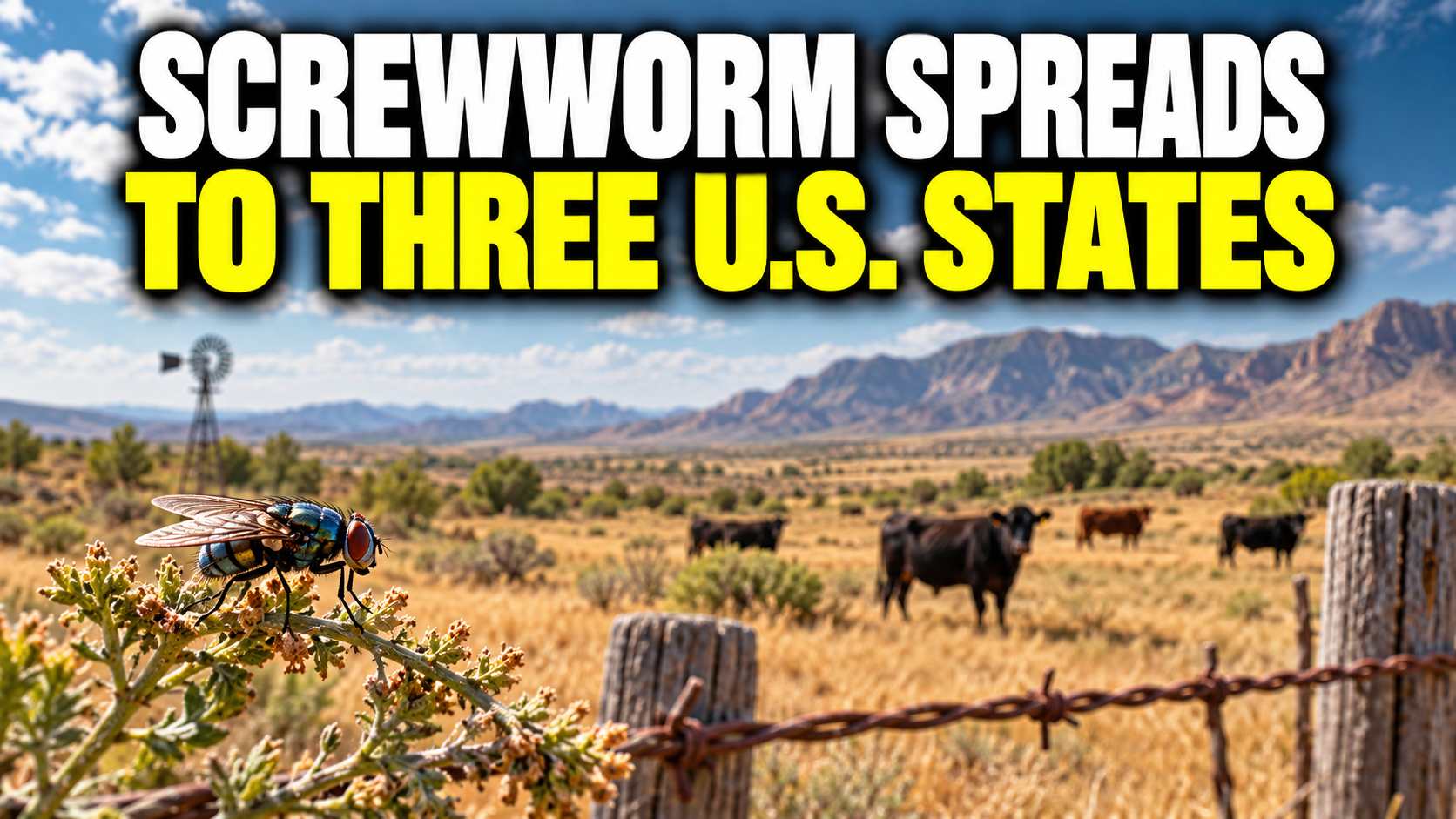
New World Screwworm Spreads to Three U.S. States as federal and state officials confirm the parasite in Texas, New Mexico and now Arizona, expanding the geographic footprint of a renewed threat to livestock, pets and wildlife. The latest milestone came October 28, when the U.S. Department of Agriculture confirmed an infestation in a dog in Cochise County, southeastern Arizona. The dog is receiving veterinary care, and authorities are investigating potential exposure while increasing surveillance. These are confirmed animal detections, not proof that the fly is established throughout three entire states. The newest developments also follow this month’s detection in a wild elk in Texas, highlighting the need to monitor both domestic and wild animals.
New World Screwworm Spreads to Three U.S. States: What Changed
The latest federal announcement marks Arizona’s first confirmed detection during the current outbreak. According to the USDA Animal and Plant Health Inspection Service announcement, a dog in Cochise County tested positive after samples were evaluated at the National Veterinary Services Laboratories in Ames, Iowa. Arizona joins Texas and New Mexico, where animal cases had already been documented. The confirmation matters because the parasite is no longer confined to the same two-state pattern that dominated earlier reports. However, a detection in one Arizona county should not be interpreted as evidence of infestations across the state. Geographic precision is essential: officials map individual cases and defined response zones, and those boundaries can change as surveillance findings evolve.
How a Veterinarian Identified Arizona’s First Case
The dog was examined on the evening of October 26 after a veterinarian noticed a wound on its back heavily infested with larvae. The Arizona Department of Agriculture’s October 28 release states that laboratory testing, coordinated with federal officials, identified the organism as New World screwworm. Officials are gathering information from the veterinarian and dog’s owner to guide an epidemiological investigation. The animal remains under veterinary care. This is a significant animal-health finding, but it does not establish where the dog first encountered the parasite or prove sustained local reproduction. Those questions require tracing, sampling and broader surveillance. Pet owners should avoid relying on appearance alone to identify suspect larvae: other fly species can infest wounds, and definitive identification requires qualified examination.
Latest Count Reaches 74 Animal Cases, With Different Reporting Cutoffs
The most recent count identified in reporting reviewed for this story is 74 confirmed animal infestations since June, with 21 classified as active and 53 inactive. That figure was published in a Texas Public Radio update dated October 29, which cited USDA data and reported two newly confirmed New Mexico cattle cases in Doña Ana and Luna counties. An earlier October 30 agriculture article still cited 71 cases and 18 active, underscoring that news reports may use different dashboard cutoffs. These figures describe recorded animal cases, not the number of flies or the number of people exposed. “Inactive” means an individual animal no longer requires mitigation measures; it does not necessarily mean a surrounding infested zone has been lifted. Readers should check the latest USDA dashboard before treating any running total as final.
Why Screwworm Is Different From an Ordinary Fly Infestation
New World screwworm, scientifically known as Cochliomyia hominivorax, is a parasitic fly whose larvae feed on living tissue rather than only decaying matter. Female flies can deposit eggs in wounds or at vulnerable body openings of warm-blooded animals. After hatching, larvae can damage tissue, worsen wounds and cause serious illness without prompt veterinary treatment. Livestock and companion animals can be affected, as can wildlife; human infestation is possible but uncommon in the United States. A suspicious wound with moving larvae, swelling or unusual discharge needs professional assessment rather than internet diagnosis. The most important practical point is not that every fly is dangerous, but that animals with open wounds in affected areas warrant attentive, timely care.
USDA Establishes a 20-Kilometer Response Zone in Arizona
Federal and Arizona animal-health officials are responding with a 20-kilometer infested zone around the Cochise County detection, animal-movement controls, increased surveillance and targeted outreach. Plans include sterile-fly suppression, a technique in which released sterile male flies reduce the chance that wild females produce viable offspring. Officials are coordinating across state and international borders because animals and the parasite do not follow administrative boundaries. A response zone is a precautionary disease-control tool; it should not be described as a circle in which every animal has become infested. Producers considering movement of livestock or other regulated animals should consult current state rules instead of assuming that requirements are identical in Texas, New Mexico and Arizona.
Why Texas Wildlife and New Mexico Cattle Matter
The current sequence includes very different hosts: domestic dogs and cats, cattle and a wild elk in Texas. That mix changes the surveillance challenge. Livestock can be monitored through farms, veterinarians and movement records, but wildlife are harder to observe routinely. Pets may present first at local clinics, where a veterinarian notices an unusual wound. New Mexico’s reported cattle cases, meanwhile, matter to ranchers because the consequences can include treatment costs, restrictions and increased monitoring. None of these reports alone provides enough evidence to calculate how quickly the parasite is spreading or to forecast infections in other states. The appropriate conclusion is narrower and more actionable: confirmed detections now cover three states, and additional surveillance is underway.
Is New World Screwworm a Threat to People?
The CDC’s October 29 outbreak summary says there have been no reported human infestations acquired in the United States during the current outbreak and describes the risk to the public as very low. That is an important distinction from the potentially severe consequences for an infested animal. People with open wounds who live or work around affected animals should follow wound-care guidance and seek medical evaluation if they suspect exposure. Animal-health authorities remain the primary source for veterinary case reporting, while health departments and clinicians handle human concerns. Headlines about a “flesh-eating parasite” can obscure the epidemiological facts: the presence of animal detections does not mean an outbreak of human infections is occurring.
What Pet Owners, Ranchers and Outdoor Visitors Should Do
The clearest preventive actions are routine wound checks and prompt reporting. People caring for livestock or pets in affected regions should examine injuries, arrange veterinary treatment for suspicious wounds and contact state animal-health officials about suspected cases. Hunters and outdoor recreationists can also help with early detection by reporting unusual lesions or visible larvae in wildlife without handling a sick animal. Avoid transporting animals out of restricted areas without checking current movement rules. For general readers outside the affected region, the practical takeaway is awareness rather than alarm. PestMarket’s broader pest-identification and prevention guides explain why identifying an organism correctly matters before attempting treatment, while its regional pest-information hub helps distinguish local problems from headlines elsewhere.
What Happens Next and What We Still Do Not Know
The next meaningful updates will be laboratory-confirmed detections, changes to infested-zone maps, results from wildlife and fly surveillance, and any revised movement restrictions. Investigators must determine whether new cases reflect isolated exposures, animal movements, local wild-fly activity or a combination. The current figures do not answer all of those questions. It would be inaccurate to claim a nationwide infestation or to suggest that an Arizona case by itself proves rapid, uncontrolled spread. Likewise, the running total of animal cases is not a reliable substitute for a geographic risk map. USDA and state agriculture departments remain the authoritative sources for current case status, while the CDC provides updates on the separate question of human-health risk.
The Bottom Line
New World screwworm is now confirmed in animals in Texas, New Mexico and Arizona, with Arizona’s first case formally announced on October 28. The latest reported national tally reviewed for this article is 74 animal cases as of the October 29 reporting cutoff, but numbers may change as laboratories and dashboards update. Officials have established a response zone around the Arizona detection and are intensifying surveillance. For livestock owners, veterinarians and pet owners in affected areas, early detection and reporting are the highest-value actions. For the general public, the current federal assessment remains reassuring: there have been no locally acquired human cases reported in the United States during this outbreak.