
Mosquito control starts with reducing the places where mosquitoes breed and limiting their access to people around your home. Learn how to identify mosquito breeding areas, eliminate standing water, reduce mosquito activity, protect your family, and know when professional pest control may be appropriate. Explore our Pest Control Guides for identification, prevention, and treatment information on other common household pests.
Why Mosquitoes Are a Problem
Mosquitoes are more than an outdoor nuisance. Female mosquitoes bite people and animals to obtain blood, and some mosquito species can spread pathogens that cause diseases.
CDC notes that mosquitoes can spread viruses and parasites through their bites, making prevention and mosquito control important for protecting people and communities.
Where Do Mosquitoes Breed?
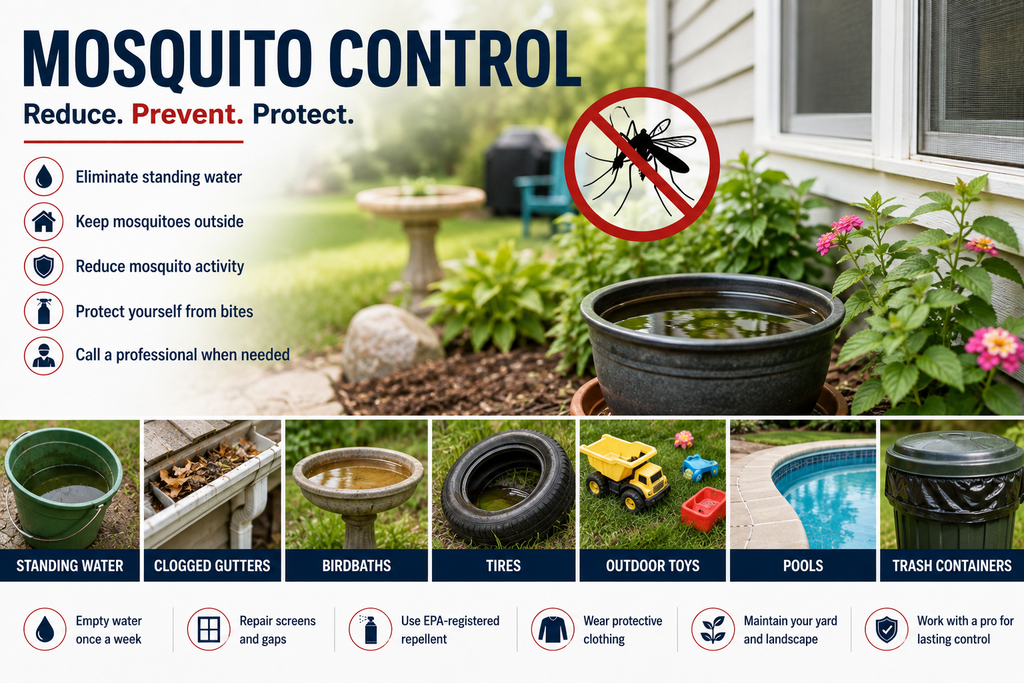
Many mosquitoes lay eggs in or near water. Around a home, even relatively small containers that collect water can become potential breeding locations.
Check areas such as:
- Buckets and containers that collect rainwater
- Flowerpot saucers
- Birdbaths
- Children’s toys left outdoors
- Clogged gutters
- Trash containers and lids
- Tarps that collect water
- Tires
- Pet water containers
- Pools or other water features that are not properly maintained
DIY Mosquito Control
1. Remove Standing Water
Once a week, inspect your property and empty, scrub, turn over, cover, or discard items that hold water.
CDC specifically recommends this approach for containers both inside and outside the home because mosquitoes lay eggs near water.
2. Keep Mosquitoes Outside
Repair damaged window and door screens and close gaps that allow mosquitoes to enter. Use air conditioning where available and keep doors closed when practical.
3. Maintain Pools and Outdoor Water
Keep swimming pools properly maintained and circulating. Empty or manage smaller water-holding containers regularly rather than allowing water to remain stagnant.
4. Protect Yourself From Mosquito Bites
When mosquitoes are active, wear clothing that provides additional coverage when appropriate and use an EPA-registered insect repellent according to the product label.
EPA provides a searchable tool for finding registered repellents based on factors such as protection time and active ingredient.
5. Consider Targeted Mosquito Treatments
Outdoor mosquito treatments may help reduce mosquito populations in specific areas, but treatment should complement—not replace—removing breeding sites and standing water.
Always follow pesticide label directions and consider professional assistance when mosquito activity remains severe.
When to Call a Professional for Mosquito Control
Professional mosquito control may be worth considering when mosquito activity remains high despite removing standing water and correcting breeding conditions, when the property contains difficult-to-manage mosquito habitats, or when recurring mosquito pressure makes outdoor areas difficult to use.
A pest control professional can inspect the property for breeding and resting locations and determine whether targeted treatment should be part of a broader mosquito-management strategy.
How to Help Prevent Mosquitoes
- Empty standing water at least once a week.
- Scrub containers that have held water before refilling them.
- Cover water-storage containers when possible.
- Keep gutters clear and draining properly.
- Maintain swimming pools and water features.
- Repair holes in window and door screens.
- Keep trash containers covered.
- Remove unnecessary containers that collect rainwater.
- Change water in outdoor pet bowls and similar containers regularly.
- Inspect the property after rain for newly collected water.
CDC’s household mosquito guidance centers on eliminating standing water and preventing mosquitoes from entering the home.
Explore more DIY Pest Control Solutions for practical ways to prevent and manage common pest problems around your home.
Mosquito Control FAQ
What attracts mosquitoes to my yard?
Standing water provides breeding locations for many mosquito species, while vegetation and shaded areas can provide resting locations. People and animals also attract biting female mosquitoes through cues including carbon dioxide and body odors.
How much water do mosquitoes need to breed?
Some mosquitoes can use surprisingly small water-holding containers. That’s why routinely checking buckets, flowerpots, toys, tires, gutters, and other objects that collect water is important.
Do mosquito sprays eliminate mosquitoes permanently?
No. A treatment may reduce mosquito activity temporarily, but mosquitoes can return and new generations can develop if breeding sites remain. Long-term management should include eliminating standing water and reducing favorable habitat.
What mosquito repellent should I use?
EPA recommends using EPA-registered insect repellents and following the label instructions. Registered active ingredients include DEET, picaridin, IR3535, oil of lemon eucalyptus/PMD, and others.
When should I hire a professional for mosquitoes?
Consider professional help when mosquito activity remains severe despite eliminating standing water and improving prevention, when breeding areas are difficult to identify or manage, or when you want a property-specific mosquito management plan.