
Flea control requires more than killing the adult fleas you can see. Fleas can develop in carpets, furniture, pet bedding, cracks, and other areas where pets spend time. Learn how to identify a flea problem, clean your home, protect pets, prevent reinfestation, and know when professional pest control may be appropriate. Explore our Pest Control Guides for identification, prevention, and treatment information on other common household pests.
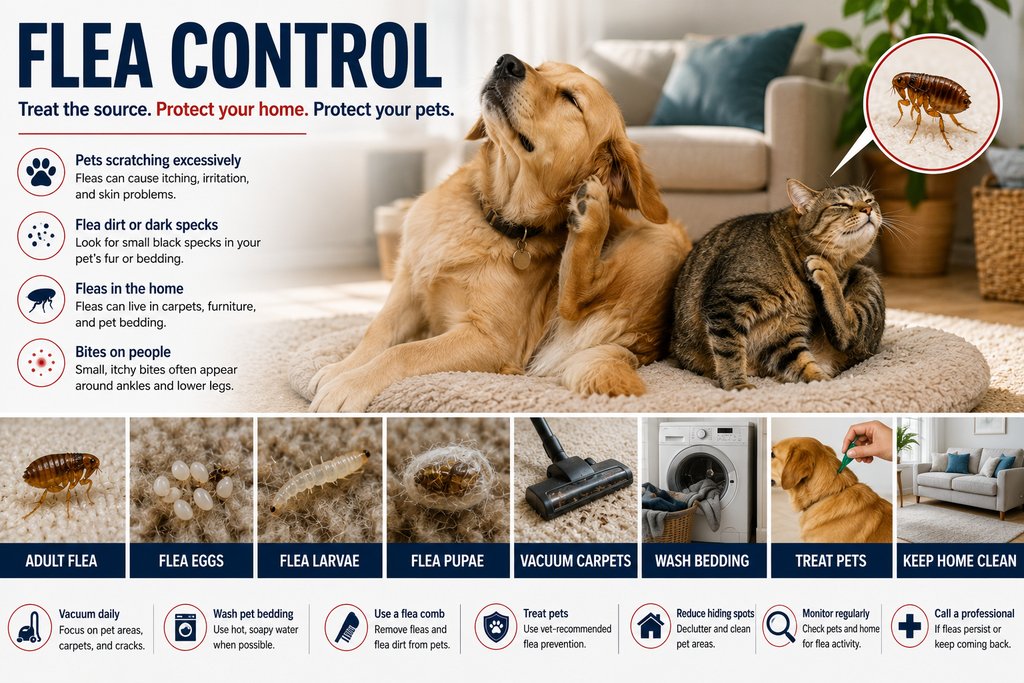
How to Identify a Flea Problem
Fleas are small, wingless insects that feed on blood. Pets scratching excessively may be one warning sign, but fleas can also be found in bedding, carpets, upholstered furniture, and other areas where animals spend time.
Because different stages of the flea life cycle may be present around the home, controlling only the adult fleas found on a pet may not eliminate the infestation.
Common Signs of Fleas
- Pets scratching, licking, or biting themselves frequently
- Small dark fleas moving through pet fur
- Flea dirt or dark specks in pet fur or bedding
- Fleas jumping on carpets, furniture, or floors
- Small itchy bites around ankles or lower legs
- Flea activity around pet sleeping and resting areas
- Continued flea sightings after treating a pet
Where Do Fleas Hide in the Home?
Flea eggs, larvae, pupae, and adults can occur in areas associated with pets. Pay particular attention to carpets, upholstered furniture, cracks and crevices, baseboards, pet beds, and locations where pets frequently sleep or rest.
EPA specifically recommends concentrating household cleaning around these areas during a flea infestation.
DIY Flea Control
1. Vacuum Thoroughly
Vacuum carpets, rugs, upholstered furniture, cracks, floor edges, baseboards, and areas where pets spend time.
EPA describes daily vacuuming as the best initial control method for a flea infestation because vacuuming can remove eggs, larvae, and adults.
2. Wash Pet Bedding
Wash pet bedding and other washable materials where pets regularly lie using hot, soapy water when appropriate for the material.
Don’t forget blankets or household bedding that pets frequently use.
3. Treat Pets Appropriately
Controlling fleas in the home while leaving an infested pet untreated can allow the problem to continue.
Talk with your veterinarian about an appropriate flea-control strategy for your pet. Always use flea products only for the animal species, age, and weight specified on the product label.
Never use a flea product intended for dogs on a cat unless the label specifically permits it. EPA warns that some pesticides can be substantially more toxic to one animal species than another.
4. Continue Monitoring
Don’t assume the infestation is gone because adult fleas temporarily disappear.
Continue vacuuming, cleaning pet areas, checking pets, and monitoring the home for additional activity.
5. Use Flea Treatments Carefully
If you use a pesticide treatment in the home, select a product specifically labeled for the intended flea-control application and follow every label direction.
Keep children and pets away from treated areas as directed by the product label. Never assume that using more pesticide will provide better control.
EPA emphasizes that flea and tick products can be effective when used according to their labels but can expose pets unnecessarily when misapplied.
Why Fleas Can Come Back After Treatment
A common frustration with flea infestations is seeing fleas again after treatment.
This does not necessarily mean that every control measure failed. Different flea life stages may remain in the environment, and continued activity can occur if pets, bedding, carpets, furniture, and other affected areas are not addressed together.
That’s why effective flea control usually requires continued cleaning and monitoring rather than a single treatment.
When to Call a Professional for Flea Control
Consider professional flea control when flea activity continues despite treating pets appropriately and thoroughly cleaning the home, when the infestation is widespread, or when fleas repeatedly return.
A professional can inspect the property, identify areas where flea development is concentrated, and determine whether additional treatment should be combined with continued cleaning and pet management.
How to Help Prevent Fleas
- Check pets regularly for signs of fleas.
- Discuss appropriate flea prevention with your veterinarian.
- Vacuum areas where pets spend significant time.
- Wash pet bedding regularly.
- Keep pet sleeping areas clean.
- Monitor carpets and upholstered furniture after an infestation.
- Use flea products only as directed on the label.
- Never use a dog-only flea product on a cat.
- Keep pets away from wildlife and environments where flea exposure may be more likely when practical.
- Continue monitoring after treatment to catch renewed activity early.
EPA recommends a combination of pet care and household cleaning for preventing and reducing flea infestations.
Explore more DIY Pest Control Solutions for practical ways to prevent and manage common pest problems around your home.
Flea Control FAQ
Can fleas live in my house without pets?
Fleas are strongly associated with animal hosts, but flea life stages can remain in the indoor environment. Wildlife or rodents around a property may also contribute to flea problems.
Where should I vacuum for fleas?
Focus on carpets, upholstered furniture, cracks and crevices, baseboards, and especially locations where pets sleep or spend significant amounts of time. EPA recommends daily vacuuming during initial flea control.
Why do I still see fleas after treating my pet?
Treating the pet addresses only part of the problem when flea life stages are also present in carpets, bedding, furniture, or other areas. Household cleaning and continued monitoring are therefore important.
Can I use my dog’s flea treatment on my cat?
Not unless the product label specifically says it can be used on cats. EPA warns never to apply dog products to cats or vice versa because pesticide toxicity can differ between species.
When should I hire a professional for fleas?
Consider professional help when fleas remain widespread, repeatedly return despite appropriate pet treatment and household cleaning, or the source of the infestation cannot be controlled.