
Earwig control starts with reducing the damp, protected places where these insects hide around your home. Earwigs often live outdoors under mulch, leaves, wood, stones, and other debris but may wander indoors through cracks and openings. Learn how to identify earwigs, reduce moisture and hiding places, prevent indoor entry, and know when professional pest control may be appropriate. Explore our Pest Control Guides for identification, prevention, and treatment information on other common household pests.
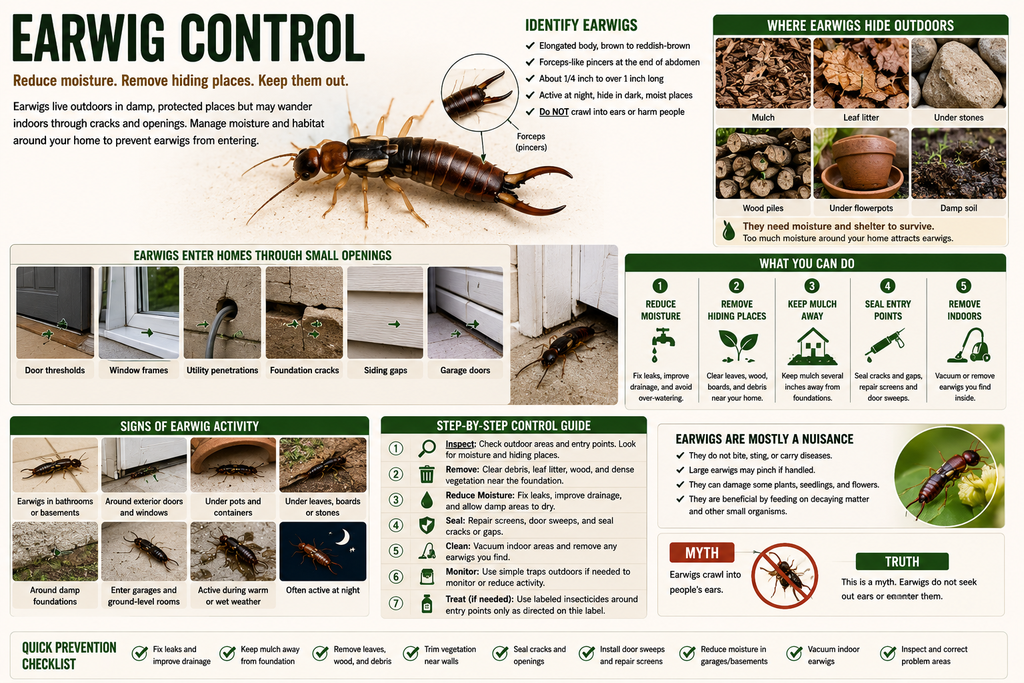
How to Identify Earwigs
Earwigs are elongated insects best recognized by the pair of forceps-like pincers at the end of their abdomen.
Depending on the species and age, they are commonly brown to reddish-brown and may range from roughly one-quarter inch to more than an inch long.
Earwigs are primarily active at night and prefer protected, moist locations during the day.
Despite the old myth, earwigs do not intentionally crawl into people’s ears or burrow into the brain.
Common Signs of an Earwig Problem
Look for:
- Earwigs appearing in bathrooms or basements
- Activity near exterior doors
- Earwigs beneath outdoor pots or containers
- Insects hiding beneath mulch
- Earwigs under leaves, boards, stones, or wood
- Activity around damp foundations
- Earwigs entering garages or ground-level rooms
- Repeated indoor sightings during warm or wet weather
Finding occasional earwigs indoors does not necessarily mean they are reproducing inside the house.
Why Are Earwigs Around My House?
Earwigs prefer dark, protected locations with moisture.
Common outdoor hiding places include:
- Mulch
- Leaf litter
- Wood piles
- Landscape timbers
- Stones
- Boards
- Dense vegetation
- Outdoor containers
- Areas beneath flowerpots
- Damp foundation areas
They may feed on decaying organic matter, plants, and other small organisms.
When outdoor conditions become unfavorable—or when populations are high—earwigs may wander into buildings.
DIY Earwig Control
1. Reduce Moisture Around the Home
Moisture management is one of the most important components of earwig control.
Check for:
- Leaking outdoor faucets
- Poor drainage
- Excess irrigation
- Constantly damp mulch
- Water collecting near the foundation
- Indoor plumbing leaks
- Damp basements or crawlspaces
Correcting moisture problems can make these areas less favorable to earwigs.
2. Remove Outdoor Hiding Places
Reduce unnecessary debris near the foundation.
Move or remove:
- Leaf piles
- Boards
- Excess mulch
- Wood
- Dense ground cover
- Yard debris
- Unused containers
You don’t need to eliminate landscaping. The goal is to reduce excessively damp shelter immediately against the structure.
3. Keep Mulch Away From the Foundation
Mulch is useful for landscaping, but thick, constantly moist mulch directly against a building can provide excellent shelter for earwigs and other pests.
Where practical, avoid excessive mulch accumulation against exterior walls and allow areas near the foundation to dry appropriately.
4. Seal Entry Points
Inspect the exterior for possible entry routes.
Pay attention to:
- Door thresholds
- Window frames
- Utility penetrations
- Foundation cracks
- Siding gaps
- Garage doors
- Damaged screens
Install or repair door sweeps and seal appropriate gaps.
5. Remove Earwigs Found Indoors
Individual earwigs can usually be vacuumed or physically removed.
Vacuuming also avoids unnecessary pesticide applications inside living spaces.
If indoor sightings continue, focus on where they are entering and what outdoor conditions are attracting them.
6. Use Traps for Outdoor Activity
Simple traps can sometimes help reduce or monitor earwig activity in gardens and around structures.
Traps are most useful when combined with moisture reduction and habitat management rather than used as the only control method.
7. Use Pesticides Carefully
For persistent outdoor problems, appropriately labeled treatments may sometimes be useful around areas where earwigs hide or enter structures.
Always follow the pesticide label.
Broad indoor spraying is generally less useful when the underlying problem is repeated migration from favorable outdoor habitat.
Do Earwigs Crawl Into Your Ears?
This is one of the most persistent myths about earwigs.
Their name has contributed to folklore suggesting that they deliberately crawl into people’s ears while they sleep.
Earwigs do not seek out human ears.
Like many small insects, an earwig could theoretically wander somewhere accidentally, but entering people’s ears is not part of normal earwig behavior.
So finding earwigs around your house does not mean you need to worry about them crawling into your ears at night.
Are Earwigs Dangerous?
Earwigs are primarily nuisance pests.
They do not have venomous stingers and are not considered important disease vectors.
Their rear pincers can be used defensively, and a larger earwig may pinch if handled, but they generally pose little danger to people.
Around gardens, earwigs can sometimes damage seedlings, flowers, fruits, or other plants, although they can also feed on other small organisms and decaying material.
Why Do Earwigs Keep Coming Inside?
Repeated indoor activity often indicates favorable conditions close to the building.
Check for:
- Damp mulch against the house
- Heavy leaf litter
- Poor drainage
- Exterior lighting and entry areas
- Gaps beneath doors
- Foundation openings
- Dense vegetation against walls
- Damp garages, basements, or crawlspaces
Killing individual earwigs without correcting these conditions may not stop new ones from entering.
When to Call a Professional for Earwig Control
Consider professional pest control when:
- Large numbers repeatedly enter the home.
- Outdoor populations are unusually high.
- You cannot determine where they are entering.
- Moisture or drainage problems are contributing to persistent activity.
- Earwigs are appearing throughout multiple areas of the property.
- Habitat reduction and exclusion have not substantially reduced activity.
A professional can inspect exterior harborages, entry points, moisture conditions, and determine whether targeted treatment is appropriate.
How to Help Prevent Earwigs
- Repair plumbing and outdoor water leaks.
- Improve drainage around the foundation.
- Avoid excessive irrigation near exterior walls.
- Remove accumulated leaves and yard debris.
- Avoid excessive damp mulch against the structure.
- Move firewood and unnecessary boards away from the house.
- Trim dense vegetation where appropriate.
- Repair door sweeps and screens.
- Seal appropriate foundation and utility gaps.
- Reduce damp hiding places in garages and basements.
- Vacuum occasional indoor earwigs instead of automatically spraying.
- Investigate persistent indoor activity for an exterior source.
Explore more DIY Pest Control Solutions for practical ways to prevent and manage common pest problems around your home.
Earwig Control FAQ
Why are earwigs suddenly in my house?
Weather changes, moisture, large outdoor populations, or favorable hiding places near the foundation can lead earwigs to wander indoors.
Do earwigs crawl into people’s ears?
Earwigs do not intentionally seek human ears. The idea that they routinely crawl into ears is a long-standing myth.
Do earwigs bite?
Earwigs do not normally bite people. They have forceps-like pincers at the rear of their bodies that may pinch defensively if the insect is handled.
Why are earwigs in my bathroom?
Bathrooms can provide the moisture and protected conditions earwigs prefer. However, the insects may have entered from outdoors rather than established an indoor infestation.
Does mulch attract earwigs?
Moist mulch can provide favorable shelter, particularly when it remains damp and undisturbed. Excessive mulch directly against the foundation can therefore contribute to activity near a home.
How do I keep earwigs out of my house?
Focus on moisture reduction, removing excessive outdoor hiding places, repairing door sweeps and screens, and sealing appropriate exterior openings.
Learn more about earwig identification and management from the University of California Integrated Pest Management Program.