
Wasp control starts with identifying the type of wasp activity and locating nests without putting yourself at unnecessary risk. Learn where wasps commonly nest, how to reduce attractants, prevent future nesting, avoid dangerous encounters, and know when professional pest control may be appropriate. Explore our Pest Control Guides for identification, prevention, and treatment information on other common household pests.
How to Identify a Wasp Problem
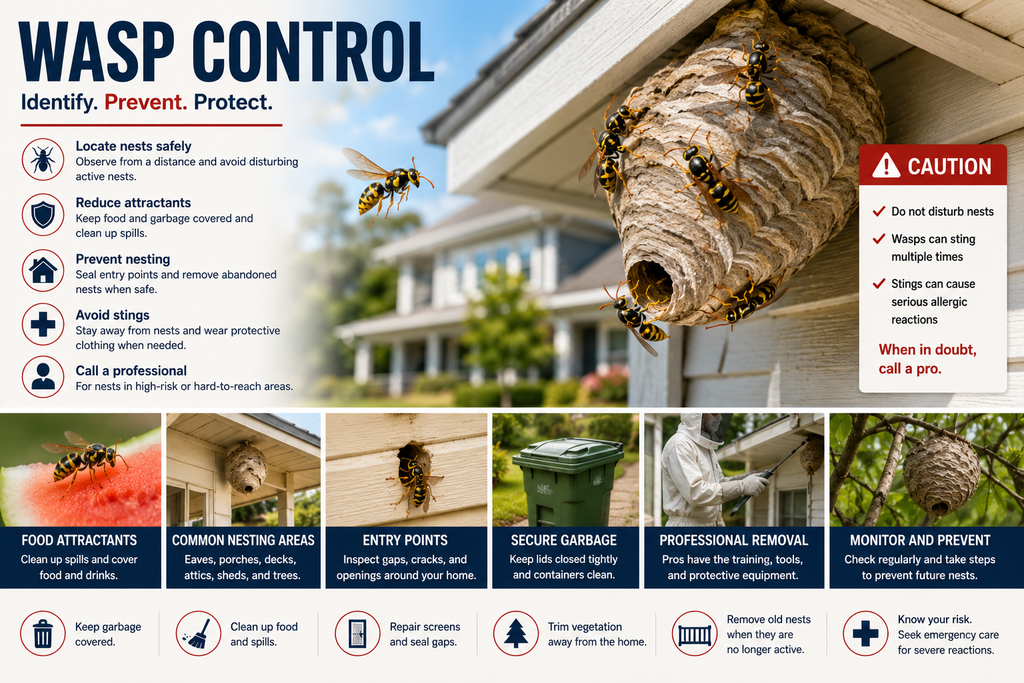
Seeing an occasional wasp outdoors does not necessarily indicate a serious problem. Concern increases when numerous wasps repeatedly travel to and from the same location, a visible nest develops near areas used by people, or wasps begin entering the home.
Observe activity from a safe distance rather than disturbing a suspected nest.
Common Signs of Wasp Activity
- Repeated wasp activity around one location
- A visible paper-like nest
- Wasps entering gaps in walls, roofs, siding, or structures
- Increased activity around garbage or outdoor food
- Wasps gathering around sugary drinks or fallen fruit
- Nesting beneath eaves, decks, railings, or outdoor structures
- Wasps repeatedly entering indoor living areas
Where Do Wasps Build Nests?
Depending on the species, wasps may build nests in exposed or concealed locations.
Common locations can include:
- Roof eaves and overhangs
- Porch ceilings
- Decks and railings
- Trees and shrubs
- Wall voids
- Attics
- Sheds and garages
- Utility structures
- Abandoned rodent burrows or underground cavities
Correct identification matters because different wasp species use different nesting locations and may respond differently when their nests are disturbed.
DIY Wasp Control and Prevention
1. Reduce Food Attractants
Keep outdoor garbage containers covered, clean food spills, remove fallen fruit, and avoid leaving sugary drinks or food exposed outdoors longer than necessary.
Reducing readily available food can make outdoor living areas less attractive to foraging wasps.
2. Prevent Access to Structures
Inspect screens, doors, siding, vents, rooflines, and other structural areas for openings.
Seal appropriate gaps after confirming that an active nest is not trapped inside. Sealing an occupied wall cavity can cause wasps to search for another exit, potentially toward the interior of the building.
3. Remove Abandoned Nests When Safe
Old or inactive nests may be removed when you are confident they are no longer occupied and the location can be accessed safely.
Do not approach or disturb a nest simply to determine whether it is active.
4. Avoid Disturbing Active Nests
Do not hit, shake, burn, flood, or otherwise disturb an active wasp nest.
Wasps may defend their nest when threatened, and multiple stings can occur during a defensive response.
5. Use Pesticides Carefully
If a pesticide is used, select a product labeled for the particular application and follow every label instruction, including required distances and protective precautions.
An active nest in a difficult location, high-traffic area, wall void, attic, or other inaccessible location is a strong reason to consider professional treatment instead of attempting removal yourself.
When Wasp Control Can Be Dangerous
Extra caution is warranted when:
- The nest is large or highly active.
- The nest is inside a wall or other structure.
- Reaching it requires a ladder.
- The nest is close to a doorway, playground, patio, or other frequently used area.
- Multiple nests may be present.
- You cannot identify the insect or nest.
- Anyone nearby has a history of severe reactions to insect stings.
Trying to save the cost of professional removal is not worth taking a significant sting or fall risk.
What to Do After a Wasp Sting
Most insect stings cause temporary pain, redness, itching, or swelling, but serious allergic reactions can occur.
The CDC advises seeking immediate emergency medical care for signs of a severe allergic reaction, including difficulty breathing or swelling of the face, mouth, or throat.
People with a known severe insect-sting allergy should follow the emergency plan provided by their healthcare professional.
When to Call a Professional for Wasp Control
Consider professional wasp control when an active nest is near people, located inside a structure, difficult to reach safely, unusually large or active, or when someone on the property has a history of severe sting reactions.
A pest control professional can identify the likely wasp species, determine the nest location, evaluate the safest treatment approach, and help reduce conditions that may encourage future nesting.
How to Help Prevent Wasps
- Keep outdoor garbage containers tightly covered.
- Clean outdoor food and drink spills promptly.
- Remove fallen or overripe fruit.
- Avoid leaving sweet beverages uncovered outdoors.
- Repair damaged window and door screens.
- Inspect eaves, decks, sheds, and other common nesting areas.
- Seal appropriate structural openings when no active nest is present.
- Reduce unnecessary clutter around exterior structures.
- Monitor early nest-building activity from a safe distance.
- Get professional help for nests that cannot be approached safely.
Explore more DIY Pest Control Solutions for practical ways to prevent and manage common pest problems around your home.
Wasp Control FAQ
Why are wasps coming around my house?
Wasps may be searching for food, water, nesting locations, or insect prey. Garbage, sugary foods and drinks, fallen fruit, and suitable protected nesting locations can contribute to activity.
How do I know if there is a wasp nest nearby?
Repeated wasps traveling along the same route or entering and leaving one specific opening can indicate a nearby nest. Observe from a safe distance rather than attempting to inspect the nest closely.
Should I knock down a wasp nest?
Not if it is active. Physically disturbing an occupied nest can trigger defensive behavior and increase the chance of multiple stings.
Can I seal a hole wasps are using?
Not while an active nest may still be inside. Blocking the visible entrance can cause trapped wasps to seek another exit, potentially into the building.
When should I hire a professional for wasps?
Professional removal is particularly appropriate for nests inside structures, high or inaccessible nests, heavily active colonies, nests near frequently occupied areas, or situations involving people at elevated risk from stings.