
Bed bug control starts with confirming that bed bugs are actually present. Learn how to recognize common signs of an infestation, reduce the spread of bed bugs, understand treatment options, and know when professional pest control may be appropriate. Explore our Pest Control Guides for identification, prevention, and treatment information on other common household pests.
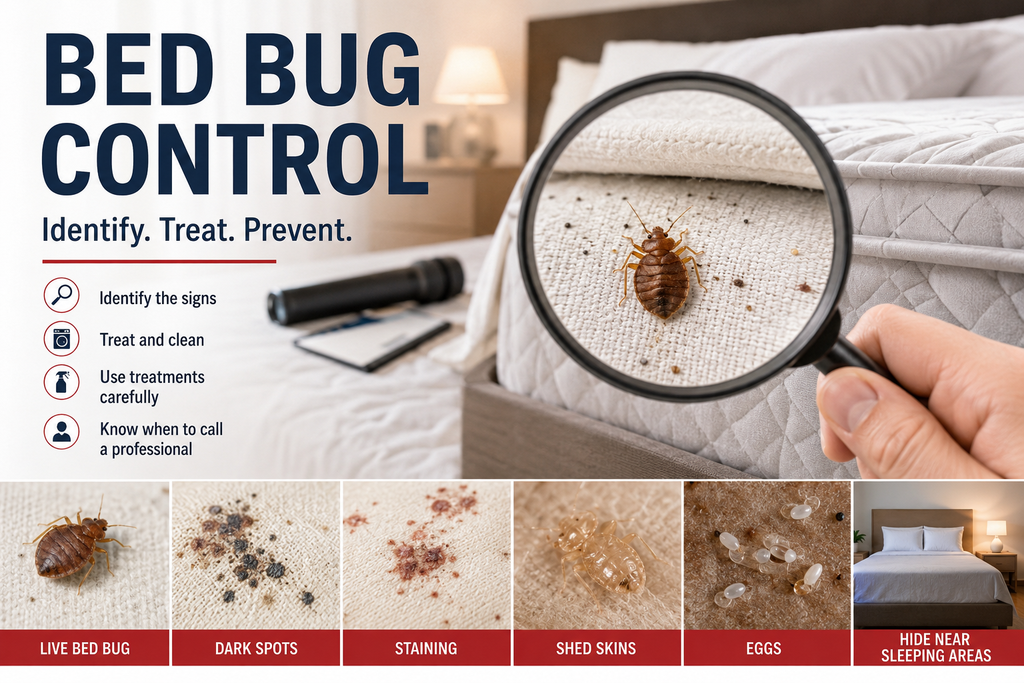
How to Identify a Bed Bug Problem
Bed bugs are small, flat insects that typically hide near places where people sleep or rest. Because bites alone cannot confirm an infestation, look for physical evidence such as live bed bugs, dark spotting, shed skins, eggs, or reddish stains on bedding and mattresses.
Common Signs of Bed Bugs
- Live bed bugs in mattress seams, furniture, or nearby cracks
- Dark spots or staining on mattresses and bedding
- Reddish or rusty stains on sheets or mattresses
- Shed bed bug skins
- Tiny eggs or eggshells in protected hiding areas
- Bites that appear after sleeping, although bites alone do not confirm bed bugs
Where Do Bed Bugs Hide?
Bed bugs commonly hide around mattresses, box springs, bed frames, headboards, furniture, baseboards, cracks, and other protected areas close to where people sleep. As an infestation grows, bed bugs may spread into additional hiding places throughout a room or nearby areas.
What to Do if You Find Bed Bugs
1. Confirm the Infestation
Do not rely on bites alone. Look for live insects or other physical evidence, and consider having a pest control professional confirm the identification if you are uncertain.
2. Reduce Clutter
Remove unnecessary clutter around sleeping areas to reduce potential hiding places. Avoid moving infested belongings into unaffected rooms because doing so may spread bed bugs.
3. Use Heat Where Appropriate
Clothing, bedding, and certain washable items can be treated using a clothes dryer at an appropriate high temperature when the items can safely tolerate it. EPA notes that simply increasing the thermostat or using space heaters is not an effective method for treating a home.
4. Vacuum and Monitor
Vacuuming can help physically remove some bed bugs and eggs from accessible areas. Dispose of vacuum contents carefully and continue monitoring sleeping areas for renewed activity.
5. Use Pesticides Carefully
If using a pesticide, use only products labeled for bed bugs and for the intended location. Follow all label directions. Do not apply pesticides to beds, furniture, clothing, or other surfaces unless the product label specifically permits that use.
When to Call a Professional for Bed Bug Control
Bed bug infestations can be difficult to eliminate because the insects hide in small spaces and may spread beyond the initially affected area. Professional pest control should be considered when the infestation is widespread, continues after reasonable DIY measures, spreads between rooms, or you are unable to locate and control the source.
EPA advises that hiring an experienced pest-management professional can increase the likelihood of successfully eliminating bed bugs.
How to Help Prevent Bed Bugs
- Inspect secondhand furniture before bringing it into your home.
- Check mattresses, headboards, and nearby furniture when staying away from home.
- Keep luggage away from beds and upholstered furniture while traveling.
- Inspect luggage and belongings after returning from a trip.
- Reduce clutter that can provide additional hiding places.
- Use protective mattress and box-spring encasements when appropriate.
- Monitor sleeping areas if you suspect recent exposure.
- Avoid moving potentially infested items into unaffected rooms.
Explore more DIY Pest Control Solutions for practical ways to prevent and manage common pest problems around your home.
Bed Bug Control FAQ
Can you tell if you have bed bugs from bites?
No. Skin reactions vary between people, and other insects or conditions can cause similar marks. Physical evidence of bed bugs is more useful for confirming an infestation.
Where should I look for bed bugs?
Start around the mattress, box spring, bed frame, headboard, nearby furniture, baseboards, and cracks or crevices close to sleeping areas. Bed bugs can spread farther as an infestation becomes established.
Can I get rid of bed bugs myself?
Some infestations may be addressed using a combination of inspection, laundering and drying appropriate items, vacuuming, monitoring, reducing hiding places, and properly labeled treatments. However, bed bugs can be difficult to eliminate completely, particularly when an infestation is established or widespread.
Should I throw away my mattress?
Not automatically. EPA specifically cautions against immediately discarding furniture and notes that beds and other furniture may sometimes be treated. Improperly discarded infested furniture can also spread bed bugs to other people.
When should I hire a professional for bed bugs?
Consider professional treatment when bed bugs are found in multiple locations, continue to appear after treatment, spread to additional rooms, or the infestation cannot be confidently identified and controlled.