
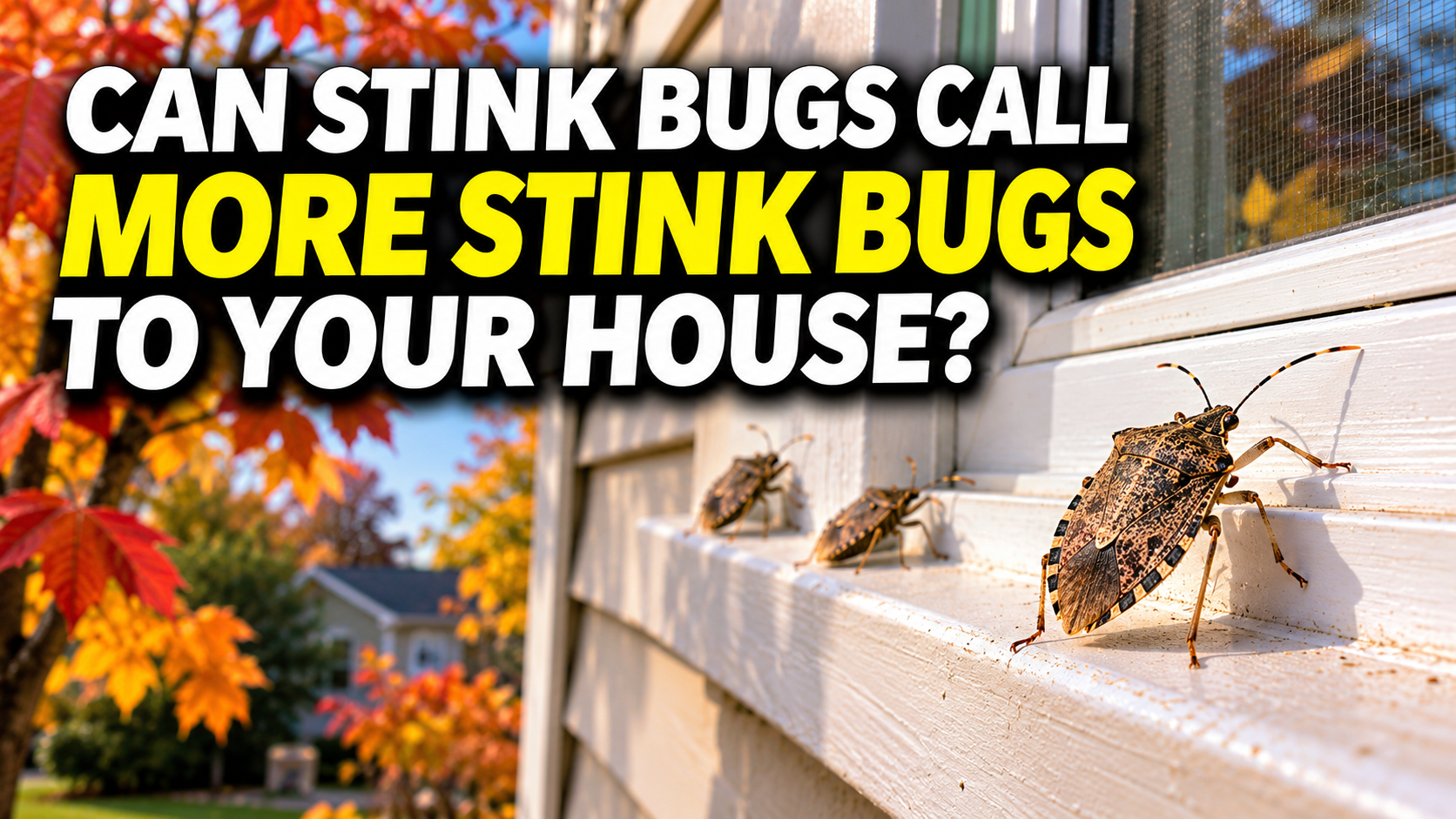
Can Stink Bugs Call More Stink Bugs to Your House? The question sounds like a Halloween mystery, but it reflects a real part of insect communication. Brown marmorated stink bugs can respond to chemical signals associated with other members of their species, and researchers have documented their tendency to assemble around suitable seasonal shelter. Yet a crucial distinction gets lost in casual explanations: the defensive smell released when a stink bug is crushed is not the same thing as an aggregation signal. Finding several bugs near one window also does not prove that the first one deliberately summoned every other insect. The more accurate story involves chemical communication, shared responses to favorable shelter, and the architecture of a home that allows insects to get inside.
The Difference Between a Bad Smell and an Invitation
Stink bugs earn their common name from defensive chemicals released when they are threatened or crushed. That unpleasant smell can discourage predators and frustrate anyone trying to remove an insect from a curtain. But an aggregation pheromone serves a different biological role: it can influence where other stink bugs gather. The University of Missouri Integrated Pest Management program specifically distinguishes the aggregation pheromone from the chemical responsible for the familiar stink. That distinction matters for homeowners because killing a bug does not create a magical invitation for more bugs to rush through the door. The National Pesticide Information Center explicitly states that killing a stink bug does not attract additional stink bugs, even though stink bugs can produce other chemical signals associated with gathering at shelter.
Why a Single Stink Bug May Be Followed by Dozens
An autumn cluster is not necessarily a chain reaction caused by one insect. In fall, adult brown marmorated stink bugs look for protected places where they can survive cooler months. Exterior walls exposed to sunshine, sheltered rooflines, gaps around windows, and openings in siding can all become attractive routes or resting places. Several insects may independently choose the same building because it offers the same favorable conditions. Chemical cues can contribute to aggregation, but so can temperature, light, location, and access to crevices. This makes the phrase “call more stink bugs” a useful question rather than a complete explanation. One bug on the outside wall is worth noticing, especially if many others appear nearby, but the primary practical concern is whether that part of the house has openings that admit insects.
Can Stink Bugs Call More Stink Bugs to Your House? What Science Says
Studies of brown marmorated stink bug communication have helped scientists develop aggregation-pheromone lures used in monitoring traps. These lures show that chemical attraction is more than folklore; it is sufficiently consistent to be useful in field surveillance. Still, a commercial lure is deliberately formulated to attract insects and does not mean every stink bug resting inside a house emits the same strength of signal in every season. The University of California Integrated Pest Management program describes both fall aggregations on buildings and pheromone-baited traps. It also warns that some traps can draw insects to nearby plants without capturing all of them, an effect sometimes called spillover. Consequently, placing a powerful outdoor lure directly beside a house or vulnerable garden is not automatically a sensible prevention strategy.
Why Fall Makes Your Home More Attractive
During warm months, brown marmorated stink bugs feed on a wide variety of plants, including agricultural crops and garden plants. As seasonal conditions shift, adults begin searching for overwintering sites instead of simply looking for another meal. On buildings, they often collect on sun-warmed surfaces before slipping through narrow openings. Once indoors, they commonly remain inactive in wall voids, attics, and other protected spaces. A warm winter day or heated room may later bring an individual into view, making it appear as if insects have suddenly multiplied. But these overwintering adults do not establish a normal indoor breeding population. The time of year matters: a fall swarm on siding and a spring insect flying toward a window can reflect different stages of the same seasonal cycle.
Can One Stink Bug Trigger a Household Infestation?
The word infestation can mislead readers when applied to stink bugs indoors. Large numbers may be a serious nuisance, but they are not chewing through structural wood, feeding on stored clothing, or reproducing behind the walls the way some other household pests can. According to the U.S. Environmental Protection Agency, brown marmorated stink bugs do not reproduce inside homes or damage buildings. They may enter in considerable numbers, and an established access point can allow many to hide until conditions change. That is an entry and overwintering problem, not proof of a growing colony inside. For residents who find them repeatedly, the most useful investigation is often around window trim, siding joints, vents, chimney openings, and gaps where pipes or cables pass through an exterior wall.
Does Crushing One Make the Problem Worse?
Crushing a stink bug is unpleasant, but the idea that the released stench will automatically recruit more individuals is not supported by the guidance reviewed here. Defensive odor and aggregation cues should not be treated as interchangeable. The more immediate disadvantages of crushing are the smell and the possibility of staining nearby materials. Gently collecting a bug in a container or removing it with a vacuum is usually more practical. A household vacuum may retain an odor afterward, so homeowners should consider an easily emptied collection method. If many insects have appeared, spraying the exposed individuals may remove some but will not close the gaps through which others continue to enter. That is why chemical products used casually indoors are unlikely to solve the underlying cause.
How to Keep Stink Bugs From Gathering Inside
Exclusion is the central prevention strategy. Start with window and door screens, torn weatherstripping, poorly fitting door sweeps, and gaps around exterior trim. Seal small exterior cracks with an appropriate sealant, and screen openings such as vents without obstructing required airflow. Inspect window air-conditioning units and the edges around utility penetrations. Check sunny exterior walls during mild fall afternoons, when bugs may gather before seeking shelter overnight. Homeowners can use PestMarket’s DIY pest-control guidance to organize prevention work and PestMarket’s pest identification guides to distinguish occasional invaders from other household problems. Avoid scattering pesticide treatments throughout living areas or using total-release foggers as a substitute for sealing entryways. Any pesticide considered should be labeled for the intended pest and application site, and all label instructions must be followed.
What the Research Does Not Prove
There is no universal measurement showing that one stink bug outside a particular home will attract a predictable number of others, or that a homeowner can determine how far the signal travels simply by noticing the odor. Species differ, seasons change behavior, and house characteristics vary considerably. The research strongly supports the existence of aggregation-related chemical communication in brown marmorated stink bugs, but it does not support treating every household cluster as proof of a single insect recruiting its neighbors. Nor should findings about this invasive species be casually applied to every shield-shaped insect found in North America. Accurate identification matters, especially when planning control, because some similar-looking insects are beneficial predators rather than nuisance invaders.
The PestMarket Verdict
Yes, some stink bugs can use chemical signals that help bring other stink bugs together, especially in the context of locating suitable shelter. But no, the foul smell released when a stink bug is crushed is not the same as the aggregation signal, and smashing one does not mean more are on the way. The strongest explanation for clusters around homes combines seasonal shelter-seeking, communication among insects, attractive building surfaces, and accessible openings. If you find one, there is no reason to panic. If you find many, focus on how they are entering.
Evidence Grade: STRONG EVIDENCE
Published entomological research supports chemical attraction and aggregation behavior in brown marmorated stink bugs, while university extension and pest-management guidance document their seasonal concentration around buildings. The evidence is much more limited for the specific claim that a single stink bug will recruit a predictable number of other stink bugs into a particular house. The unpleasant defensive odor is not sufficient evidence of that claim, and shelter conditions and available entry points remain essential parts of the explanation.