
Termite control starts with recognizing the signs of activity early. Learn how to identify a possible termite infestation, understand the risks termites can pose to your home, and know when professional inspection or treatment may be appropriate. Explore our Pest Control Guides for identification, prevention, and treatment information on other common household pests.
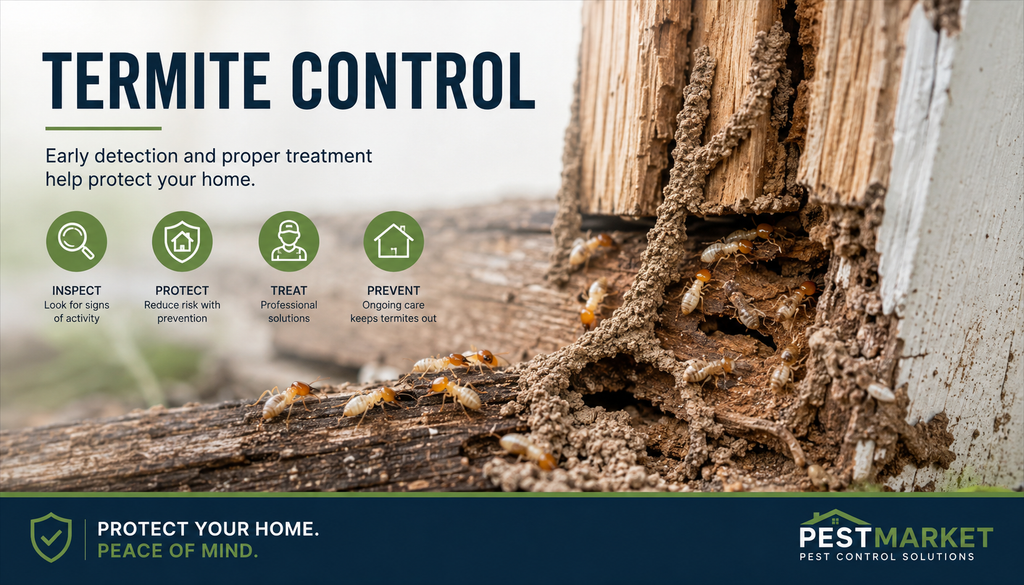
How to Identify a Termite Problem
Termites often remain hidden inside wood, walls, or soil, so an infestation may not be immediately obvious. Mud tubes, discarded wings, damaged or hollow-sounding wood, and swarming activity can indicate that termites may be present.
Common Signs of Termite Activity
- Mud tubes along foundations, walls, or crawl spaces
- Discarded wings near windows, doors, or other entry points
- Termite swarmers appearing inside or around the home
- Wood that sounds hollow or appears damaged
- Blistering, buckling, or unusual changes in wood surfaces
- Visible galleries or damage discovered inside wood
Why Termites Can Be a Serious Problem
Termites feed on cellulose-containing materials, including wood and other building materials. Because termite activity can remain hidden for long periods, damage may progress before the infestation becomes obvious. Suspected termite activity should therefore be investigated rather than ignored.
What to Do if You Suspect Termites
1. Look for Signs of Activity
Check accessible areas around the foundation, crawl spaces, windows, doors, and exposed wood for mud tubes, discarded wings, swarmers, or visible wood damage.
2. Reduce Moisture Around the Home
Repair leaks, maintain gutters and downspouts, and improve drainage where necessary. Excess moisture around a structure can create conditions favorable to termite activity.
3. Reduce Wood-to-Soil Contact
Avoid storing firewood, lumber, or wood debris directly against the house. Where possible, reduce conditions that give termites direct access from soil to wooden portions of the structure.
4. Avoid Relying on Surface Treatment Alone
Killing termites that are visible does not necessarily eliminate a colony or protect the structure. Effective termite management depends on the termite species, location of the colony, construction of the property, and treatment method.
EPA notes that products that only kill termites on contact have not necessarily demonstrated that they can protect a structure from termite infestation.
Professional Termite Control
Professional termite treatment may involve inspection, monitoring, bait systems, soil treatments, wood treatments, or other methods depending on the property and type of termite activity.
Because termite treatments intended to protect a structure can require specialized products, equipment, and application methods, professional evaluation is often appropriate when active termites or structural damage are suspected. EPA notes that in most cases termiticide application can only be properly performed by a trained pest-management professional.
How to Help Prevent Termites
- Repair plumbing leaks and other moisture problems promptly.
- Keep gutters and downspouts functioning properly.
- Maintain drainage that directs water away from the foundation.
- Seal accessible cracks and openings around the foundation and utility penetrations.
- Avoid storing firewood or wood debris directly against the house.
- Keep vegetation from blocking ventilation or growing directly against exposed wood.
- Reduce unnecessary wood-to-soil contact around the structure.
- Inspect the property periodically for signs of termite activity.
Explore more DIY Pest Control Solutions for practical ways to reduce pest-friendly conditions around your home.
Termite Control FAQ
What are the most common signs of termites?
Common warning signs include mud tubes, termite swarmers, discarded wings, and damaged wood. Because termites often remain concealed, visible signs may not appear until a colony has already become established.
Can I treat termites myself?
Homeowners can reduce conditions that encourage termite activity, such as moisture and wood-to-soil contact. However, treating an established infestation and protecting a structure can require specialized termite treatments and professional expertise.
Do termites go away on their own?
Termite activity should not be assumed to have ended simply because visible termites or swarmers disappear. The colony may remain active in soil, wood, or other concealed areas.
Are termite baits effective?
Termite bait systems are one recognized treatment approach. They use cellulose-based bait containing a slow-acting active ingredient. Whether baiting or another treatment is appropriate depends on the property and infestation.
When should I call a professional for termites?
Consider a professional termite inspection when you find mud tubes, swarmers, discarded wings, suspected termite damage, or recurring signs of activity. Professional evaluation is particularly important when structural wood may be affected.