
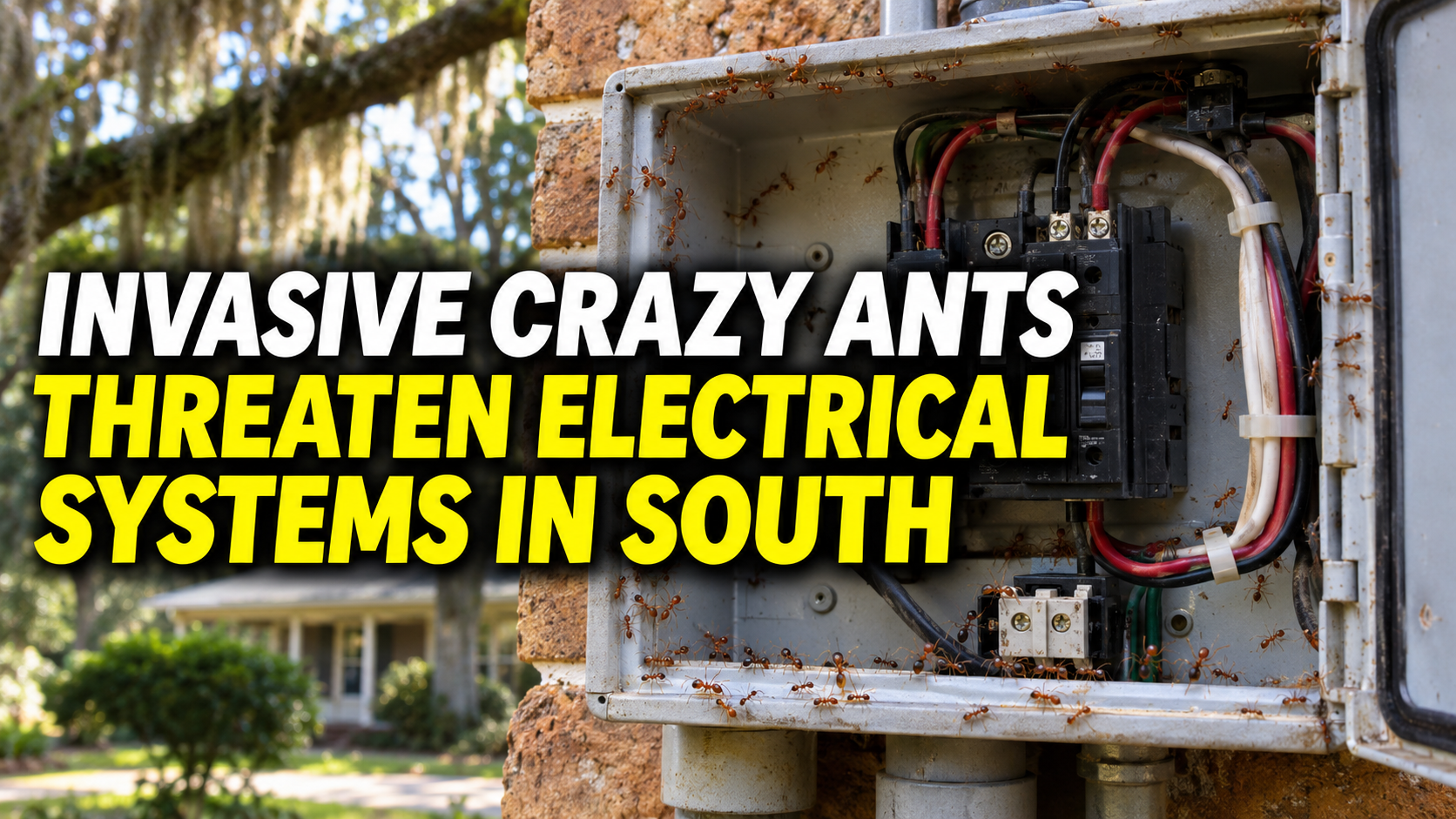
Invasive Crazy Ants Threaten Electrical Systems in South as new reports from Mississippi show that an invasive ant already known for overwhelming properties and interfering with electrical equipment is being identified in additional counties. The species, called the tawny crazy ant (Nylanderia fulva), is not a newly arrived insect in the United States, but its renewed expansion in Mississippi has drawn attention from university entomologists and local news outlets. A November 5 report from WDAM’s Mississippi coverage quotes a Mississippi Entomological Museum specialist saying that 10 counties in the state have now recorded the insect. For residents and businesses across affected areas, the concern is not merely having ants in a kitchen: large populations can also enter areas housing sensitive electronics.
Mississippi Reports 10 Counties With Tawny Crazy Ants
The newest county count represents a meaningful change from the state university’s earlier report. On October 6, the Mississippi State University Extension Service reported that tawny crazy ants had expanded from four established Mississippi counties into three additional counties in 2026, for a total of seven. On November 5, local coverage described 10 affected counties, with Jones County added on November 4. The newly reported locations this year include Marion, Lamar, Perry, Jones, Wilkinson and Madison, alongside the previously affected Hancock, Harrison, Jackson and Pearl River counties. These figures refer to confirmed or reported locations in Mississippi, not a count of affected houses or a measured estimate of total ants. The new reporting provides a stronger local news peg than repeating the university’s month-old seven-county announcement.
Why Crazy Ants Can Damage Electrical Equipment
Tawny crazy ants have a documented history of entering electrical enclosures. According to Texas A&M University’s urban entomology program, large accumulations have caused short circuits, obstructed switching mechanisms and contributed to equipment failure. The danger arises when large numbers gather inside or around vulnerable equipment rather than from ants deliberately eating wiring. Outdoor boxes, switches, electrical cabinets and electronics can provide small protected spaces where ants accumulate. These findings establish a real equipment-damage risk, but they do not prove that the latest Mississippi detections caused a specific fire or widespread blackout. Any suggestion that a particular incident was caused by these ants requires separate inspection evidence.
Invasive Crazy Ants Threaten Electrical Systems in South: What the New Reports Show
The headline concern connects two independently supported facts: the ants have recently been found in more Mississippi counties, and the same species can damage electrical equipment when infestations become severe. That combination is important for homeowners, property managers and technicians, yet it should not be mistaken for evidence that electrical failures are occurring in every newly affected county. University specialists say populations can reach extraordinary numbers once established. That raises the potential for recurring pest pressure around houses and equipment, particularly where ants have easy access from landscape materials. Neither the newest county total nor an ant sighting alone establishes the severity of a particular property’s infestation.
What Are Tawny Crazy Ants?
Tawny crazy ants are small reddish-brown invasive ants native to South America. They have relatively long antennae and legs and often move in rapid, irregular patterns that inspired the name “crazy ants.” Unlike fire ants, they do not characteristically build conspicuous, centralized soil mounds. They may nest in loose outdoor material, including leaf litter, wood debris and spaces beneath rocks or landscape objects. Their colonies can contain many queens, allowing dense populations to develop. They do not sting, and their bites are generally minor, but their sheer abundance can make a home or yard difficult to use. Proper species identification is important because several ants have similar appearances.
How They Reach New Neighborhoods
Movement of infested materials can help these ants appear far beyond the edges of an existing colony. University experts and local reporting point to items such as vehicles, hay, landscape debris and other objects that can transport ants between sites. Once a population becomes established outdoors, workers may forage into nearby buildings through gaps and utility penetrations. That means an indoor sighting does not necessarily indicate the main nesting area is inside the walls. It is also too soon to say exactly why Mississippi detections increased in 2026. The university has reported unusual activity across parts of the Gulf Coast but has not identified a confirmed single cause for the increase.
Signs Homeowners Should Watch For
The most obvious sign is often not one ant but very large numbers moving quickly along foundations, sidewalks, patios or landscape borders. Look for recurring activity around mulch, leaf litter, wood piles and spaces beneath outdoor objects. If ants repeatedly appear near an electrical enclosure, document the location from a safe distance rather than opening the equipment. Ordinary ants are common throughout the South, and color alone is not sufficient to identify tawny crazy ants. The PestMarket ant control guide explains general entry points and prevention methods, but a local extension office or qualified professional is the better option for confirming an unusual invasive species.
What to Do if Ants Are Near Electrical Systems
Never open a live electrical panel or spray pesticide into sockets, switches, power strips or other energized equipment. If electrical devices malfunction, smell hot, spark or show other signs of trouble, stop using the affected equipment when safe and consult a licensed electrician. For suspected tawny crazy ant activity, contact a pest management professional familiar with local conditions; pest control and electrical repairs are separate tasks. Eliminating outdoor harborage, managing moisture and preventing entry may reduce pressure, but massive established populations often need coordinated professional treatment and follow-up. Always use pesticides only according to the product label and avoid applying treatments to electrical components unless explicitly permitted and professionally appropriate.
Why Total Eradication Is Difficult
Mississippi State University Extension cautions that once these ants are established, complete eradication from an area is unlikely. The extraordinary number of workers and multiple nesting sites mean a single surface treatment may only provide temporary relief. Controlling indoor incursions and protecting sensitive locations can be more realistic goals than expecting every ant in a landscape to disappear. Preventive maintenance matters as well: remove unnecessary debris near buildings, avoid transporting potentially infested materials and keep a record of persistent sightings. Homeowners facing a recurring infestation can begin with practical steps in PestMarket’s DIY pest control guide for general sanitation, habitat reduction and entry-point prevention, while recognizing that major tawny crazy ant infestations often require professional management.
The PestMarket Takeaway
The November 5 reports put a sharper focus on an existing Gulf Coast invasive pest problem. Ten Mississippi counties have reportedly recorded tawny crazy ants, up from the seven described in an October university update, while established scientific guidance confirms that dense infestations can damage electrical equipment. Those are legitimate reasons for caution, not grounds for panic. Residents should prioritize correct identification, protection of electrical systems, and realistic pest management rather than assuming a short-term spray will solve a widespread infestation. New county detections are a warning to watch for a difficult-to-control species, not evidence that every home in the South faces an immediate electrical emergency.