
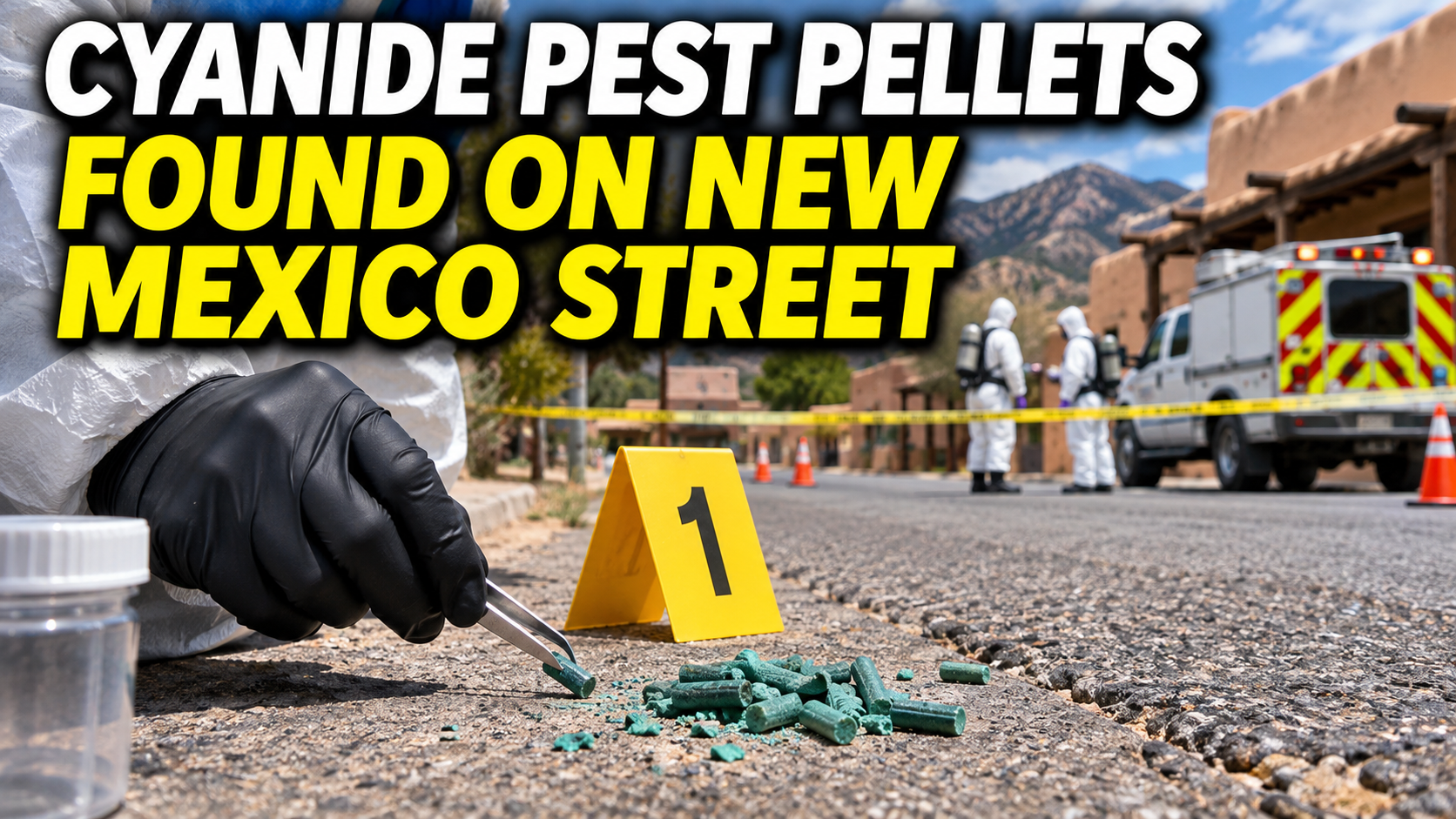
Cyanide Pest Pellets Found on New Mexico Street after officials in Clovis, New Mexico, confirmed that pest control pellets containing cyanide were discovered along Grand Avenue on Thursday, November 5, 2026. The city announced the discovery the following day, saying the hazardous material had been secured and would be collected by a specialized disposal company. Local reporting adds a troubling possible connection to two horse deaths in neighboring Roosevelt County, although investigators had not established a definitive cause of death. The story underscores the risks of improperly stored or transported pest-control chemicals, rather than suggesting that all pesticide products present the same danger.
What Clovis Officials Confirmed
The City of Clovis announcement dated November 6 states that cyanide-containing pest control pellets were identified on Grand Avenue a day earlier. Officials reported no suspicious circumstances associated with the discovery and said the material was being safely stored pending pickup by a hazardous-waste disposal contractor. The announcement also urged residents not to touch, move, or handle unknown potentially hazardous materials and to alert emergency personnel instead. It did not disclose the product name, concentration of cyanide, precise quantity recovered, or an exact disposal date. Those missing details matter: the description of a chemical-containing pellet does not establish its intended pest target, its legal status, or its precise chemical formulation.
How the Pellets Reached Downtown Clovis
Local reporting provides additional context beyond the short municipal notice. According to The Eastern New Mexico News report updated November 6, Roosevelt County Sheriff Javier Sanchez said the material had been in a bag of pest control product on a rural property for approximately a year, according to family members. After two horses were found dead, a woman reportedly collected the bag to keep other animals away from it and placed it in a pickup truck. The sheriff said the bag subsequently tore open and its contents spilled. Police and hazardous-material responders were notified when the woman realized that some of the contents might have escaped from the truck near downtown Clovis. This is the reported sequence, not a final forensic reconstruction.
Two Horse Deaths Are Under Investigation
The deaths of two horses make this more than a routine discarded-chemical discovery, but the evidence still requires careful wording. The sheriff said the animals may have eaten material from the pest control bag and that the incident appeared accidental. He also said investigators still needed to speak with the property owner before concluding their investigation. As of the cited November 6 report, a definitive toxicology finding had not been publicly established in the material reviewed by PestMarket. It would therefore be misleading to state that cyanide poisoning had conclusively killed the horses, that a person intentionally poisoned them, or that the discovery amounted to a malicious attack on the public. The possible connection is newsworthy precisely because it remains a question investigators are examining.
Cyanide Pest Pellets Found on New Mexico Street Raise Safety Questions
Chemical safety is the central public-interest issue. Cyanide compounds can pose serious hazards, but the risk from a particular product depends on its composition, dose, route of exposure and handling conditions. In this case, the municipality confirmed the presence of cyanide-containing pellets, while product-specific details have not been published in its statement. That uncertainty is a reason for caution, not for speculation about an unverified brand or chemical ingredient. The local response also shows why unrecognized powders or pellets should never be treated like ordinary litter. Moving an unidentified container without the proper equipment can increase the possibility of accidental exposure, spills, or further contamination.
Why Long-Term Pesticide Storage Can Become Dangerous
The reported account that the bag had been stored on the property for roughly a year illustrates a general risk of old pesticide stockpiles, although it does not prove exactly what happened in this incident. The U.S. Environmental Protection Agency advises that pesticides be kept in their original labeled containers, secured away from children and animals, and separated from food or animal feed. Its guidance also warns against unnecessary stockpiling and recommends following the label when selecting storage conditions. The best prevention is to avoid accumulating chemicals that no longer have a clear, lawful, and practical use. Old, damaged or unidentified packages should be assessed through appropriate local hazardous-waste resources rather than being transferred into unlabeled bags or improvised containers.
How Hazardous Pest Chemicals Should Be Disposed Of
The city said professionals would collect the secured material for proper disposal, a response consistent with the seriousness of a suspected toxic chemical. For consumers with leftover pesticide products, the EPA’s pesticide disposal guidance recommends checking product labels and contacting local solid-waste or environmental agencies about appropriate collection options. It warns against pouring pesticide wastes into drains or sewers and against reusing pesticide containers. Farm, ranch and commercial operations may face different disposal rules than ordinary households, so the correct route depends on who possesses the material and what it contains. Unknown or potentially lethal chemicals call for professional assessment, not household cleanup experiments.
What Residents Should Do if They Find Suspicious Pellets
Anyone who notices unusual pellets, powder, or an unmarked bag in a public place should avoid touching the material and keep children and animals away from it. If it appears potentially dangerous, notify local emergency responders and follow their instructions. Do not taste or smell unidentified material, attempt to sweep it into a vehicle, or move it elsewhere for disposal. For everyday pest problems at home, PestMarket’s DIY pest control guidance explains why identification, prevention, label compliance and nonchemical options should come before pesticide use. This public-safety approach is compatible with effective pest management; it does not mean that every labeled pesticide is inherently unsafe when used as directed.
What Is Still Unknown About the Clovis Incident
Several questions remain unanswered in the sources available as of November 9. Investigators have not publicly released a complete product identification, toxicology report, independent confirmation of the horses’ cause of death, or final investigation findings. Nor has the city’s announcement described any confirmed human poisoning from the downtown discovery. A follow-up report could materially change the interpretation of the case, especially if it establishes how the bag was originally obtained and why it had been kept on the property. PestMarket will distinguish between official statements, sheriff-reported witness accounts and findings that still require confirmation. For more on how the publication approaches evidence and chemical safety, see PestMarket’s editorial approach.
Why This Case Matters Beyond New Mexico
The Clovis event is a reminder that pesticide safety continues long after a treatment is finished. Storage, transportation, labeling, access by livestock and final disposal all affect whether hazardous products remain contained. The confirmed facts are that Clovis identified cyanide-containing pest pellets, secured them and arranged professional disposal. The unresolved question is whether the same material caused two nearby horse deaths. Until investigators finish that work, the strongest conclusion is a practical one: potentially dangerous pest-control chemicals should be kept secure, correctly labeled and handled only through appropriate safety procedures. That message is relevant to homeowners, agricultural operators and anyone responsible for old pest-control supplies.