
Cockroach control starts with identifying where roaches are living and what is attracting them. Learn how to recognize a cockroach infestation, reduce food, water, and hiding places, explore treatment options, and know when professional pest control may be appropriate. Explore our Pest Control Guides for identification, prevention, and treatment information on other common household pests.
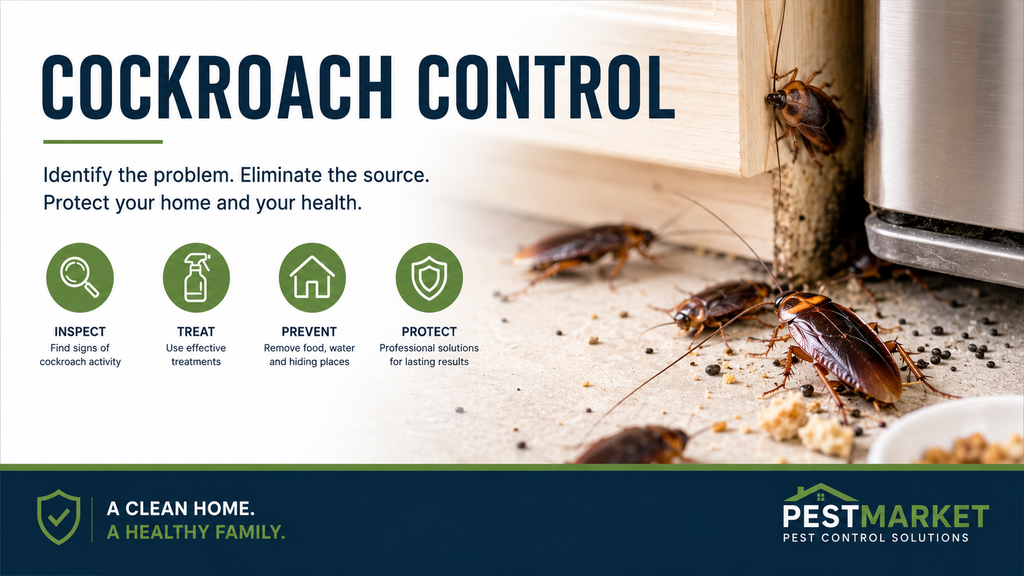
How to Identify a Cockroach Problem
Cockroaches typically hide during the day and become more active at night. Seeing live roaches, finding droppings or egg cases, noticing shed skins, or repeatedly finding activity around kitchens, bathrooms, appliances, and other warm or moist areas may indicate an infestation.
Common Signs of Cockroach Activity
- Live cockroaches, especially at night
- Cockroach droppings in cabinets, drawers, or along walls
- Egg cases in hidden or protected areas
- Shed skins from developing cockroaches
- Activity around sinks, drains, appliances, or food-storage areas
- Recurring cockroach sightings despite cleaning
Why Cockroaches Can Be a Serious Problem
Cockroaches are more than a nuisance. They can contaminate food and household surfaces, and cockroach saliva, feces, and shed body material can contribute to allergy and asthma problems. EPA identifies cockroaches as pests of significant public-health importance in connection with asthma, allergies, and food contamination.
DIY Cockroach Control
1. Remove Food Sources
Clean crumbs and spills promptly, wash dirty dishes, store food in sealed containers, keep trash covered, and avoid leaving pet food out overnight. Removing readily available food makes the home less attractive to cockroaches.
2. Eliminate Water Sources
Repair leaking faucets and pipes, wipe up standing water, and check areas under sinks and around appliances for excess moisture. Cockroaches depend on accessible water as well as food and shelter.
3. Reduce Hiding Places
Remove unnecessary cardboard, paper bags, clutter, and other materials that provide protected hiding areas. Seal accessible cracks and openings around baseboards, pipes, cabinets, windows, and other potential entry or movement points.
4. Monitor Cockroach Activity
Sticky traps can help identify areas with the greatest cockroach activity. Place monitoring traps near walls and locations where roaches have been observed, then use the results to determine where control efforts should be concentrated.
5. Use Cockroach Treatments Carefully
Cockroach baits and other pesticide products may be part of a broader control strategy. Always select products labeled for the intended use and follow the product label directions carefully. Avoid assuming that spraying visible cockroaches alone will eliminate the underlying infestation.
When to Call a Professional for Cockroach Control
Consider professional pest control when cockroach activity is widespread, repeatedly returns after sanitation and treatment, occurs throughout multiple areas of the home, or cannot be brought under control with reasonable DIY measures.
A professional can help identify the cockroach species, locate areas of concentrated activity, and develop an integrated treatment strategy. The University of Minnesota Extension specifically recommends professional pest-management service for pesticide treatment of cockroach infestations.
How to Help Prevent Cockroaches
- Store food in tightly sealed containers.
- Clean crumbs, grease, and spills promptly.
- Keep trash containers covered and empty them regularly.
- Avoid leaving dirty dishes or pet food out overnight.
- Repair plumbing leaks and eliminate standing water.
- Seal cracks and openings around pipes, cabinets, walls, doors, and windows.
- Reduce cardboard boxes, paper bags, and unnecessary clutter.
- Inspect boxes and bags for cockroaches before bringing them inside.
- Monitor areas where cockroach activity has occurred previously.
Explore more DIY Pest Control Solutions for practical ways to reduce pest-friendly conditions around your home.
EPA specifically emphasizes removing food, water, and shelter and preventing pests from entering as fundamental pest-control measures.
Cockroach Control FAQ
What attracts cockroaches to a home?
Cockroaches are attracted to accessible food, water, shelter, and suitable hiding places. Crumbs, grease, garbage, pet food, plumbing leaks, moisture, cardboard, and clutter can all contribute to favorable conditions.
Why do I see cockroaches at night?
Many household cockroaches hide during daylight hours and become active at night while searching for food and water. Nighttime sightings are therefore common when an infestation is present.
Can cleaning alone get rid of cockroaches?
Cleaning and sanitation are important parts of cockroach control because they reduce food and hiding places, but an established infestation may require additional monitoring and treatment. An integrated approach generally works better than relying on a single control method.
Are cockroach baits effective?
Cockroach baits can be useful when placed appropriately as part of a broader control strategy. They generally work more slowly than contact treatments, so results may not be immediate. Always follow the product label and keep pesticide products inaccessible to children and pets.
When should I hire a professional for cockroaches?
Professional help is worth considering when cockroaches are widespread, repeatedly return, appear in multiple areas of the home, or persist despite sanitation, exclusion, monitoring, and appropriate treatment.