
Rat control starts with finding signs of activity and eliminating the conditions that allow rats to enter and survive around your home. Learn how to identify a rat problem, remove food and shelter, block entry points, explore control options, and know when to call a professional. Explore our Pest Control Guides for identification, prevention, and treatment information on other common household pests.
How to Identify a Rat Problem
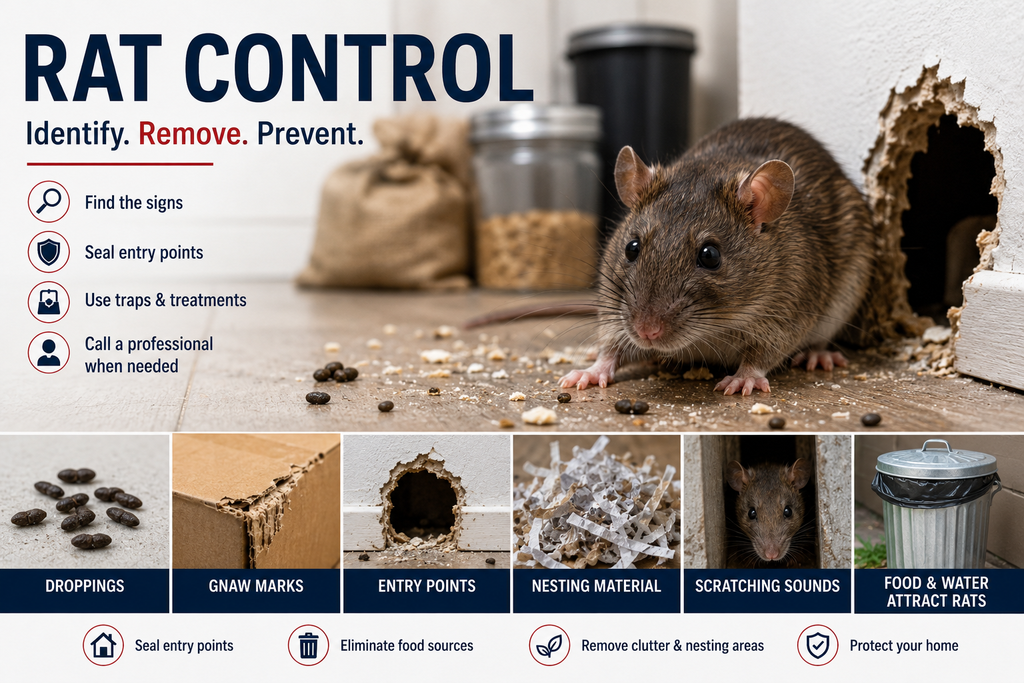
Rats often remain hidden, especially during the day, so you may notice evidence before seeing a live animal. Droppings, gnawed food packaging, nesting materials, holes, scratching sounds, and unusual odors can all indicate rodent activity. EPA recommends looking for these signs when checking for a possible rat or mouse infestation.
Common Signs of Rat Activity
- Rat droppings near food, cabinets, storage areas, or walls
- Gnaw marks on food packaging, wood, wiring, or other materials
- Holes or gaps that may provide entry into the home
- Shredded paper, fabric, insulation, or other nesting materials
- Scratching or movement sounds inside walls, ceilings, or attics
- Stale or unusual odors coming from concealed areas
- Food packages that appear damaged or disturbed
- Live or dead rats around the property
Why Rats Can Be a Serious Problem
Rats can contaminate food and living areas and damage property by gnawing and nesting. Rodents may also expose people to disease directly through bites or contaminated waste and indirectly through parasites such as fleas, ticks, and mites.
DIY Rat Control
1. Remove Food and Water Sources
Store food in tightly sealed containers, clean crumbs and spills promptly, keep garbage covered, and avoid leaving pet food or water available overnight. Outdoor food sources and poorly secured trash can also attract rats.
2. Seal Entry Points
Inspect the inside and outside of your home for holes, gaps, and damaged areas that rats may use to enter. Seal accessible openings and repair damaged walls, doors, screens, vents, and utility penetrations where appropriate.
EPA identifies sealing holes inside and outside the home as an important part of preventing rodent infestations.
3. Remove Nesting and Hiding Areas
Reduce clutter and remove potential nesting material around the property. Leaf piles, dense vegetation, debris, unnecessary storage, and accessible materials can provide rats with protected areas to hide or nest.
4. Use Rat Traps Carefully
Traps can be used to control rats already inside a structure. Place traps in areas where rodent activity has been observed while keeping them inaccessible to children and pets.
EPA lists lethal traps such as snap traps among the available options for managing rodent infestations.
5. Use Rodenticides With Caution
Rodenticide products can pose risks to children, pets, and wildlife if they are used improperly. For residential consumer products, follow the product label carefully and use only as directed.
EPA advises that poison baits be used in appropriate tamper-resistant bait stations and placed where children and pets cannot reach them.
When to Call a Professional for Rat Control
Consider professional rat control when activity continues despite sanitation, exclusion, and trapping; rats are established in walls, ceilings, attics, crawl spaces, or other difficult-to-access areas; the infestation appears extensive; or you are uncomfortable handling traps or rodent-control products.
A professional can help locate entry points, identify nesting areas, evaluate the extent of an infestation, and develop a control and exclusion strategy. EPA specifically provides guidance for homeowners who prefer to hire a rodent-control professional.
How to Help Prevent Rats
- Store food in sealed containers.
- Keep garbage in containers with tight-fitting lids.
- Clean food spills and crumbs promptly.
- Avoid leaving pet food and water out overnight.
- Seal holes and gaps inside and outside the home.
- Repair damaged screens, vents, doors, and other possible entry points.
- Remove unnecessary clutter and potential nesting materials.
- Keep vegetation and debris under control around the structure.
- Store animal feed and other attractive food sources securely.
- Monitor areas where rat activity has previously occurred.
EPA emphasizes clean living areas, preventing rodent access, and eliminating potential nesting areas as the major steps for eliminating and preventing rodent infestations.
Explore more DIY Pest Control Solutions for practical ways to prevent and manage common pest problems around your home.
Rat Control FAQ
What are the most common signs of rats?
Droppings, gnaw marks, damaged food packages, nesting material, holes, scratching noises, unusual odors, and actual rat sightings can indicate activity.
Why are rats coming into my home?
Rats generally enter properties seeking food, water, shelter, and nesting locations. Accessible garbage, pet food, structural openings, clutter, and protected nesting areas can make a property more attractive.
Are rat traps effective?
Traps can be an effective component of rat control, particularly when combined with removing food sources and sealing entry points. Trap placement and continued monitoring are important because trapping without correcting the conditions attracting rats may not prevent another infestation.
Should I use rat poison?
Rodenticides are one available control option, but they require careful use because they can present risks to children, pets, and wildlife. Follow the product label and EPA safety guidance, and consider professional assistance when appropriate.
When should I call a professional for rats?
Consider professional help when rats continue returning, activity occurs in inaccessible areas such as walls or attics, multiple rats appear to be present, or exclusion and trapping have not controlled the problem.