
Mouse control starts with finding how mice are entering your home and removing the food, water, and shelter that allow them to stay. Learn how to recognize mouse activity, seal entry points, use traps safely, prevent future infestations, and know when professional pest control may be appropriate. Explore our Pest Control Guides for identification, prevention, and treatment information on other common household pests.
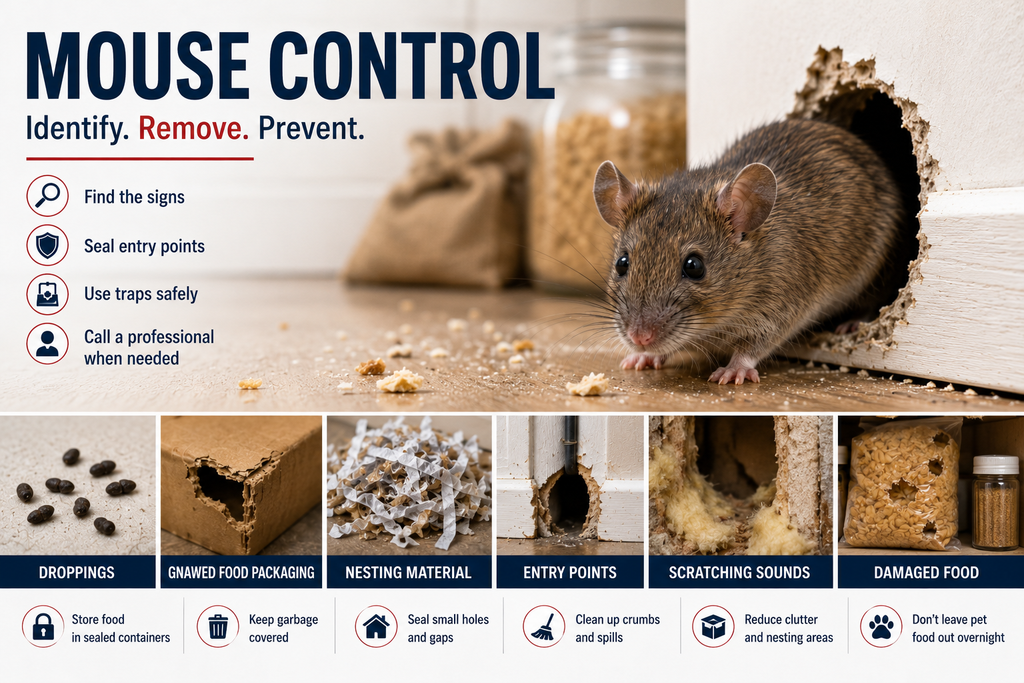
How to Identify a Mouse Problem
Mice are small and often remain hidden, so droppings, gnaw marks, nesting materials, and scratching noises may appear before you see a live mouse. Check kitchens, pantries, cabinets, garages, attics, basements, and areas behind appliances for evidence of activity.
Common Signs of Mice
- Small rodent droppings near food or along travel routes
- Gnawed food packages or containers
- Shredded paper, fabric, insulation, or other nesting material
- Scratching or movement sounds inside walls or ceilings
- Small holes or gaps around walls, cabinets, doors, or utility lines
- Food that has been disturbed or contaminated
- Musky or unusual odors in enclosed areas
- Live or dead mice
Where Do Mice Commonly Hide?
Mice look for protected locations close to food and nesting materials. They may hide behind appliances, inside cabinets, in wall voids, garages, attics, basements, storage areas, and other quiet spaces.
Because mice can use relatively small openings to enter buildings, finding and sealing potential entry points is an important part of long-term mouse control.
DIY Mouse Control
1. Remove Food Sources
Store cereal, grains, pet food, snacks, and other foods in tightly sealed containers. Clean crumbs and spills promptly, keep garbage covered, and avoid leaving pet food available overnight.
2. Find and Seal Entry Points
Inspect areas around doors, pipes, utility lines, cabinets, foundations, vents, and other openings.
EPA recommends sealing holes inside and outside the home as part of rodent prevention and notes that mice can fit through openings approximately ¼ inch wide.
3. Remove Nesting Materials
Reduce clutter, cardboard, paper, fabric scraps, and other materials mice may use for nesting. Pay particular attention to garages, storage spaces, attics, basements, and areas that are rarely disturbed.
4. Use Mouse Traps Carefully
Snap traps can be part of a mouse-control strategy. Place traps where mouse activity has been observed and where children and pets cannot access them.
Continue monitoring after activity appears to stop because trapping individual mice does not correct the entry points or food sources that attracted them.
5. Clean Rodent-Contaminated Areas Safely
Do not sweep or vacuum dry rodent urine, droppings, or nesting materials because this can cause contaminated particles to become airborne.
CDC recommends wetting contaminated material thoroughly with disinfectant before cleanup and following appropriate precautions when cleaning areas affected by rodents.
When to Call a Professional for Mouse Control
Consider professional mouse control when activity continues despite trapping and exclusion, mice are established inside walls, ceilings, attics, crawl spaces, or other inaccessible locations, or you cannot determine how they are entering the structure.
A professional can help identify entry points, nesting locations, and areas of concentrated activity and develop a strategy that combines removal with exclusion and prevention.
How to Help Prevent Mice
- Store food and pet food in sealed containers.
- Clean crumbs and food spills promptly.
- Keep garbage containers tightly covered.
- Avoid leaving pet food out overnight.
- Inspect and seal small openings around the structure.
- Check around pipes, utility lines, doors, vents, and foundations.
- Reduce cardboard, paper, and unnecessary clutter.
- Keep garages and storage areas organized.
- Remove potential nesting materials.
- Continue monitoring areas where mouse activity has occurred.
Explore more DIY Pest Control Solutions for practical ways to prevent and manage common pest problems around your home.
Mouse Control FAQ
How can I tell if I have mice instead of rats?
Mice are generally smaller than rats and leave smaller droppings and gnaw marks. Identifying the rodent correctly matters because behavior, entry points, trap selection, and control strategies can differ.
How small of a hole can a mouse enter?
EPA states that mice can fit through holes approximately ¼ inch wide, roughly the width of a pencil. That makes small gaps around utility lines, doors, cabinets, foundations, and other structural openings important to inspect.
Where should I put mouse traps?
Place traps near areas showing mouse activity, particularly along walls and near food, nesting locations, or travel routes. Keep traps where children and pets cannot reach them.
Why do mice keep coming back?
Removing individual mice without eliminating accessible food, nesting areas, and entry points can allow another infestation to develop. Long-term mouse control therefore combines removal with sanitation and exclusion.
When should I hire a professional for mice?
Professional help may be appropriate when mouse activity persists, mice are inside inaccessible structural areas, multiple entry points are difficult to locate, or repeated trapping has not solved the infestation.