
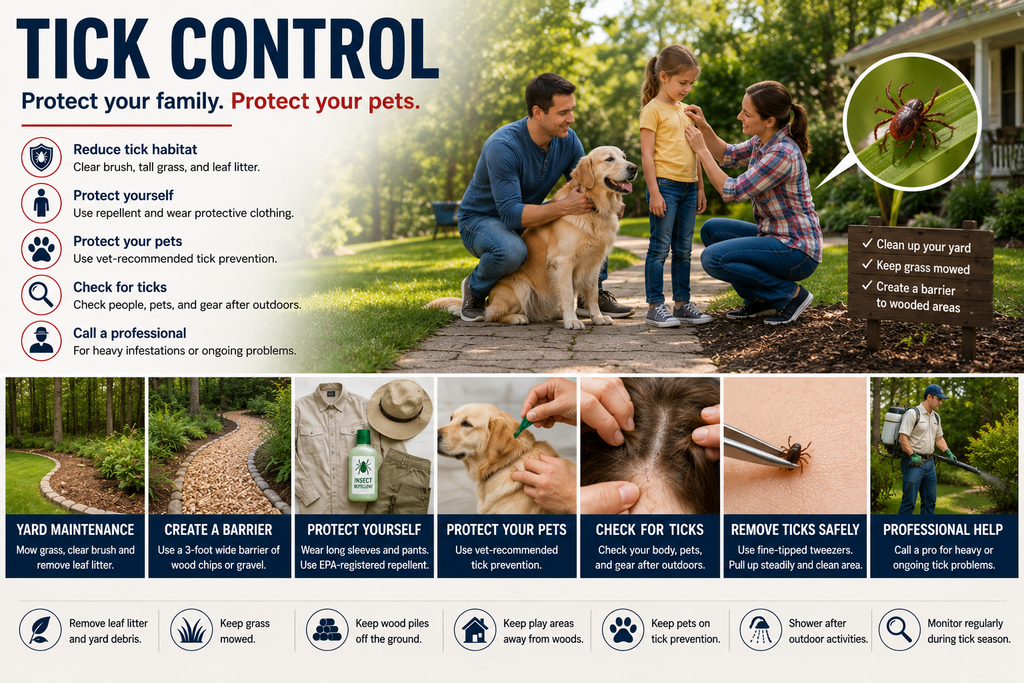
Tick control starts with reducing the places where ticks live and limiting opportunities for them to reach people and pets. Learn how to identify tick habitat, make your yard less favorable to ticks, protect your family and pets, check for ticks after outdoor activity, and know when professional pest control may be appropriate. Explore our Pest Control Guides for identification, prevention, and treatment information on other common household pests.
Why Ticks Can Be a Serious Problem
Ticks are parasites that feed on the blood of people and animals. Some ticks can spread pathogens that cause illnesses, including Lyme disease, Rocky Mountain spotted fever, ehrlichiosis, and other tickborne diseases.
CDC emphasizes that preventing tick bites is an important way to reduce the risk of tickborne illness.
Where Are Ticks Commonly Found?
Ticks often occur in grassy, brushy, wooded, or leaf-covered areas. They may also be present in yards, particularly around property edges and places where wildlife or pets travel.
- Tall grass and weeds
- Brush and dense vegetation
- Leaf litter
- Wooded property edges
- Wood piles and debris
- Areas frequented by wildlife
- Shaded areas with ground cover
- Places where pets spend time outdoors
CDC recommends modifying yards to reduce tick habitat and creating separation between recreational areas and wooded or brushy environments.
DIY Tick Control
1. Reduce Tick Habitat Around Your Yard
Remove leaf litter, clear tall grasses and brush around the home and lawn edges, mow regularly, and discourage vegetation from becoming excessively dense.
Keep patios, playground equipment, and frequently used outdoor areas away from yard edges and wooded vegetation when practical.
2. Create a Barrier Around Wooded Areas
CDC recommends placing a roughly 3-foot-wide barrier of wood chips or gravel between lawns and wooded areas to help restrict tick movement into recreational areas.
This can be particularly useful on properties bordering brush or woodland.
3. Protect Yourself Outdoors
When spending time in areas where ticks may occur, avoid unnecessary contact with tall grass and brush and consider clothing that provides additional coverage.
EPA-registered insect repellents can also be used according to label directions. EPA provides a searchable repellent tool for selecting an appropriate product.
4. Check for Ticks After Outdoor Activity
Check your clothing, gear, pets, and body after spending time in potentially tick-infested areas.
CDC recommends showering soon after returning indoors and performing a full-body tick check, including less obvious areas such as behind the knees, around the waist, under the arms, around the ears, and in the hair.
5. Protect Pets From Ticks
Pets can encounter ticks outdoors and potentially carry them into areas where people live.
Talk with your veterinarian about appropriate tick-prevention products for your pet. Use products only according to the species, age, weight, and other instructions on the label.
6. Consider Yard Treatments Carefully
Pesticide treatments may help reduce tick populations in specific areas, but treatment should complement habitat modification rather than replace it.
If using pesticides yourself, choose products labeled for the intended application and follow all label directions. Professional treatment may be appropriate when tick pressure remains high.
How to Remove an Attached Tick
If you find a tick attached to your skin, remove it as soon as possible.
CDC recommends using clean, fine-tipped tweezers to grasp the tick as close to the skin’s surface as possible and pulling upward with steady, even pressure.
After removing the tick, clean the bite area and your hands.
Avoid folk remedies intended to force a tick to detach. CDC specifically advises against techniques such as covering the tick with petroleum jelly or using heat.
If you develop symptoms such as a rash or fever after a tick bite, contact a healthcare provider and tell them about the bite.
When to Call a Professional for Tick Control
Consider professional tick control when ticks are repeatedly found around your property despite habitat management, when the property borders extensive wooded or brushy areas, or when tick activity makes outdoor areas difficult to use safely.
A professional can inspect likely tick habitat, identify areas that may require additional management, and determine whether targeted treatment should be incorporated into a broader tick-control strategy.
How to Help Prevent Ticks Around Your Home
- Remove leaf litter around the property.
- Clear tall grasses and brush near the home and lawn edges.
- Mow the lawn regularly.
- Keep wood piles organized and dry.
- Discourage unnecessary vegetation around frequently used areas.
- Consider a wood-chip or gravel barrier along wooded edges.
- Keep playground and seating areas away from dense vegetation when practical.
- Check people and pets for ticks after outdoor activity.
- Discuss appropriate tick prevention with your veterinarian.
- Continue monitoring the property during periods of high tick activity.
Explore more DIY Pest Control Solutions for practical ways to prevent and manage common pest problems around your home.
Tick Control FAQ
Where do ticks usually live in a yard?
Ticks commonly occur in grassy, brushy, wooded, and leaf-covered environments. Yard edges adjacent to woodland and areas frequented by wildlife can be particularly important to inspect.
Can ticks live in short grass?
They can occur in maintained yards, although reducing tall grass, brush, leaf litter, and other favorable habitat can make the property less hospitable to ticks. Yard maintenance reduces risk but cannot guarantee a tick-free property.
How should I remove a tick?
Use clean, fine-tipped tweezers, grasp the tick close to the skin, and pull upward using steady, even pressure. Clean the bite area afterward. CDC advises against twisting, burning, or covering an attached tick with substances intended to make it detach.
Should I treat my yard for ticks?
Targeted pesticide treatment can be one component of tick management, particularly where tick pressure is significant. Habitat modification and personal/pet protection should still remain part of the strategy.
When should I hire a professional for ticks?
Professional help may be appropriate when tick activity remains high despite yard maintenance, the property contains extensive tick habitat, or you want a property-specific prevention and treatment strategy.