
When a pest problem is persistent, difficult to identify, or hard to control on your own, professional help may be the right next step. Call to connect with pest control service options available in your area.
Call Now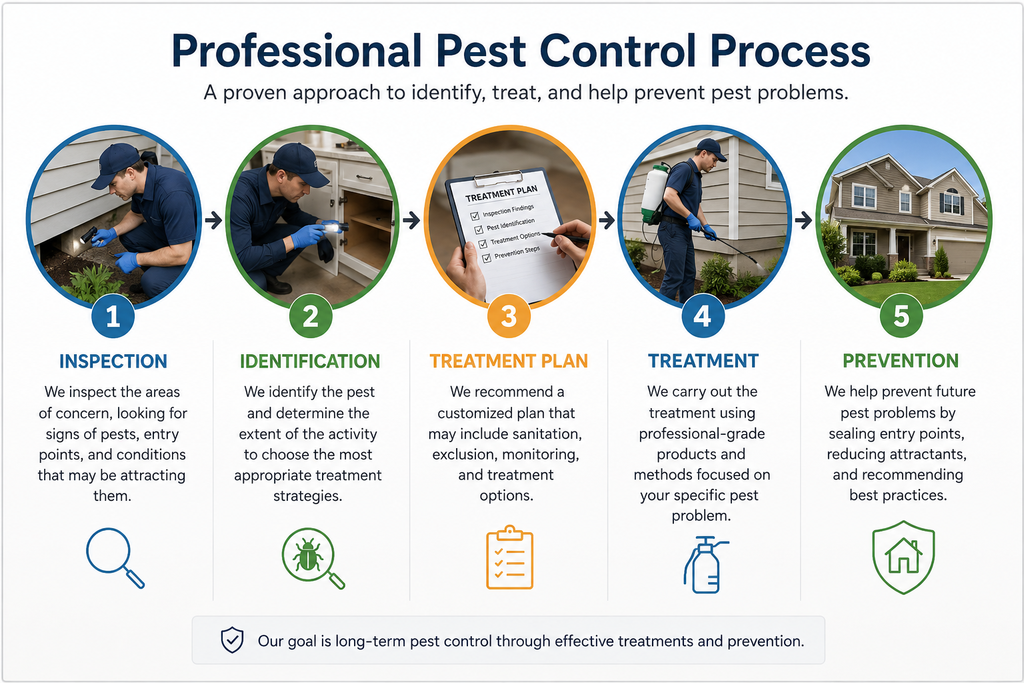
Find the Right Pest Control Help
Start with the pest you’re dealing with or browse by location. Understanding the type of pest and the extent of the problem can help you determine what kind of professional service you may need.
Find Help by Pest
Termites
Termites can damage structural wood while remaining hidden. A professional inspection can help determine whether termites are active and what treatment options may be appropriate.
Bed Bugs
Bed bug infestations can be difficult to eliminate completely, especially when they have spread beyond a single room.
Cockroaches
Recurring cockroach activity may indicate hidden harborages, moisture problems, or breeding areas that require a more comprehensive approach.
Rats & Mice
Rodent control may involve trapping, sanitation, identifying entry points, and exclusion to reduce the chance of recurring activity.
Ants
Persistent ant problems may require identifying the species, locating nesting areas, and targeting colonies rather than only treating visible ants.
Wasps
Professional help may be appropriate for active wasp or yellow jacket nests, difficult to reach locations, or situations where stings present a safety concern.
For information about bees, including identification and safety considerations, visit our Bee Guide.
Find Pest Control by Location
Pest problems, seasonal activity, and available services can vary by location. Browse PestMarket’s location guides to learn about pest activity, treatment considerations, and professional pest control options in your area.
When Should You Call a Pest Control Professional?
Not every pest sighting requires professional treatment. Minor problems can sometimes be managed with sanitation, exclusion, trapping, or other DIY methods. Professional help may be worth considering when:
- The infestation keeps returning after DIY treatment.
- You suspect termites or another structural pest.
- Bed bugs have spread or treatment has not worked.
- Rodents continue entering despite trapping or exclusion attempts.
- A wasp or yellow jacket nest is in a difficult or unsafe location.
- You cannot confidently identify the pest or source of the problem.
- The infestation involves areas that are difficult to inspect or treat safely.
If the problem is beyond what you can comfortably handle yourself, professional pest control may be the next step.
Call for Pest Control HelpPrefer to call? (877) 607-0102 – For new pest control customers. Service availability varies by location and pest type
What to Expect From Professional Pest Control
1. Inspection
A pest control professional may inspect areas where activity has been reported, look for signs of the pest, and evaluate possible food, water, shelter, breeding sites, or entry points.
2. Identification
Correct identification helps determine which control methods are appropriate. In some cases, identifying the species can significantly change the treatment strategy.
3. Treatment Plan
Depending on the pest and conditions, recommendations may include sanitation, exclusion, trapping, monitoring, habitat modification, pesticide treatment, or a combination of methods.
4. Treatment and Follow-Up
Some pest problems may be addressed in one visit, while others can require monitoring, follow-up treatments, or ongoing prevention.
5. Prevention
A professional may recommend sealing entry points, correcting moisture problems, changing storage practices, removing pest attractants, or taking other steps to reduce future activity.
Questions to Ask Before Hiring a Pest Control Company
Before choosing a pest control provider, consider asking:
- Are you licensed where required in my state or locality?
- What pest do you believe is causing the problem?
- What treatment do you recommend and why?
- Are there nonchemical or lower-impact options appropriate for the situation?
- How many visits may be needed?
- What preparation should I complete before treatment?
- Are there precautions for children or pets?
- Is follow-up included?
- What can I do to help prevent the problem from returning?
Learn more about choosing a Pest Control Company from the U.S. Environmental Protection Agency.
DIY or Professional Pest Control?
Some pest problems can be handled without professional treatment. If the infestation is minor and the pest can be confidently identified, sanitation, exclusion, monitoring, trapping, or other targeted DIY methods may be enough.
If you’re not sure which approach fits your situation, start with our DIY pest control guide and compare your options before deciding.
Need Professional Pest Control Help?
If you would rather speak with someone about professional pest control service available in your area, call below.
Call NowService availability and participating providers vary by location.
Service Disclaimer: This site is a free service to assist homeowners in connecting with local service contractors. All contractors are independent and this site does not warrant or guarantee any work performed. It is the responsibility of the homeowner to verify that the hired contractor furnishes the necessary license and insurance required for the work being performed. All persons depicted in a photo or video are actors or models and not contractors listed on this site.