
Silverfish control starts with finding the moisture, food sources, and hiding places that allow them to survive indoors. These fast-moving insects often appear in bathrooms, basements, closets, kitchens, and storage areas. Learn how to identify silverfish, reduce conditions that attract them, protect belongings, and know when professional pest control may be appropriate. Explore our Pest Control Guides for identification, prevention, and treatment information on other common household pests.
How to Identify Silverfish
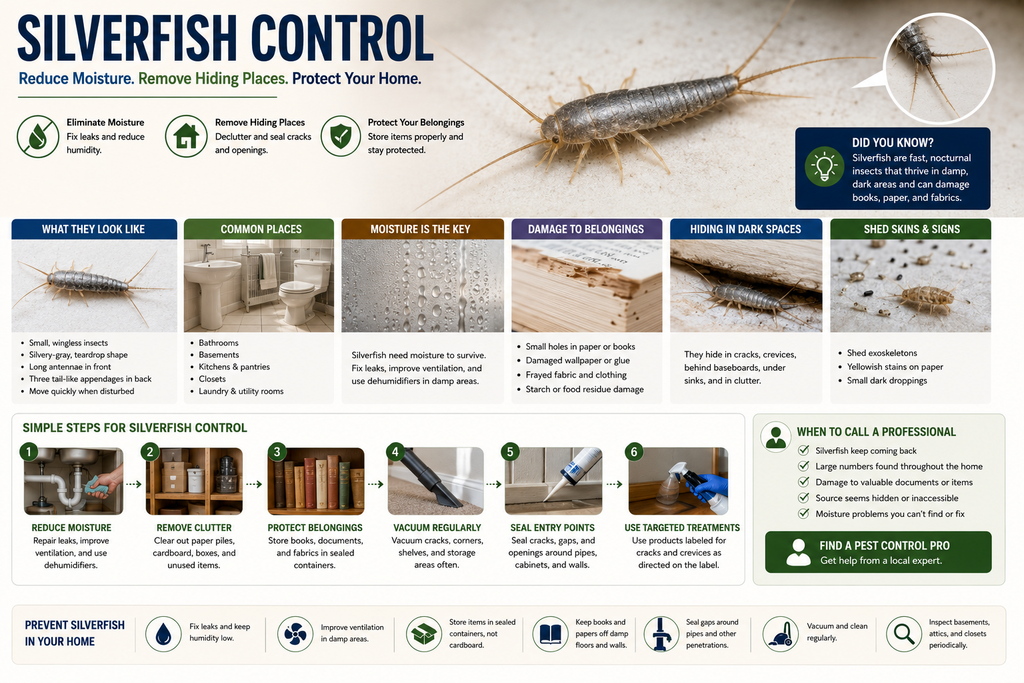
Silverfish are small, wingless insects with flattened, tapered bodies covered in silvery or gray scales. Their distinctive shape resembles a tiny fish, and they move quickly when disturbed.
Adults typically have long antennae at the front and three tail-like appendages at the rear.
Silverfish are primarily active at night, so homeowners may not notice them until turning on a light in a bathroom, basement, kitchen, or storage area.
Common Signs of a Silverfish Problem
- Live silverfish, particularly at night
- Small irregular holes or scraped areas on paper
- Damage to books, wallpaper, cardboard, or stored documents
- Yellowish staining on paper or fabrics
- Shed skins
- Activity around sinks, tubs, or plumbing
- Silverfish trapped in sinks or bathtubs
- Activity in humid basements, closets, attics, or storage rooms
Finding one silverfish does not necessarily mean there is a major infestation, but repeated sightings can indicate favorable conditions somewhere in the home.
Why Are Silverfish in My House?
Silverfish prefer protected environments where they can find suitable food and moisture.
They may feed on materials containing starches, sugars, or proteins, including:
- Paper and cardboard
- Book bindings
- Wallpaper paste
- Certain fabrics
- Stored foods
- Dead insects and organic debris
Moisture is particularly important.
Bathrooms, kitchens, laundry rooms, basements, crawlspaces, and areas around leaking plumbing can provide favorable environments.
DIY Silverfish Control
1. Reduce Moisture
Start by looking for excess humidity and water sources.
Repair leaking pipes or fixtures, improve ventilation, and address damp basements or crawlspaces.
A dehumidifier may help in persistently humid areas.
Removing favorable moisture conditions can make the environment considerably less suitable for silverfish.
2. Remove Hiding Places
Silverfish hide in cracks, crevices, cardboard boxes, paper piles, and clutter.
Reduce unnecessary storage and organize areas where silverfish have been observed.
Pay particular attention to:
- Basements
- Closets
- Garages
- Attics
- Utility rooms
- Under sinks
- Bookshelves
- Paper and cardboard storage
3. Protect Books, Paper, and Stored Items
Valuable documents, photographs, books, clothing, and other vulnerable materials should be stored appropriately.
Replace unnecessary cardboard storage with sealed containers when practical.
Avoid storing valuable paper products directly against damp walls or floors.
4. Vacuum Cracks and Crevices
Vacuuming can remove silverfish, shed skins, food debris, and other organic material from accessible areas.
Focus on baseboards, shelving, closets, cracks, storage areas, and other locations where activity has been observed.
5. Seal Entry and Hiding Areas
Seal appropriate cracks and gaps around:
- Baseboards
- Cabinets
- Pipes
- Wall penetrations
- Door and window frames
- Other structural openings
This can reduce hiding locations and movement between areas of the home.
6. Use Pesticides Carefully
Pesticides may sometimes be appropriate for persistent silverfish infestations, particularly when treatment can target cracks, crevices, and known harborages.
Always use products specifically labeled for the intended application and follow label directions.
Broadly spraying rooms without correcting moisture and hiding conditions is unlikely to provide the best long-term solution.
Are Silverfish Dangerous?
Silverfish are primarily considered nuisance and property pests.
They do not normally bite people and are not known as important disease vectors.
The bigger concern is potential damage to materials such as books, documents, wallpaper, cardboard, and certain fabrics, particularly when populations remain established for long periods.
That means the goal of silverfish control is usually protecting the home and stored belongings rather than responding to a direct health threat.
When to Call a Professional for Silverfish Control
Consider professional pest control when:
- Silverfish appear regularly despite moisture reduction and cleaning.
- Large numbers are found throughout the home.
- Valuable books, documents, or stored materials are being damaged.
- Activity appears to originate inside walls or inaccessible spaces.
- A persistent moisture problem or hidden infestation cannot be located.
- DIY measures have not substantially reduced activity.
A professional inspection can help identify harborages, moisture conditions, and areas where targeted treatment may be useful.
How to Help Prevent Silverfish
- Repair plumbing leaks.
- Reduce excessive indoor humidity.
- Improve ventilation in damp areas.
- Keep basements and storage areas dry.
- Reduce paper and cardboard clutter.
- Store important belongings in appropriate sealed containers.
- Vacuum cracks and storage areas regularly.
- Seal gaps around pipes and structural penetrations.
- Avoid allowing cardboard boxes to remain on damp floors.
- Inspect humid or rarely disturbed areas periodically.
Explore more DIY Pest Control Solutions for practical ways to prevent and manage common pest problems around your home.
Silverfish Control FAQ
Why am I suddenly seeing silverfish?
Changes in moisture, humidity, storage conditions, or access to food and hiding places can make parts of a home more favorable to silverfish. Repeated sightings are a reason to inspect nearby damp and undisturbed areas.
Do silverfish bite?
Silverfish are not known for biting people. Their main significance indoors is as nuisance pests and their ability to damage certain stored materials.
Why are silverfish in my bathroom?
Bathrooms can provide moisture, humidity, cracks, and protected hiding locations. Seeing silverfish there can indicate that conditions nearby are favorable for them.
Can silverfish damage books?
Yes. Silverfish can feed on materials associated with paper, book bindings, and adhesives, which can damage books and documents over time.
Does killing the silverfish I see solve the problem?
Not necessarily. Visible silverfish may be only part of the population. Long-term control should focus on moisture, harborages, food sources, and inaccessible areas where they may be living.
When should I call a pest professional?
Consider professional help when sightings continue despite moisture control, sanitation, exclusion, and other preventive measures or when the source cannot be identified.
Learn more about silverfish identification and management from the University of California Integrated Pest Management Program.