
Fruit fly control starts with finding the food or organic material where the flies are breeding. Overripe fruit, food residue, sugary liquids, recycling containers, garbage, and other fermenting materials can support an infestation. Learn how to find hidden breeding sources, get rid of fruit flies, prevent them from returning, and know when a different type of fly may actually be causing the problem. Explore our Pest Control Guides for identification, prevention, and treatment information on other common household pests.
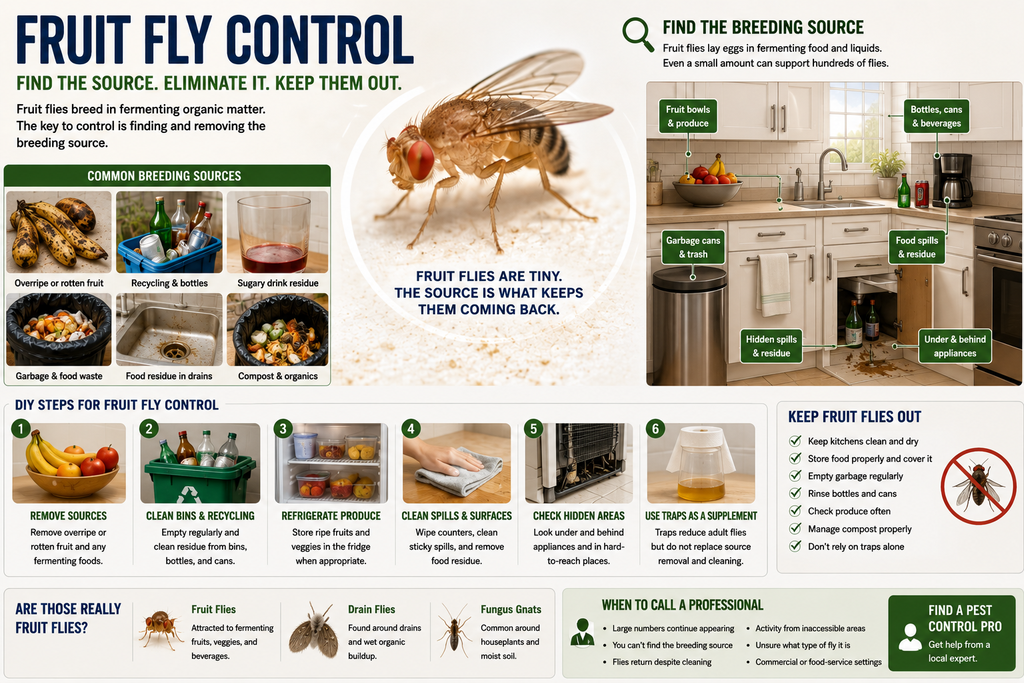
How to Identify Fruit Flies
Fruit flies are tiny flies commonly found around kitchens and other areas containing fermenting food or liquids.
Adults are usually only a few millimeters long. They are often tan or brownish and many common fruit flies have noticeable red eyes.
They may hover around:
- Fruit bowls
- Bananas and other ripe produce
- Garbage containers
- Recycling bins
- Bottles and cans
- Sinks
- Food preparation areas
- Spilled sugary beverages
Seeing several tiny flies around food does not automatically mean they are fruit flies. Drain flies, fungus gnats, and other small flies can be mistaken for them.
Correct identification matters because different flies breed in different places.
Where Do Fruit Flies Come From?
Fruit flies are strongly attracted to fermenting organic material.
Common breeding sources include:
- Overripe or damaged fruit
- Rotting vegetables
- Fruit or vegetable scraps
- Garbage containing food waste
- Empty beer or wine bottles
- Soda and juice containers
- Recycling bins with sugary residue
- Spilled beverages
- Food residue beneath appliances
- Forgotten produce in cabinets or storage areas
- Compost containers
A surprisingly small amount of fermenting material may be enough to maintain activity.
Common Signs of a Fruit Fly Infestation
- Tiny flies hovering around fruit
- Flies gathering around garbage or recycling
- Activity near wine, beer, juice, or soda containers
- Flies appearing around kitchen counters
- Repeated activity near one food-storage area
- Tiny flies returning soon after adults are killed
- Activity around forgotten or overripe produce
- Flies concentrated around food residue or spills
When adults continue appearing, look for the breeding source rather than focusing only on the flies themselves.
DIY Fruit Fly Control
1. Find and Remove the Breeding Source
This is the most important step.
Inspect the kitchen and nearby areas carefully.
Look at:
- Fruit bowls
- Countertops
- Pantry shelves
- Garbage cans
- Recycling containers
- Under and behind appliances
- Beverage containers
- Compost containers
- Potatoes and onions in storage
- Forgotten produce
- Food spills
Remove spoiled food and clean contaminated areas thoroughly.
2. Refrigerate Ripe Produce
During an active infestation, storing ripe fruits and vegetables in the refrigerator when appropriate can remove an important food and breeding source.
Inspect produce regularly and discard items that have begun to rot.
3. Clean Garbage and Recycling Containers
Simply taking out the trash may not eliminate the problem.
Sugary or fermenting residue can remain inside garbage cans, recycling bins, bottles, and cans.
Rinse recyclable containers when appropriate and clean residue from bins.
4. Look for Hidden Food Residue
Fruit-fly breeding sources are not always obvious.
Check beneath:
- Refrigerators
- Stoves
- Cabinets
- Trash containers
- Kitchen islands
- Shelving
A spilled drink or piece of produce that rolled into an inaccessible location can sometimes sustain an infestation.
5. Clean Food Preparation Areas
Wipe counters and clean food residue promptly.
Pay attention to sticky liquids from:
- Juice
- Soda
- Wine
- Beer
- Syrups
- Fruit
Keep food-storage and preparation areas as clean and dry as practical.
6. Use Fruit Fly Traps as a Supplement
Simple traps may capture adult fruit flies and help reduce their numbers.
However, traps do not replace source removal.
If fermenting material remains available, new adults can continue emerging even while existing flies are being trapped.
Why Do Fruit Flies Keep Coming Back?
If fruit flies disappear temporarily and then return, an overlooked breeding source is often still present.
Possible hidden sources include:
- Produce stored outside the refrigerator
- Residue inside recycling containers
- Forgotten potatoes or onions
- Food underneath appliances
- Dirty garbage containers
- Beverage residue
- Compost
- Food debris in difficult-to-clean areas
Fruit fly control becomes much easier once the breeding material is eliminated.
Are Those Really Fruit Flies?
This is an important question because several small flies commonly occur inside homes.
Fruit Flies
Often associated with fermenting fruits, vegetables, beverages, and food residue.
Drain Flies
Often appear around drains and wet areas containing organic buildup. Their fuzzy, moth-like appearance helps distinguish them from typical fruit flies.
Fungus Gnats
Often associated with moist potting soil and houseplants.
If you’ve repeatedly cleaned food sources but tiny flies continue appearing, the pest may not be a fruit fly at all.
Identifying where the flies concentrate can provide an important clue.
Do Fruit Flies Come From Drains?
Fruit flies may sometimes be seen near sinks, but seeing tiny flies around a drain does not prove they are fruit flies or that the drain is the breeding source.
Drain flies and other small flies can also develop in wet organic material associated with plumbing.
Before repeatedly treating a drain, identify the fly and determine where it is actually breeding.
This prevents wasting time treating the wrong source.
When to Call a Professional for Fruit Fly Control
Most ordinary fruit-fly problems can be resolved by locating and eliminating the breeding source.
Consider professional pest control when:
- Large numbers continue appearing despite thorough sanitation.
- You cannot locate the breeding source.
- The infestation continues for an extended period.
- Flies appear to originate from inaccessible areas.
- You are unsure whether the insects are actually fruit flies.
- Multiple types of small flies may be present.
- The problem involves a commercial kitchen or food-service environment.
A professional can identify the fly species and help locate breeding material that may have been overlooked.
How to Help Prevent Fruit Flies
- Refrigerate ripe produce when appropriate.
- Discard spoiled fruit and vegetables promptly.
- Clean food spills immediately.
- Keep countertops free of food residue.
- Empty garbage regularly.
- Clean garbage containers when residue accumulates.
- Rinse recyclable bottles and cans when appropriate.
- Keep recycling containers clean.
- Check potatoes, onions, and other stored produce regularly.
- Clean beneath appliances periodically.
- Keep compost containers properly managed.
- Do not rely on traps without removing breeding sources.
Explore more DIY Pest Control Solutions for practical ways to prevent and manage common pest problems around your home.
Fruit Fly Control FAQ
What is the fastest way to get rid of fruit flies?
The fastest long-term solution is usually to find and remove the breeding material. Traps can reduce adult flies, but the infestation can continue if fermenting food or residue remains.
Why are fruit flies in my kitchen?
Kitchens provide many potential sources, including ripe produce, garbage, recycling, beverage residue, food spills, and forgotten food.
Can fruit flies reproduce in garbage?
Yes. Garbage containing fermenting fruit, vegetables, beverages, or other suitable organic material can provide breeding conditions.
Will vinegar traps eliminate fruit flies?
Vinegar-based traps can capture adult fruit flies, but they do not necessarily eliminate eggs and larvae developing elsewhere. Use traps as a supplement to finding and removing the breeding source.
Why do fruit flies keep coming back after I kill them?
New adults may still be developing in an overlooked breeding source. Inspect produce, garbage, recycling, beverage containers, compost, and hidden food residue.
Are tiny flies around my drain always fruit flies?
No. Drain flies and other small flies can also occur around plumbing. Identification and locating the actual breeding source are important before choosing a treatment.
Learn more about fruit fly identification and management from the University of Kentucky Department of Entomology.