
Carpet beetle control starts with finding the larvae and the materials they are feeding on. Carpet beetle larvae can damage wool, clothing, rugs, upholstery, stored fabrics, and other animal-based materials while remaining hidden in dark, undisturbed areas. Learn how to identify carpet beetles, find the source of an infestation, protect your belongings, and know when professional pest control may be appropriate. Explore our Pest Control Guides for identification, prevention, and treatment information on other common household pests.
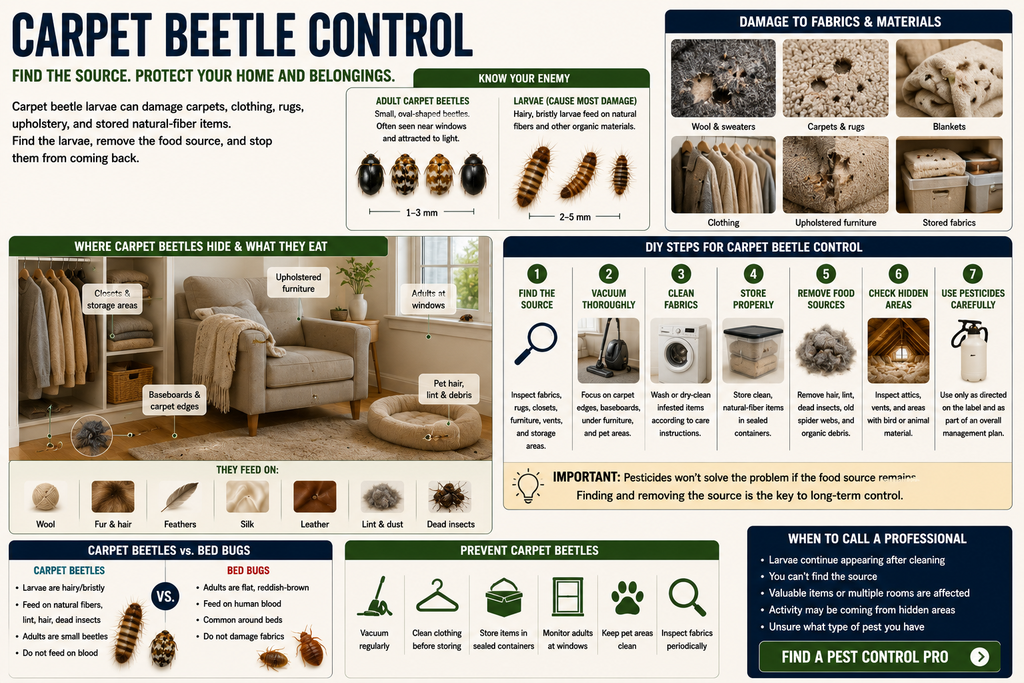
How to Identify Carpet Beetles
Adult carpet beetles are small, oval-shaped beetles. Depending on the species, they may appear black or have mottled patterns of white, brown, yellow, or orange scales.
The larvae cause most household damage.
Carpet beetle larvae are usually brownish and covered with hairs or bristles. They may be found crawling through closets, along baseboards, underneath furniture, or near materials they can feed on.
Adult beetles are often noticed around windows because they are attracted to light.
Common Signs of Carpet Beetles
- Small adult beetles around windows
- Hairy or bristly larvae
- Shed larval skins
- Irregular damage to clothing or fabrics
- Damage to wool rugs or carpets
- Damage beneath furniture
- Larvae inside closets or storage areas
- Damage to blankets or stored natural-fiber items
- Repeated adult beetles appearing indoors
Finding the larvae or their shed skins can be a particularly useful clue when locating an infestation.
What Do Carpet Beetle Larvae Eat?
Despite their name, carpet beetles do not live only in carpets.
Larvae can feed on materials containing animal-derived fibers or proteins, including:
- Wool
- Fur
- Feathers
- Hair
- Leather
- Silk
- Felt
- Natural-fiber rugs
- Upholstered furniture
- Blankets
- Stored clothing
- Dead insects
They may also survive on lint, hair, and other organic debris accumulating in undisturbed locations.
This is why infestations can sometimes persist even when obvious damaged items have been removed.
Where Do Carpet Beetles Hide?
Carpet beetle larvae prefer protected areas where food is available and disturbance is limited.
Inspect:
- Carpet edges
- Beneath furniture
- Closets
- Baseboards
- Air vents
- Attics
- Storage boxes
- Upholstered furniture
- Beneath rugs
- Areas containing pet hair
- Stored clothing and blankets
Also inspect locations where dead insects may accumulate.
DIY Carpet Beetle Control
1. Find the Source
Don’t begin by spraying the beetles you see.
First determine where larvae are feeding.
Inspect susceptible fabrics, rugs, furniture, stored clothing, closets, pet areas, and other undisturbed locations.
Finding the source can dramatically improve control.
2. Vacuum Thoroughly
Vacuum areas where larvae, shed skins, hair, lint, or dead insects may accumulate.
Pay particular attention to:
- Carpet edges
- Baseboards
- Under furniture
- Closets
- Heating vents
- Upholstered furniture
- Pet resting areas
Dispose of vacuum contents appropriately after cleaning an infested area.
3. Clean Infested Fabrics
Wash or dry-clean susceptible clothing and fabrics according to their care instructions.
Items that cannot be cleaned easily should be inspected carefully before being returned to storage.
The goal is to remove larvae and eggs while protecting the material from damage.
4. Store Vulnerable Items Properly
Clean wool clothing, blankets, fabrics, and other susceptible materials before long-term storage.
Use tightly sealed storage containers when appropriate.
Avoid placing already infested items into storage because larvae can continue feeding while hidden.
5. Remove Hair, Lint, and Dead Insects
Carpet beetle larvae can survive on surprisingly small accumulations of organic material.
Clean:
- Pet hair
- Human hair
- Lint
- Dead insects
- Spider webs containing insects
- Debris beneath furniture and appliances
This is especially important in areas that are rarely disturbed.
6. Check for Bird or Animal Material
Occasionally, carpet beetle infestations can be associated with bird nests, animal remains, or accumulations of insects in attics or structural spaces.
If the obvious indoor source cannot be found, these less-visible areas may deserve inspection.
7. Use Pesticides Carefully
Targeted pesticide treatment may sometimes be useful for persistent infestations.
However, pesticides should not replace finding and removing the larval food source.
Never apply pesticides directly to clothing, bedding, or other materials unless the product label specifically allows that use.
Always follow label directions.
Carpet Beetles vs. Bed Bugs
Carpet beetle larvae are sometimes confused with bed bugs because both may be discovered in bedrooms and around fabrics.
But they are very different pests.
Carpet Beetles
- Larvae are often hairy or bristly.
- Feed primarily on susceptible materials and organic debris.
- Can damage clothing, carpets, and fabrics.
- Adults are small beetles.
Bed Bugs
- Feed on blood.
- Commonly hide around beds and furniture.
- Adults are flattened, reddish-brown insects.
- Do not feed on carpets or clothing fibers.
Correct identification is important before beginning treatment.
If you find an unknown insect near your bed, don’t automatically assume it is a bed bug.
Can Carpet Beetles Cause Skin Irritation?
Carpet beetles do not feed on people.
However, hairs associated with carpet beetle larvae can cause skin irritation in some individuals.
Because skin reactions can have many causes, a rash alone should not be used to diagnose a carpet beetle infestation.
Look for actual insects, larvae, shed skins, and damaged materials.
When to Call a Professional for Carpet Beetle Control
Consider professional pest control when:
- Larvae continue appearing after thorough cleaning.
- You cannot locate the source.
- Multiple rooms are affected.
- Valuable rugs, clothing, or other materials are being damaged.
- Activity may originate from an attic, wall void, or inaccessible location.
- The infestation repeatedly returns.
- You are unsure whether the insects are carpet beetles or another pest.
A professional inspection can help identify the species, locate hidden food sources, and determine whether targeted treatment is necessary.
How to Help Prevent Carpet Beetles
- Vacuum carpet edges and baseboards regularly.
- Clean beneath furniture.
- Remove accumulated pet hair and lint.
- Clean clothing before long-term storage.
- Store susceptible fabrics in sealed containers.
- Inspect wool, fur, feathers, and other natural materials periodically.
- Remove dead insects and old spider webs.
- Monitor adult beetles around windows.
- Inspect stored fabrics before bringing them into living areas.
- Address bird or animal nesting material when legally and safely appropriate.
- Investigate repeated larval sightings rather than relying only on pesticides.
Explore more DIY Pest Control Solutions for practical ways to prevent and manage common pest problems around your home.
Carpet Beetle Control FAQ
Why do I have carpet beetles?
Carpet beetles may find suitable food in wool, hair, feathers, dead insects, pet hair, lint, stored fabrics, or other animal-based materials. Adults can also enter buildings from outdoors.
Do carpet beetles only live in carpet?
No. Larvae may be found in closets, furniture, storage areas, rugs, attics, vents, and other locations containing suitable food.
Do carpet beetles bite?
No. Carpet beetles do not feed on people. The hairs of some larvae can cause irritation in sensitive individuals, however.
Why do I see carpet beetles near windows?
Adult carpet beetles are attracted to light and are frequently noticed around windows.
Will vacuuming get rid of carpet beetles?
Thorough vacuuming is an important control measure and can remove larvae, hair, lint, dead insects, and other food sources. A larger infestation may also require finding and cleaning infested materials and addressing hidden sources.
How can I tell carpet beetles from bed bugs?
Carpet beetle larvae are often hairy and feed on susceptible materials, while bed bugs are blood-feeding insects with flattened bodies. Finding and identifying the actual insect is much more reliable than using skin irritation alone.
Learn more about carpet beetle identification and management from the University of California Integrated Pest Management Program.