
Pantry pest control starts with finding the food product where the infestation began. Beetles, moths, weevils, and other stored-food pests can infest flour, cereal, grains, nuts, spices, pet food, and many other dry products. Learn how to identify pantry pests, locate infested food, clean storage areas, protect your groceries, and prevent the problem from returning. Explore our Pest Control Guides for identification, prevention, and treatment information on other common household pests.
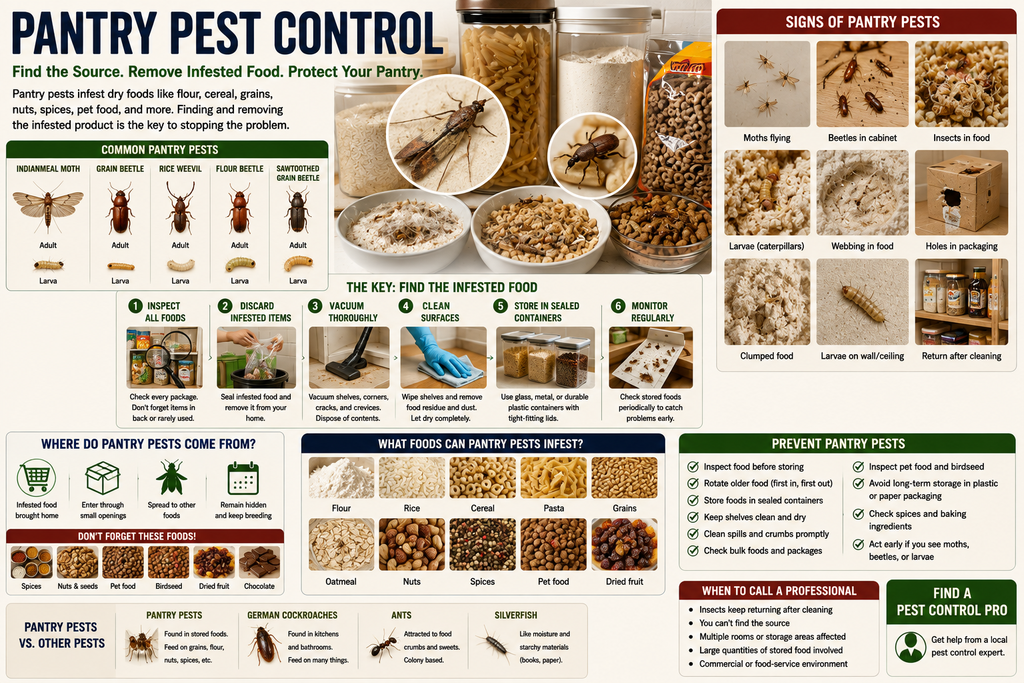
What Are Pantry Pests?
Pantry pests are insects that infest stored foods and other dry products inside homes.
Several different insects can cause pantry infestations, including:
- Indianmeal moths
- Flour beetles
- Grain beetles
- Weevils
- Drugstore beetles
- Cigarette beetles
The exact insect may differ, but successful control usually depends on the same critical step:
Find and eliminate the infested product.
Simply killing the adult insects you see will not necessarily stop an infestation developing inside food packages.
Common Signs of Pantry Pests
Look for:
- Small beetles crawling inside cabinets
- Moths flying around kitchens or pantries
- Insects inside food packages
- Larvae or caterpillar-like insects
- Webbing inside or around stored food
- Small holes in packaging
- Clumped or contaminated dry food
- Insects appearing repeatedly after cabinets are cleaned
- Larvae crawling on walls or ceilings near the pantry
Don’t assume the package closest to the insects is necessarily the source.
Inspect all susceptible foods nearby.
What Foods Can Pantry Pests Infest?
Pantry pests can occur in a surprisingly wide range of products.
Inspect:
- Flour
- Rice
- Cereal
- Pasta
- Grains
- Oatmeal
- Nuts
- Seeds
- Dried fruit
- Spices
- Chocolate
- Baking mixes
- Crackers
- Dried pet food
- Birdseed
- Dry animal treats
Some pantry pests can infest unopened packages or enter through small openings and weak packaging.
DIY Pantry Pest Control
1. Inspect Every Susceptible Food Product
This is the most important step.
Remove susceptible products from cabinets and inspect them individually.
Look inside packages for insects, larvae, webbing, unusual clumping, holes, or other signs of infestation.
Don’t forget products that are rarely used and may have been sitting in the back of the pantry for months.
2. Discard Infested Products
Clearly infested food should be removed from the home appropriately.
Seal infested products before disposal when practical so insects cannot spread while the food is being removed.
Don’t leave discarded infested food sitting in an indoor garbage container.
3. Vacuum the Pantry Thoroughly
Once products have been removed, vacuum:
- Shelves
- Shelf corners
- Cracks
- Crevices
- Cabinet joints
- Peg holes
- Areas beneath shelving
Food particles trapped in small spaces can provide additional resources for pantry pests.
Dispose of vacuum contents appropriately after cleaning.
4. Clean Shelves and Storage Areas
Clean food residue from pantry shelves and surrounding areas.
Pay special attention to spilled flour, grains, seeds, pet food, and other dry products.
Sanitation helps remove food material but remember:
Cleaning alone will not solve the infestation if the original infested package remains.
5. Store Food in Pest-Resistant Containers
After the infestation is controlled, store vulnerable dry foods in sturdy containers with tight-fitting lids.
Glass, metal, or durable plastic containers can provide much better protection than thin bags or cardboard packaging.
This also makes future infestations easier to detect and contain.
6. Don’t Forget Pet Food and Birdseed
One of the easiest sources to overlook is animal food.
Inspect:
- Dog food
- Cat food
- Birdseed
- Small-animal food
- Dry pet treats
Large bags that remain open for long periods can become an important source of pantry pests.
7. Avoid Unnecessary Pesticides Around Food
Finding and removing the infested product is usually far more important than spraying pantry shelves.
Never apply pesticides to food or food-contact surfaces unless the product label specifically permits the intended use.
Following pesticide label directions is essential.
Why Are Moths Crawling on My Walls or Ceiling?
If you find small moths flying around the kitchen—or larvae crawling up walls and across ceilings—Indianmeal moths may be involved.
Their larvae can leave an infested food source and travel some distance before finding a location to pupate.
This means finding a larva on the ceiling does not mean the ceiling is the source.
Go back to the pantry and inspect stored foods carefully.
Why Do Pantry Pests Keep Coming Back?
Recurring pantry pests usually indicate that an infested product was overlooked.
Commonly missed sources include:
- Old spices
- Open baking ingredients
- Nuts and seeds
- Forgotten cereal
- Decorative dried foods
- Pet treats
- Birdseed
- Bulk foods
- Products stored in another cabinet
One overlooked package can allow the infestation to continue.
Are Pantry Pests Dangerous?
Pantry pests are primarily a food contamination and nuisance problem.
Food containing insects, larvae, webbing, or other obvious infestation should not be consumed.
The main goal is to identify contaminated products, remove them, clean the storage area, and prevent susceptible foods from becoming reinfested.
When to Call a Professional for Pantry Pest Control
Many pantry-pest infestations can be handled by locating and removing the source.
Consider professional pest control when:
- Insects continue appearing after all food has been inspected.
- You cannot identify the pest.
- The infestation repeatedly returns.
- Multiple rooms or storage areas are affected.
- The source appears to be somewhere other than ordinary pantry food.
- Large quantities of stored food are involved.
- The infestation involves a commercial food environment.
A professional can identify the insect and help determine whether an overlooked or unusual source is maintaining the infestation.
How to Help Prevent Pantry Pests
- Inspect dry foods before long-term storage.
- Rotate older food products and use them first.
- Avoid allowing forgotten packages to accumulate.
- Clean food spills promptly.
- Keep pantry shelves clean.
- Store vulnerable foods in tightly sealed containers.
- Inspect bulk foods carefully.
- Check pet food and birdseed.
- Avoid mixing new food into containers holding older food without checking them.
- Periodically inspect rarely used spices and baking ingredients.
- Investigate pantry moths or beetles promptly before they spread.
Explore more DIY Pest Control Solutions for practical ways to prevent and manage common pest problems around your home.
Pantry Pest Control FAQ
Where do pantry pests come from?
Some infestations begin in food products before they enter the home. Once inside, insects can spread to other susceptible foods if they have access to them.
Do I need to throw away everything in my pantry?
Not automatically. Inspect susceptible products carefully and discard those showing infestation. Unaffected foods stored in secure containers may not need to be discarded.
Why are moth larvae crawling on my ceiling?
Indianmeal moth larvae may leave their food source and crawl away to find a location to pupate. The infested product can therefore be some distance from where the larva is discovered.
Can pantry pests get into unopened packages?
Some stored-food insects can enter weak packaging or exploit tiny openings. This is one reason sturdy, tightly sealed containers are useful for long-term storage.
Should I spray insecticide inside my pantry?
Finding and removing infested food is generally the key step. Pesticides should never be applied directly to food, and any use around food-storage areas must follow the product label precisely.
Why do pantry pests keep returning?
An overlooked food product is often responsible. Check rarely used ingredients, pet food, birdseed, bulk foods, nuts, spices, and products stored outside the main pantry.
Learn more about pantry pest identification and management from the University of Minnesota Extension.