
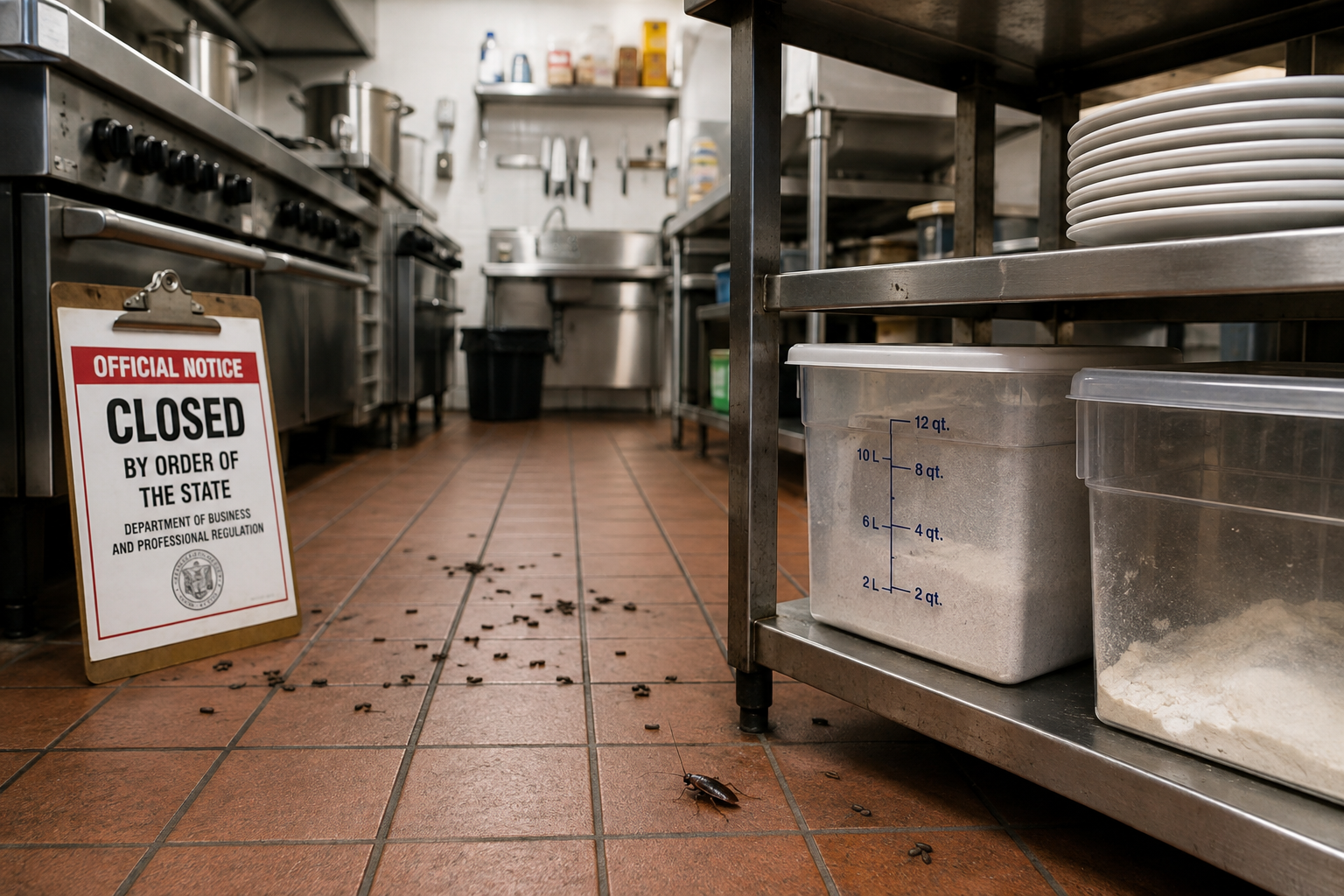
Several South Florida restaurant closures followed inspections that found rodent droppings, live cockroaches and other food-safety problems in late August.
The closures involved restaurants in Miami-Dade, Broward County and Key West, according to inspection findings reported by Local 10 and records maintained by the Florida Department of Business and Professional Regulation.
Some of the findings were extensive.
At Nueva San Salvador Restaurant #4, inspectors reported more than 50 rodent droppings on storage shelves, more than 25 beneath bags of flour and more than 10 on a cooking-oil container.
At Ichimi in Midtown Miami, inspectors documented rodent droppings in several parts of the restaurant, including storage areas and near kitchen equipment. Droppings were still noted during a follow-up inspection the next day.
Live Roaches Found in a Key West Restaurant
Rodents weren’t the only problem inspectors encountered.
Ocean Grill in Key West was ordered closed on August 25 after inspectors reported live cockroaches in several areas of the restaurant.
According to the inspection findings, roaches were observed around a handwashing sink, beneath a dishwasher, on or near stored glassware and cookware, and around food-preparation equipment.
A follow-up inspection on August 26 still found live roaches in the dish area and around kitchen equipment.
The restaurant had also been temporarily closed in July following rodent and roach issues, according to the inspection history cited in the report.
Another Key West establishment, Hurricane Hole, was ordered closed after inspectors reported more than 20 rodent droppings on the floor near a cooler and liquor-storage area.
Other restaurants included in the latest inspections were cited for combinations of pest activity, flies, sanitation problems and improper food temperatures.
A Closure Doesn’t Necessarily Mean a Restaurant Stayed Closed
Florida’s restaurant inspection system includes emergency closures when inspectors determine that conditions present an elevated risk to public health or safety.
That distinction matters.
The Florida Department of Business and Professional Regulation says an emergency closure is not itself a disciplinary action. Inspection reports also represent conditions found at a particular point in time rather than a permanent judgment about an establishment.
The restaurants covered in the latest South Florida report were allowed to reopen after required corrective action and reinspection.
For consumers, that means an alarming inspection report should be taken seriously, but it should also be read in context. Conditions can change after pest treatment, cleaning, repairs and follow-up inspections.
Why Rodent and Cockroach Findings Matter
Finding a single insect near a restaurant does not automatically prove there is a widespread infestation.
Repeated indoor pest activity is different.
Rodent droppings in storage or food-preparation areas can indicate that rats or mice have access to parts of a building where food or supplies are kept. Cockroaches found around sinks, equipment and other kitchen areas can point to shelter, moisture or food sources that are allowing them to remain indoors.
Restaurants offer many of the same conditions that can attract pests inside homes: food, water, warmth and places to hide.
The difference is scale. Commercial kitchens receive frequent deliveries, generate large amounts of food waste and contain numerous openings around plumbing, drains, storage rooms and equipment. Once pests establish themselves, eliminating the underlying access points and food sources becomes as important as killing the pests already inside.
The Same Warning Signs Can Show Up at Home
Homeowners may never encounter pest activity on the scale described in a failed restaurant inspection, but many of the warning signs are the same.
Rodent droppings inside cabinets, pantries, garages or beneath appliances should not simply be swept away and forgotten. They can be evidence that mice or rats are moving through the structure.
Other clues can include gnaw marks, scratching sounds inside walls or ceilings, damaged food packaging and greasy rub marks along frequently traveled areas.
Cockroaches often leave different evidence. Depending on the species, homeowners may notice live roaches after dark, small droppings, egg cases or recurring activity around kitchens and bathrooms.
Seeing pests repeatedly during daylight hours can also warrant a closer look, particularly when several are appearing in the same area.
What to Do if You Find Rodents or Roaches
Removing the visible pests is only part of the job.
Food should be stored in sealed containers, spills and crumbs cleaned promptly, garbage managed carefully and leaks or standing water corrected. Gaps around doors, pipes, utility penetrations and other entry points should also be inspected.
For rodents, finding and sealing access points is especially important. A trap may remove an individual mouse or rat without stopping others from entering.
Cockroach problems can be similarly persistent when hiding places, moisture or food sources remain available.
If activity continues despite basic sanitation and exclusion work, or if pests are being found throughout multiple parts of a home, a professional inspection may help determine where they are coming from and how extensive the problem is.
PestMarket’s guides to rat control, mouse control and cockroach control cover common signs, prevention steps and treatment options in more detail.