
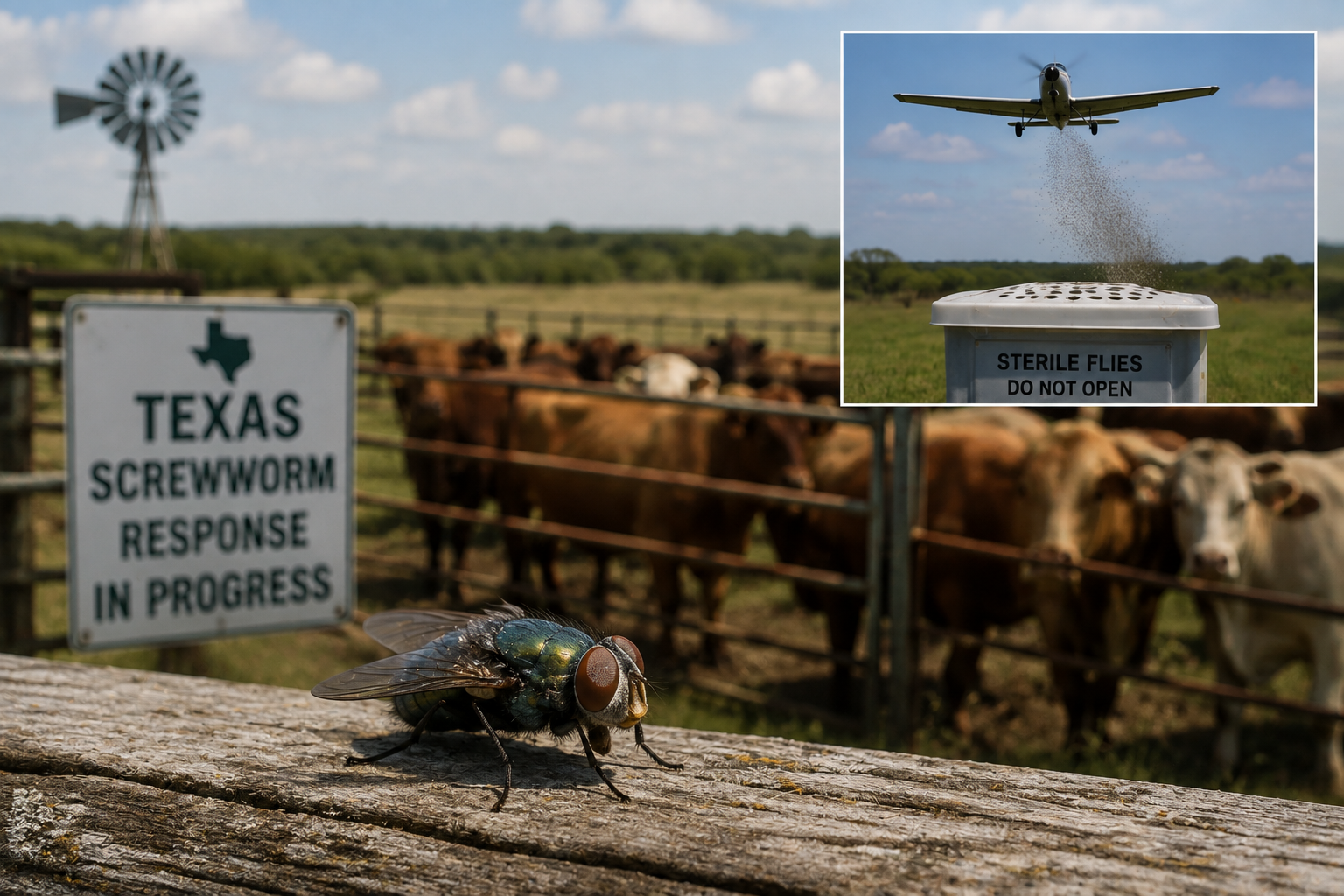
The Texas screwworm response reached a milestone this week as federal officials released two New World screwworm infested zones for the first time since the parasite was detected in the state in June.
The U.S. Department of Agriculture’s Animal and Plant Health Inspection Service announced the decision on August 31 after receiving concurrence from Texas State Veterinarian Dr. Bud Dinges and the Texas Animal Health Commission.
It is a sign of progress, but not an all-clear. New World screwworm cases have been confirmed across parts of Texas, and surveillance, animal movement restrictions and control efforts remain active in affected areas.
Texas Screwworm Response Reaches Its First Zone Release
New World screwworm was first confirmed in Texas on June 3, when the parasite was detected in a calf in Zavala County. The calf recovered and that individual case is now considered inactive.
Since then, cases have been identified elsewhere in the state.
The Texas Animal Health Commission currently reports cases associated with 16 Texas counties and 37 premises. Movement restrictions remain in place in portions of affected counties as state and federal officials continue surveillance and response work.
The release of two infested zones therefore represents something different from declaring Texas free of screwworm.
An infested zone can be released after officials determine that requirements have been met, including surveillance and response criteria. USDA called the latest action a significant milestone and said these are the first Texas zones released since the state’s initial detection.
What Exactly Is New World Screwworm?
Despite its name, screwworm isn’t a worm.
It is the larval stage of the New World screwworm fly, Cochliomyia hominivorax. Unlike ordinary fly larvae that may feed on dead or decomposing material, screwworm larvae infest wounds and feed on living tissue in warm-blooded animals.
That makes the parasite a serious concern for livestock and wildlife.
Pets can also be affected. Open wounds can provide an opportunity for female flies to lay eggs, and the resulting larvae can cause significant tissue damage if an infestation isn’t treated.
Humans can be affected as well, although USDA currently characterizes the risk to animals and people in the United States as very low. The agency also stresses that the current situation is not a food-safety issue and that the U.S. food supply remains safe.
Texas Is Fighting the Fly With More Flies
One of the most interesting parts of the response is how screwworm is controlled.
Officials are using the sterile insect technique, a method that helped eradicate New World screwworm from the United States decades ago.
Large numbers of male screwworm flies are sterilized and released into affected areas. When sterile males mate with wild females, the resulting eggs do not hatch. Repeated releases can gradually drive down the reproducing fly population.
Texas officials say both ground and aerial releases of sterile flies are underway in affected areas.
This isn’t a new experiment. The United States previously used the same basic strategy during its historic screwworm eradication program. New World screwworm was eradicated from the United States in 1966, according to the Texas Animal Health Commission.
Its return to Texas this summer followed a northward expansion of the parasite through Central America and Mexico.
Pet Owners Should Pay Attention to Wounds
For most homeowners, screwworm is very different from familiar household pests such as ants, cockroaches or mice.
The most practical concern is animals.
Pet owners should pay attention to wounds that are not healing normally, particularly on animals that spend substantial time outdoors. USDA advises animal owners to monitor for signs that can include irritated wounds, unusual behavior and visible larvae.
A suspected screwworm infestation is not something to treat as a routine household fly problem. Animal owners should contact a veterinarian and follow state or federal reporting guidance when an infestation is suspected.
Concern has already reached Texas pet owners outside the areas where cases have been detected. Austin veterinary organizations told Axios that they have been receiving more questions about screwworm, although no cases had been reported in the Austin area as of September 1.
That distinction matters. Increased public concern does not mean the parasite is suddenly widespread across every Texas community.
The Fight in Texas Isn’t Over
Releasing the first two infested zones is an encouraging development because it shows that some areas have progressed far enough to have restrictions lifted.
But the broader response continues.
Federal and state teams are still conducting animal and fly surveillance, investigating detections and releasing sterile flies. Movement restrictions also remain in portions of Texas counties within established infested zones.
For now, the most useful approach is awareness rather than alarm: animal owners should monitor wounds, follow veterinary guidance and pay attention to official updates if they live in or move animals through affected areas.
The first zone releases are a milestone. Whether they mark the beginning of a sustained retreat for New World screwworm in Texas will depend on what surveillance finds next.