
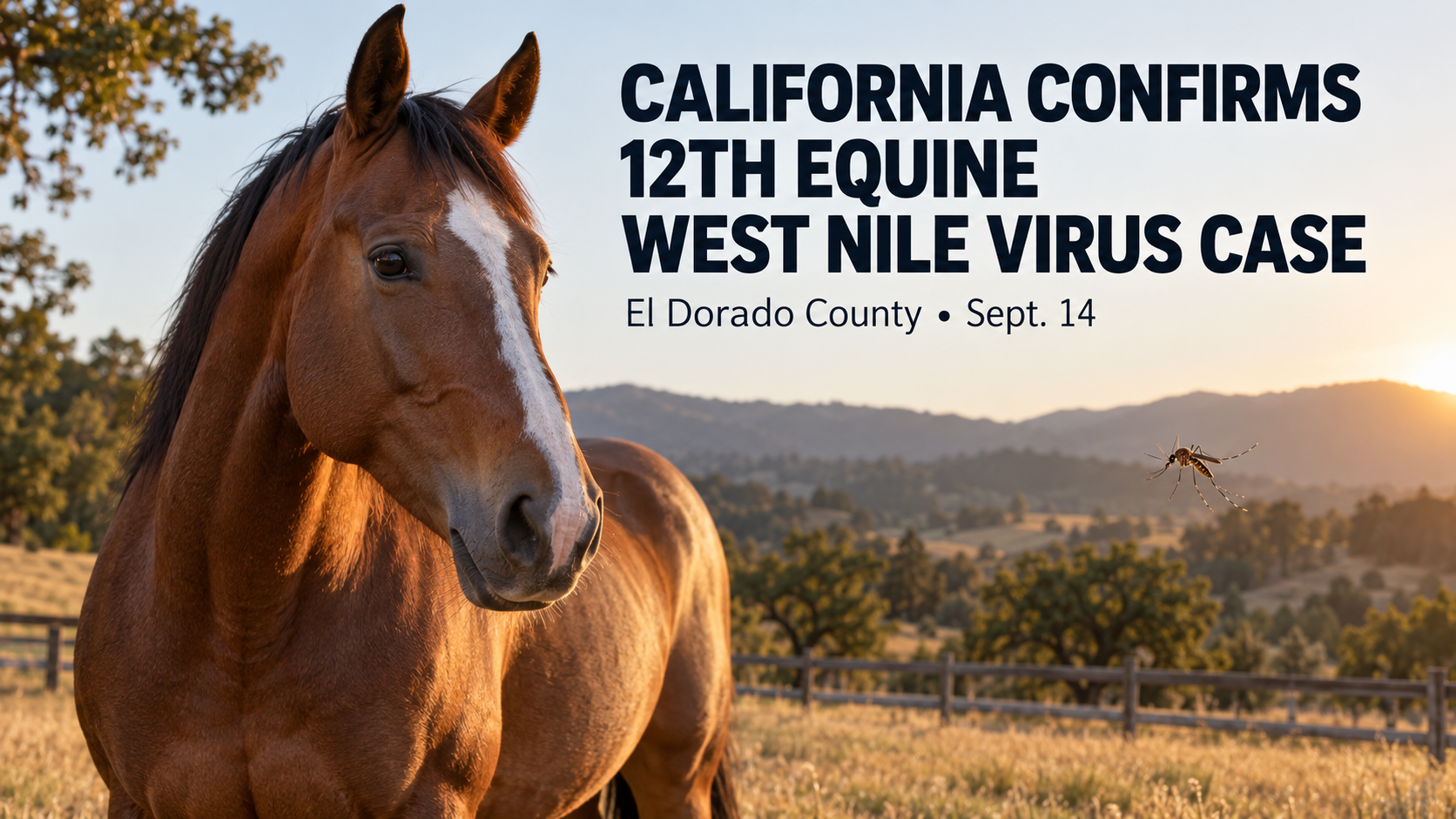
California has confirmed another case of West Nile virus in a horse, bringing the state’s 2026 total to 12 as mosquito activity continues into the fall.
California Confirms 12th Equine West Nile Virus Case after an unvaccinated 9-year-old Warmblood mare in El Dorado County developed neurological signs and tested positive on September 14, according to the California Department of Food and Agriculture’s latest equine WNV update. The mare is alive and recovering.
The Latest Case Comes Just Days After Another
The El Dorado County diagnosis follows California’s 11th equine case, confirmed September 10 in neighboring Amador County. That case involved an unvaccinated 2-year-old Friesian stallion that also developed neurological symptoms. Unlike the latest case, the stallion’s condition became severe enough that it was euthanized.
According to CDFA’s 2026 case record, the state’s 12 confirmed equine cases have now occurred in 12 different counties: Amador, Contra Costa, El Dorado, Fresno, Kings, Merced, Placer, Sacramento, San Joaquin, San Luis Obispo, Stanislaus and Sutter. Nine of the horses are alive and recovering, while three died or were euthanized.
Most of the Horses Were Not Fully Vaccinated
Vaccination status stands out in this year’s numbers. Of California’s 12 confirmed equine cases, five horses were unvaccinated, two were undervaccinated, two were vaccinated and three had an unknown vaccination history, according to CDFA.
West Nile vaccination does not guarantee that a horse will never become infected, but vaccination remains one of the primary tools used to reduce the risk of serious disease. CDFA’s West Nile vaccination guidance notes that California’s highest-risk period generally coincides with peak mosquito activity from July through October.
West Nile Virus Is Still Active Across California
The horse case is only one part of a much larger West Nile surveillance picture. California’s official West Nile virus surveillance system reported 126 human cases, 574 positive dead birds and 3,424 positive mosquito samples statewide in its September 11 weekly update. The website had not yet incorporated the newly confirmed El Dorado horse when that weekly snapshot was posted.
Southern California has also been seeing substantial activity. In that same update, Los Angeles County accounted for 43 human cases and Orange County for seven. The state reported 26 new human cases in Los Angeles County and one in Orange County during the previous week. Positive mosquito samples were also continuing to appear in both counties.
How Horses Become Infected With West Nile Virus
West Nile virus is maintained primarily in a bird-mosquito transmission cycle. Mosquitoes become infected after feeding on infected birds and can then transmit the virus when they bite horses, people and other animals. CDFA’s equine West Nile information notes that the virus is now considered endemic in California.
A horse testing positive does not mean people can catch West Nile virus from that horse. Horses and humans are generally considered incidental hosts in the transmission cycle. For PestMarket readers, the important connection is the mosquito: continued equine, bird, mosquito and human detections are different indicators that West Nile virus is circulating in California.
September Is Still Mosquito Season
The calendar may be moving toward fall, but mosquito season isn’t necessarily over. CDFA specifically identifies July, August, September and October as the months when horses are generally at greatest risk in California because mosquito activity is typically highest during that period.
Reducing standing water around homes and properties remains one of the simplest ways to reduce mosquito breeding opportunities. Water collecting in buckets, containers, plant saucers, toys and other small objects can provide breeding habitat. For more information on prevention around the home, see PestMarket’s Mosquito Control Guide.
What Horse Owners Should Watch For
West Nile infection in horses can produce neurological symptoms. Because symptoms can vary and overlap with other serious neurological diseases, owners who notice abnormal behavior, weakness, coordination problems or other neurological signs should contact a veterinarian rather than attempt to diagnose the cause themselves.
CDFA also encourages horse owners to work with their veterinarians to maintain appropriate West Nile vaccination. With California’s latest case arriving in mid-September, the state’s 2026 numbers are another reminder that mosquito-borne disease risk doesn’t disappear simply because summer is nearing its end.