
Ant control starts with correctly identifying the problem. Explore our Pest Control Guides to compare identification, prevention, and treatment options for other common household pests.
How to Identify an Ant Problem
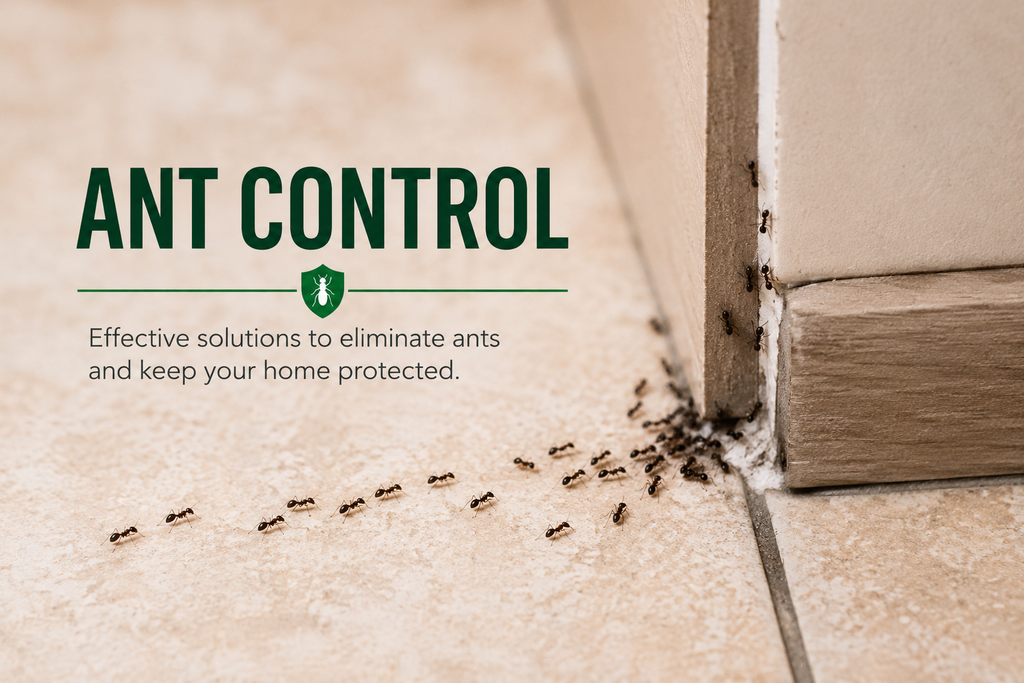
Seeing a few ants does not always mean you have a large infestation. However, repeated ant trails, ants appearing around food or water, and activity near cracks, walls, or entry points can indicate an established colony nearby.
Common Signs of an Ant Infestation
- Ant trails along walls, countertops, or floors
- Ants repeatedly appearing near food or water
- Ant activity around cracks, windows, doors, or other entry points
- Small piles of soil or debris near nesting areas
Why Are Ants Coming Into Your Home?
Ants typically enter homes in search of food, water, or shelter. Crumbs, spills, pet food, moisture, and small openings around doors, windows, pipes, and foundations can all make a home more attractive or accessible to ants.
DIY Ant Control
For minor ant problems, DIY control usually works best when you combine sanitation, entry-point prevention, and treatments that target the colony rather than only the ants you can see.
1. Remove Food and Water Sources
Clean up crumbs and spills, store food in sealed containers, avoid leaving pet food out for long periods, and address moisture or leaks that may attract ants.
2. Seal Entry Points
Seal cracks and gaps around doors, windows, pipes, baseboards, and other areas where ants may be entering your home. Explore more DIY Pest Control Solutions for practical prevention and home pest-management strategies.
3. Use Ant Baits Strategically
Ant baits can allow worker ants to carry bait back toward the colony. Place baits near active ant trails or suspected entry points and always follow the product label directions.
4. Monitor Ant Activity
Continue checking areas where ants were active. If activity persists, spreads, or repeatedly returns despite treatment and prevention efforts, the colony may require a different approach or professional treatment.
When to Call a Professional for Ant Control
Consider professional pest control if ant activity is widespread, repeatedly returns after DIY treatment, appears to originate from inside walls or other difficult-to-reach areas, or you are unable to identify or locate the source of the infestation.
How to Prevent Ants
- Keep countertops, floors, and food-storage areas clean.
- Store food, including pet food, in sealed containers.
- Repair leaking pipes and reduce excess moisture around the home.
- Seal cracks and gaps around doors, windows, pipes, and the foundation.
- Trim vegetation that touches the house and remove debris near the foundation.
- Check common entry points periodically for renewed ant activity.
Different ant species may require different treatment approaches, so identifying the type of ant can make control efforts more effective. If you are unsure which species you are dealing with, monitoring where the ants appear and how they move can help narrow down the source of the problem.
Ant Control FAQ
How do I get rid of ants in my house?
Start by removing accessible food and water sources, cleaning ant trails, identifying entry points, and using an appropriate ant-control method. Ant baits may help target the colony rather than only the ants you can see.
Why do ants keep coming back?
Ants may return when a colony remains active nearby or when food, moisture, or accessible entry points are still present. Continued activity after treatment can indicate that the source has not been fully addressed.
Are ant baits better than ant sprays?
They work differently. Baits are designed to be carried by worker ants and may help reach the colony, while contact sprays primarily affect ants that encounter the treatment. The appropriate method depends on the ant species, location, and extent of the problem.
When should I hire a professional for ants?
Consider professional help when ant activity is extensive, repeatedly returns after DIY treatment, originates from inaccessible areas, or you cannot determine where the ants are coming from.