
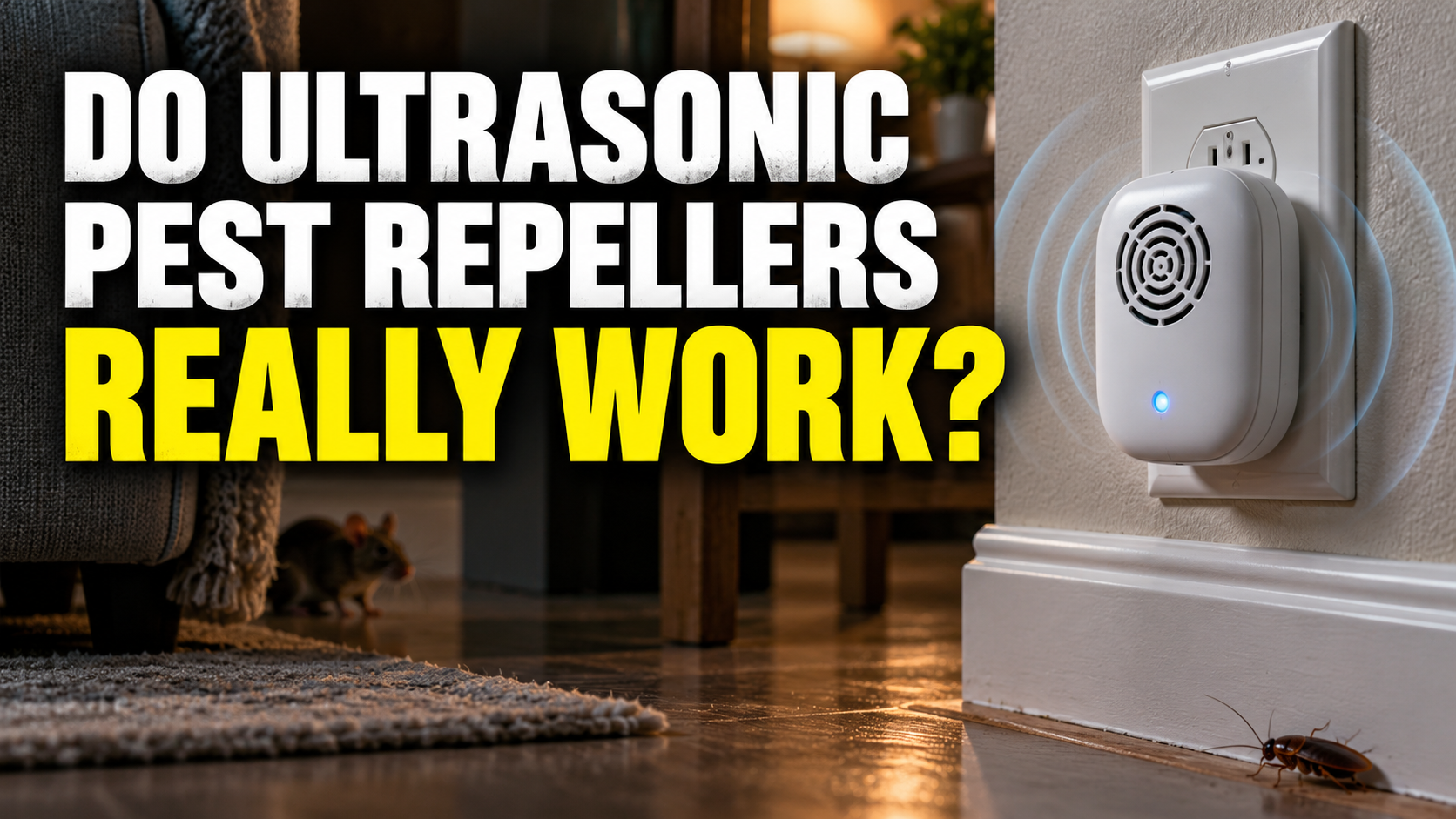
Do Ultrasonic Pest Repellers Really Work? If you have searched online for an easy way to get rid of mice, roaches, ants or mosquitoes, you have probably seen the small plug-in devices promising to drive pests away with sound people cannot hear. They are cheap, require no traps or sprays and seem almost too convenient not to try. Current TikTok Shop listings include products marketed for everything from mice and cockroaches to ants, fleas and mosquitoes. The problem is that the scientific evidence behind those broad promises is far less impressive than the marketing.
What Are Ultrasonic Pest Repellers Supposed to Do?
Ultrasonic pest repellers produce high-frequency sound above the normal range of human hearing. The basic idea is that the sound will annoy, disorient or frighten pests enough that they leave the room or building. Some products also claim to vary frequencies so pests cannot become accustomed to them. It is an appealing concept because there is no poison to handle, no dead rodent to remove and no insecticide residue to worry about. But a plausible-sounding mechanism is not the same thing as proven pest control.
What Does the Research Actually Say?
The University of Arizona Cooperative Extension reviewed sonic pest-repellent technology and reached a straightforward conclusion: commercially available sonic devices for residential pest problems have not been shown to be effective in scientific studies, and the university does not recommend them for common pest problems. Researchers have explored specialized uses of sound against particular pests, but that is very different from a plug-in product reliably clearing mice, roaches and insects from a home.
The evidence for insects is especially weak. The University of Georgia Cooperative Extension notes that peer-reviewed tests of ultrasonic pest-management devices have failed to demonstrate effective control of insects including cockroaches, fleas, ticks, ants and mosquitoes. That does not mean every pest will completely ignore every sound immediately. It means the kind of lasting household control consumers expect from these devices has not been demonstrated under rigorous testing.
Mice May React at First, but That Is Not the Same as Control
Rodents can notice unfamiliar sounds, and that may help explain why some people are convinced their device worked for a few days. The problem is what happens next. Colorado State University Extension explains that ultrasound is highly directional, loses intensity with distance and does not travel well around obstacles. Furniture, cabinets and walls can create areas where little ultrasonic energy reaches at all. Their guidance also notes that rodents may initially avoid the immediate area but can become accustomed to the sound and resume normal activity.
That matters because a mouse with access to food, water and shelter has a powerful reason to stay. A device plugged into the kitchen wall does not seal the hole behind the dishwasher, remove food under the stove or block an opening around a pipe.
The FTC Has Challenged Big Ultrasonic Claims Before
Questions about these products are not new. In 2001, the Federal Trade Commission warned more than 60 manufacturers and retailers that claims about ultrasonic pest-control devices needed competent scientific support. The agency pointed to earlier cases involving claims that the devices could eliminate rodents, repel insects or serve as an effective replacement for conventional pest-control methods. That history does not automatically mean every ultrasonic device sold today is illegal or identical to products from decades ago. It does show that broad claims in this category have faced scrutiny for a long time.
Why Do Some People Swear They Work?
This is where things get interesting. A homeowner plugs in a device, stops seeing mice for several days and assumes the sound solved the problem. But pest activity naturally changes. A rodent may move to another part of the building, food availability may change or an insect population may fluctuate. People also often start cleaning, sealing food or placing traps at the same time they install the device. If pest activity drops, it can be difficult to know which change actually caused it.
There is also a difference between briefly disturbing a pest and eliminating an infestation. A mouse moving from one side of a kitchen to another is not pest control. Neither is a roach avoiding one exposed area while remaining behind cabinets.
What Should You Do Instead?
Start with the pest itself. Identify what you are dealing with, figure out where it is entering or hiding and remove the conditions helping it survive. For rodents, that usually means exclusion, sanitation and properly placed traps. For cockroaches and ants, inspection, food and moisture control, sealing gaps and correctly selected baits can matter far more than adding another electronic device to an outlet. PestMarket’s DIY Pest Control section covers practical approaches for common household pest problems.
If you already own an ultrasonic repeller, there is no reason to panic or assume it is doing harm simply because the evidence for pest control is weak. The bigger mistake would be relying on it while an infestation continues behind the walls.
The verdict is fairly clear: ultrasonic pest repellers offer an attractive idea, but the research does not support treating them as a dependable solution for common household pest infestations.