
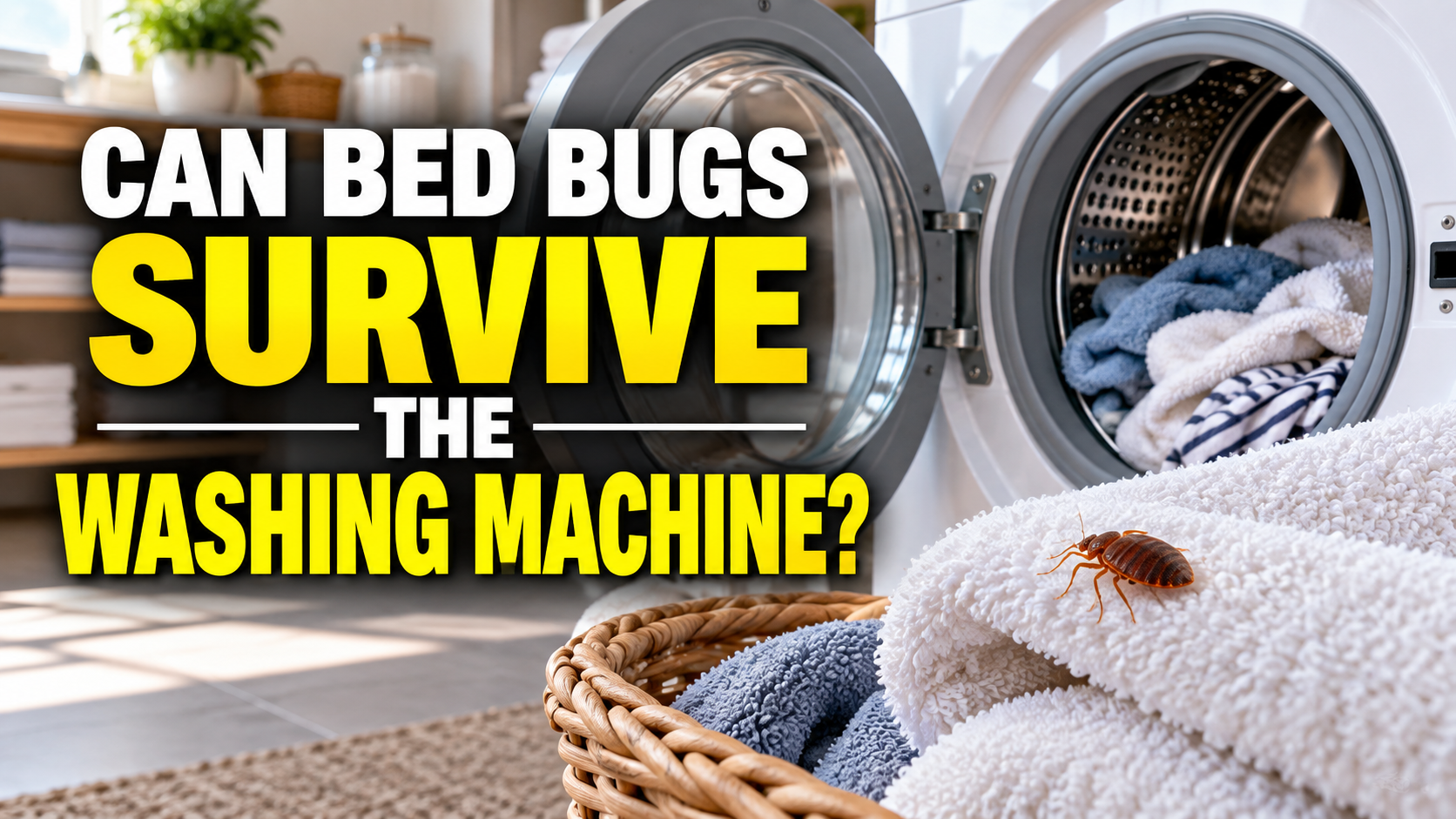
Can Bed Bugs Survive the Washing Machine? Yes, they can. Tossing clothes, sheets or blankets into a normal wash cycle may remove or kill some bed bugs, but washing alone is not something you should rely on to eliminate them. The U.S. Environmental Protection Agency specifically warns travelers that simply washing clothing generally will not kill bed bugs and points instead to high-temperature drying as the more dependable step. That distinction matters because someone can wash everything after a hotel stay, feel confident the problem is gone and still carry surviving bugs or eggs back into the home.
Why Washing Alone May Not Be Enough
A washing machine exposes bed bugs to water, detergent, agitation and sometimes heat, but those conditions vary dramatically from one load to another. Cold and warm wash cycles may never reach temperatures high enough for long enough to reliably kill every life stage. Heavy blankets and packed loads can also create cooler areas where heat does not penetrate evenly. Some bugs may drown or be physically removed during washing, but pest control is about reliably eliminating the infestation, not killing only part of it. If even a few bugs or viable eggs survive, the problem can begin again.
The Dryer Is the More Important Step
Heat is one of the strongest nonchemical tools available against bed bugs. EPA guidance says a clothes dryer on high heat can be used as part of a bed bug treatment strategy. Penn State’s Integrated Pest Management guidance goes further, stating that 30 minutes on high heat in a loosely filled clothes dryer can kill bed bugs and their eggs. The important detail is not simply putting something in the dryer. The items need to tolerate high heat, the dryer should not be overloaded and the contents must actually reach lethal temperatures throughout the load.
Bed Bug Eggs Matter Too
One reason bed bugs are difficult to eliminate is that getting rid of the adults you see does not necessarily mean the infestation is finished. Eggs can be tucked into seams, folds, clothing piles, luggage or bedding. EPA notes that bed bug control often requires repeating treatment steps because bugs or eggs may be missed during the first cleanup. That is why laundering should be treated as one part of a larger control plan rather than a one-time reset button. Clothing that comes out of a hot dryer can also be placed into clean sealed bags or containers so it does not become infested again while the room itself is still being treated.
What Should You Do After Traveling?
Travel is one of the most common situations where laundry becomes part of bed bug prevention. Hotels, vacation rentals and other temporary lodging can provide opportunities for bed bugs to hitchhike in luggage or clothing. EPA advises travelers to inspect hotel mattresses and headboards, keep luggage off beds and floors, and unpack directly into a washing machine after returning home. The agency specifically emphasizes that time in a high-temperature dryer kills bed bugs, while washing alone generally does not. Suitcases should also be inspected carefully and stored away from sleeping areas rather than underneath the bed.
You Do Not Necessarily Need to Wash Everything First
This surprises many people. If an item is already clean and can safely tolerate high dryer heat, the dryer may be the most important treatment step. The goal is exposure to lethal heat, not detergent. Washing may still make sense for dirty clothing and bedding, but adding a normal wash cycle does not automatically make the treatment more effective against bed bugs. Always follow fabric-care instructions because high temperatures can shrink or damage certain materials.
What About Items That Cannot Go in the Dryer?
Not everything in a bedroom can be tossed into a clothes dryer. Mattresses, luggage, furniture and delicate items need different approaches. EPA recommends several nonchemical tools depending on the item, including steam for cracks and fabrics, carefully controlled freezing under appropriate conditions and professional heat treatment for larger infestations. Homemade attempts to heat an entire room with a thermostat, fireplace or portable heater are unsafe and may not work. Bed bugs often hide deep in cracks and furniture where temperatures can remain lower than expected.
Laundry Alone Will Not Eliminate an Infestation
Even perfectly treated clothing will not solve bed bugs hiding in a mattress frame, baseboard, couch, neighboring apartment or wall void. EPA describes bed bug control as a multi-step process involving identification, containment, treatment, monitoring and follow-up. PestMarket’s Pest Control Guide can help homeowners understand when a household pest problem may require more than a single DIY treatment.
The practical answer to Can Bed Bugs Survive the Washing Machine? is yes. A normal wash should never be treated as proof that an item is bed-bug free. When the fabric allows it, the high-temperature dryer is the part of the laundry process that matters most.