
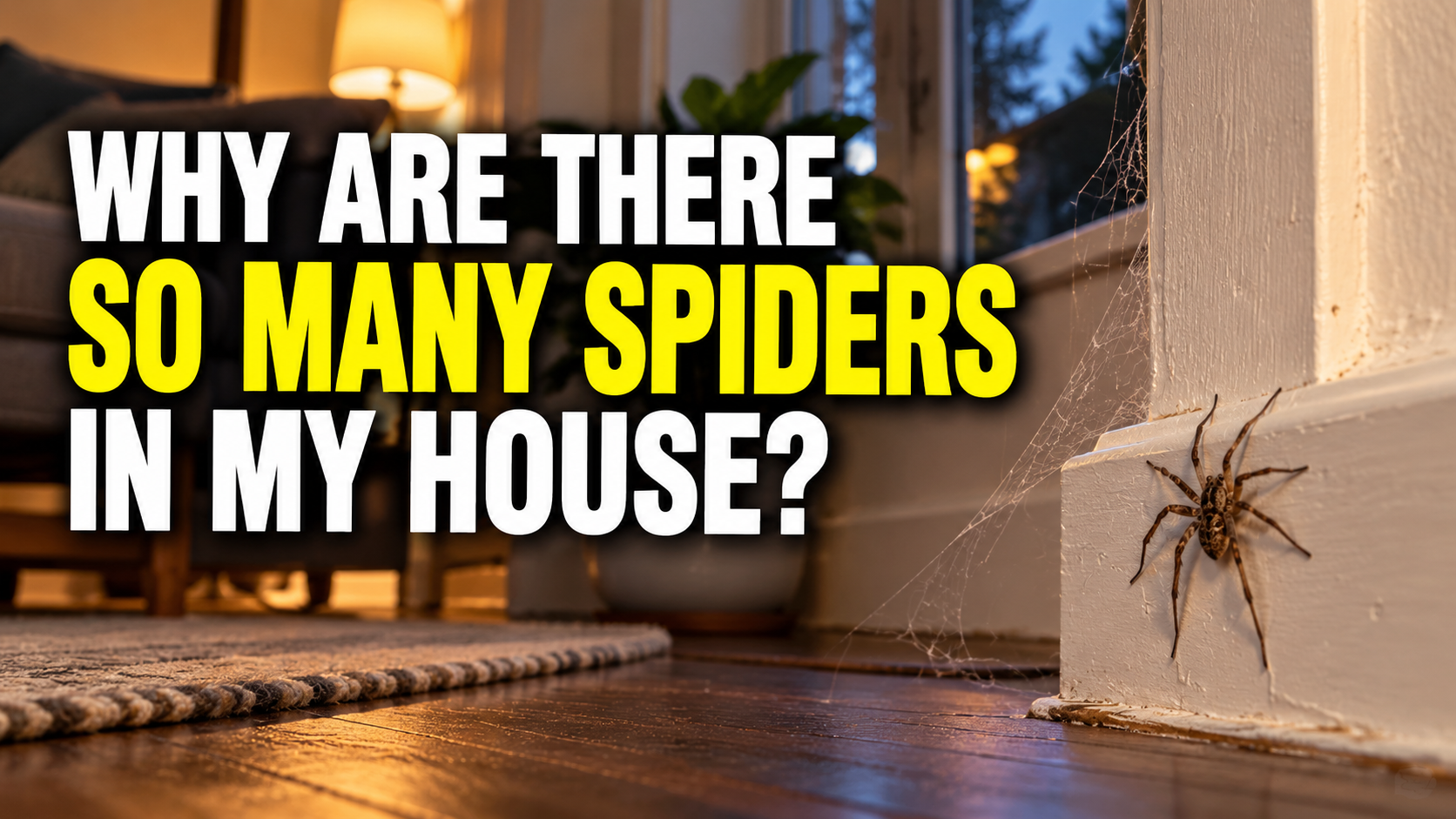
Why Are There Suddenly So Many Spiders in My House? If it feels like spiders suddenly appeared everywhere as summer ended, you are not imagining the timing. Spider encounters often become more noticeable in late summer and fall, but the reason is more complicated than the familiar idea that they are simply running indoors because it is cold. Some spiders have been living quietly inside for months. Others wander indoors from outside, and some become much more visible during mating season when males leave their usual hiding places and start moving around.
Fall Can Make Spiders Much Easier to Notice
The University of Minnesota Extension notes that outdoor hunting spiders may accidentally enter homes, particularly in the fall. These spiders normally live outside and often do not reproduce successfully indoors. At the same time, true house spiders can live and reproduce inside buildings throughout the year.
That distinction matters. Seeing several spiders during September does not automatically mean dozens of outdoor spiders suddenly invaded the house. Some may have already been there, hidden in basements, crawl spaces, closets and other quiet areas.
Mating Season Can Bring Spiders Out of Hiding
One reason spider activity can suddenly seem to explode is mating behavior. As many species mature later in the season, males begin roaming in search of females.
Utah State University Extension explains that fall spider encounters often increase as spiders approach the end of their seasonal life cycles and search for mates and places to produce egg sacs. A spider that spent weeks hidden behind furniture or in a basement may suddenly cross an open floor, making it seem as if it just entered the house.
This is also why people sometimes notice unusually large spiders during fall. Mature adults are easier to see than the smaller immature spiders that were present earlier in the year.
More Spiders Can Mean More Insects
Spiders go where food is available. If your home or exterior walls support plenty of flies, moths, mosquitoes, ants or other small insects, spiders have a reason to remain nearby.
Outdoor lighting can contribute to this pattern. Porch and security lights attract flying insects, which can turn doorways, windows and exterior walls into good feeding locations for web-building spiders. This is one reason spider webs are so common around porch lights.
Reducing insect activity around a home can sometimes reduce spider activity as a secondary effect. That does not mean every spider disappears, but removing an easy food supply can make a particular area less attractive.
Some House Spiders Were Already Inside
Not every spider in your home came through the door last night. The Penn State Extension describes the common house spider as a species that frequently lives inside homes, especially in damp or protected areas such as basements and crawl spaces. It may abandon one web and build another nearby, which can create several webs in a relatively small area.
Seeing new webs therefore does not necessarily mean new spiders are constantly entering. One spider can move around and leave multiple abandoned webs behind.
Where Are Spiders Getting In?
For spiders that do wander inside, entry points are often the same small gaps used by insects. Poorly sealed doors, window frames, damaged screens, utility penetrations, foundation cracks and garage doors can all provide access.
Vegetation touching the house can also create convenient pathways. Bushes, branches and groundcover close to siding give spiders and their prey places to live immediately next to potential entry points.
Vacuuming webs, sealing gaps and repairing screens can reduce the number that make it indoors without requiring broad pesticide applications.
Should You Be Worried About a Sudden Increase?
Usually, no. Most house spiders are nuisance pests rather than a serious danger. University of Minnesota Extension notes that spider bites are rare and that most spiders encountered around homes are harmless to people.
A large number of spiders may still be worth investigating because it can signal abundant insect prey or easy access into the structure. In that case, treating the spiders alone may miss the real reason they are there.
PestMarket’s Pest Control Guide covers common household pests and prevention strategies that can help reduce both spiders and the insects they feed on.
The PestMarket Verdict
Why Are There Suddenly So Many Spiders in My House? In many cases, it is a combination of seasonal activity, mating behavior, insect prey and increased movement rather than a sudden indoor spider infestation. Some spiders may wander in during fall, while others were already inside and simply became easier to notice.
Evidence Grade: STRONG EVIDENCE
University Extension guidance consistently supports increased fall spider encounters, accidental indoor entry and seasonal movement. If spiders suddenly seem more common, check for insect activity, outdoor lighting and entry gaps before assuming the house itself has developed a major spider infestation.