
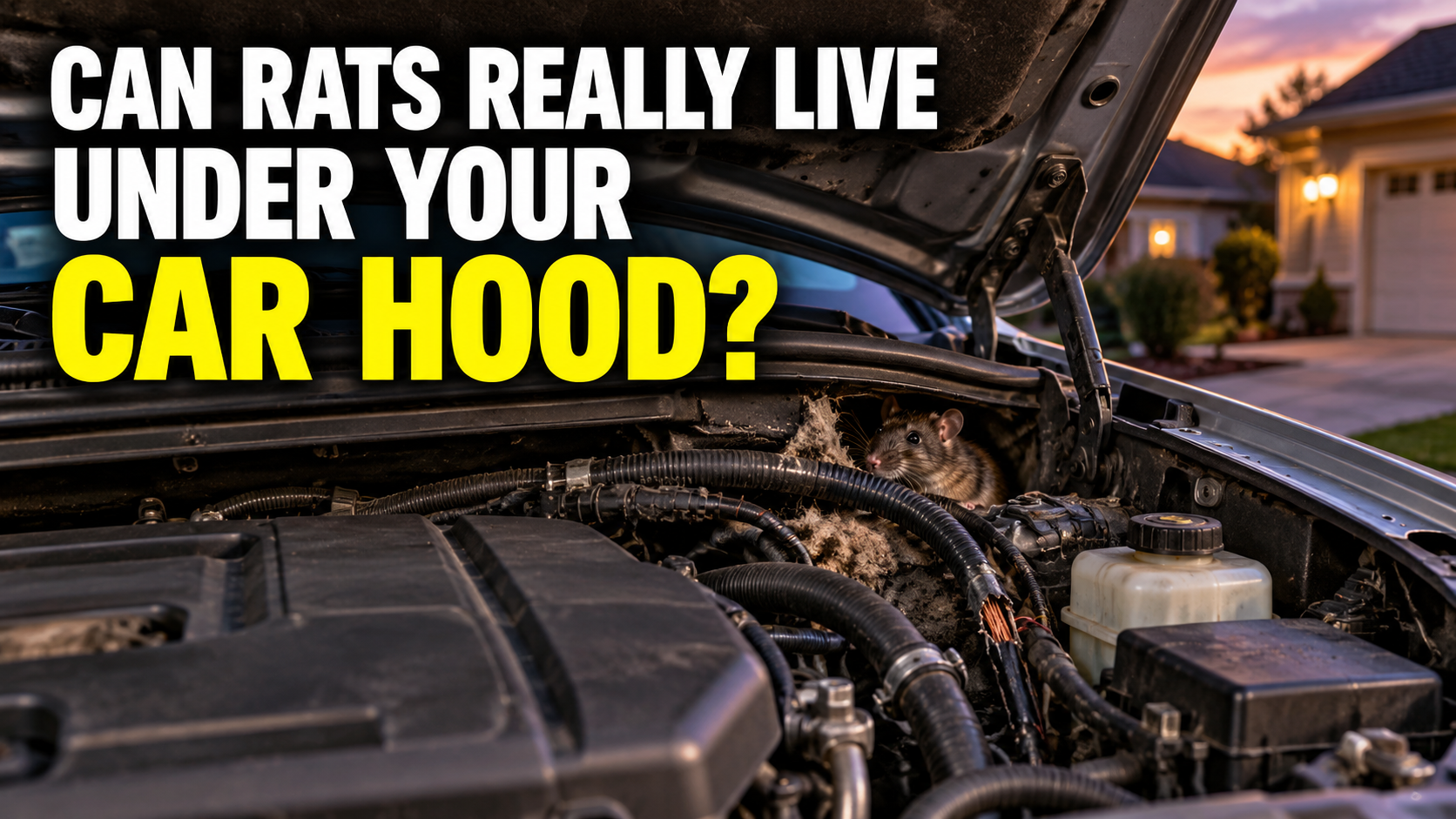
Can Rats Really Live Under Your Car Hood? Yes. Rats, mice and other rodents can enter engine compartments, build nests around insulation or air-intake areas and sometimes damage wiring before the owner realizes anything is wrong. The problem is especially associated with vehicles that sit unused, but regularly driven cars are not automatically safe. Recent homeowners have reported opening their hoods after normal daily use and finding droppings, nesting material or chewed wiring. The engine bay is not a permanent home in the same way a wall void or attic can be, but it can provide rodents with enough shelter to repeatedly return, nest or stash material.
Why Would a Rat Choose a Car?
An engine compartment offers several things rodents look for: cover from predators, dark spaces, insulation and plenty of narrow places where they can hide. A recently driven vehicle may also remain warm for a period after parking, although warmth alone is not the reason rodents enter cars. The CDC specifically warns that rodents may build nests in cars, trucks, campers and other vehicles, especially when those vehicles are used infrequently. Nesting material may turn up in the engine compartment, air intakes, filters, ducting, trunk or even passenger areas. That means the phrase “rat under the hood” is not just an urban legend. It is a documented vehicle pest problem.
The Wiring Is Often the Expensive Part
Rodents have continuously growing incisors and gnaw on many materials. Inside a vehicle, that can include wiring insulation, hoses, plastic components and insulating material. The University of Arizona Cooperative Extension notes that pack rats can occasionally damage vehicles and wiring. San Mateo County Vector Control also warns that rodents in engines are known to chew engine wires and says there is currently no single method guaranteed to prevent the problem. A few bites in the wrong place can create warning lights, electrical faults, starting problems or a vehicle that will not run at all.
Can This Happen to a Car You Drive Every Day?
Yes. Less-used vehicles may be easier targets because rodents have more uninterrupted time, but daily driving does not create an invisible barrier around the engine bay. In an August Santa Cruz discussion, one driver said rats had apparently nested under the hood even though the vehicle was driven almost every day. Other commenters described wiring and HVAC damage costing hundreds or thousands of dollars. Those are anecdotal reports rather than controlled studies, but they illustrate why finding droppings under the hood should not be ignored.
What Are the Warning Signs?
Droppings are one of the clearest clues. Other signs can include shredded hood insulation, leaves or grass packed into corners, food stored in the engine bay, chewed plastic, damaged wires and unusual odors from the ventilation system. The CDC recommends inspecting air intakes and filters when a vehicle has been idle for an extended period because nests can form there. King County Public Health also notes that nesting material in a vehicle’s air-intake system can create odors and that chewed wiring can contribute to poor performance or prevent a vehicle from starting.
Do Peppermint Oil, Lights or an Open Hood Work?
This is where internet advice gets messy. Owners commonly recommend peppermint oil, lights under the vehicle, ultrasonic devices or leaving the hood open. San Mateo County Vector Control lists several of these as anecdotal approaches and explicitly notes that there is no 100 percent effective way to prevent rodents from entering engines. That means they may be worth discussing as supplemental deterrents, but none should replace reducing rodent activity around the parking area, removing food sources and checking the vehicle regularly.
Be Careful Cleaning Droppings or Nests
Do not immediately vacuum dry rodent droppings or nesting material out of the engine bay. The CDC recommends first airing out the vehicle, wearing gloves and wetting contaminated material thoroughly with disinfectant before removal. If nesting material is in the air intake or the wiring appears damaged, a mechanic or qualified automotive professional may be the safer option. PestMarket’s Rodent Control Guide covers additional signs of rodent activity and ways to reduce conditions that attract rats and mice around a property.
The PestMarket Verdict
Can Rats Really Live Under Your Car Hood? Yes. Rats, mice and other rodents can use engine compartments for shelter and nesting, and the problem can lead to chewed wiring, contaminated air-intake areas and expensive repairs.
Evidence Grade: STRONG EVIDENCE
Public-health agencies and university Extension sources directly document rodents nesting in vehicles and damaging wiring. A single rat passing through an engine bay is not the same as a permanent nest, but droppings, shredded material or chewed wires are strong reasons to inspect the vehicle and address rodent activity around the parking area.