
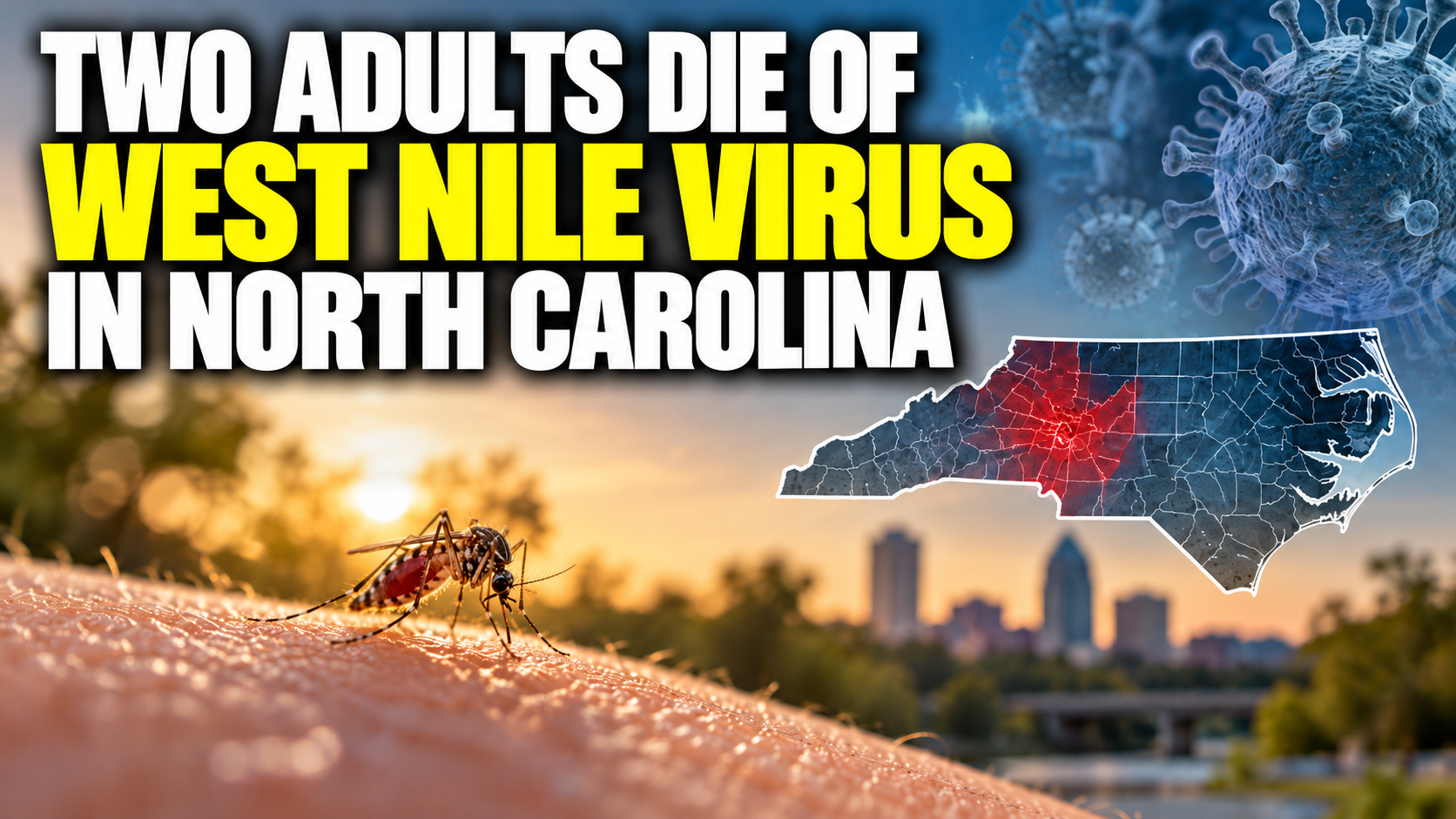
Two Adults Die of West Nile Virus in North Carolina as state health officials warn that mosquito transmission remains unusually active deep into October. The two adults were from central North Carolina, although officials have not released their counties or other identifying details. ABC11 reported that state health officials are seeing elevated West Nile transmission in the region and linked the ongoing activity to prolonged warm weather that has allowed mosquitoes to remain active later than many residents might expect.
Warm Fall Weather Is Extending Mosquito Season
North Carolina’s public health entomologist Michael Doyle said mosquitoes that spread West Nile can continue biting as long as daytime temperatures remain warm enough, including days in the 50s and above. That matters because many people mentally treat October as the end of mosquito season, even though transmission can continue until colder weather sharply reduces activity. Health officials say the mosquitoes responsible for West Nile are especially active around dusk and after dark.
North Carolina Has Reported 11 Cases This Year
The latest national surveillance data show North Carolina with 11 reported human West Nile disease cases so far in 2026. Nationwide, the CDC’s current-year West Nile surveillance reported 1,328 human disease cases across 45 states as of October 13, including 1,004 neuroinvasive cases. The agency notes that current-season numbers are preliminary and can lag behind more recent state and local reporting.
Severe Cases Can Affect the Brain and Nervous System
Most people infected with West Nile virus never develop symptoms. Some experience fever, headache, body aches, joint pain, vomiting, diarrhea or rash. The more serious concern is neuroinvasive disease, which can cause encephalitis, meningitis or other neurological complications. North Carolina officials said more than 10 people this season have experienced infections involving the central nervous system.
Older Adults Face the Highest Risk
Severe illness can occur at any age, but the risk rises substantially among older adults and people with certain underlying health conditions or weakened immune systems. The two recent deaths reinforce that West Nile can be far more than a temporary flu-like illness. Once the virus affects the brain or nervous system, hospitalization may be required and recovery can take weeks or months.
West Nile Was Already Showing Up This Summer
North Carolina had warning signs months before the latest deaths. In August, the North Carolina Department of Health and Human Services announced the state’s first human West Nile disease case of 2026 in a Gaston County resident and also reported a West Nile-positive blood donor in Mecklenburg County. State laboratory testing had already detected the virus in mosquitoes collected in Cabarrus, Forsyth and Mecklenburg counties during July.
The Virus Is Spread Through Mosquito Bites
West Nile virus normally circulates between birds and mosquitoes. Mosquitoes become infected after feeding on infected birds and can then transmit the virus to people and other animals through later bites. Casual person-to-person contact does not spread West Nile virus. That makes mosquito prevention the main way individuals can reduce their risk.
There Is No Human West Nile Vaccine
Unlike some infectious diseases, there is currently no licensed human vaccine for West Nile virus and no antiviral medication that specifically eliminates the infection. Treatment for severe disease is supportive, which is why public health agencies emphasize avoiding mosquito bites in the first place. North Carolina’s West Nile virus guidance recommends insect repellent, long sleeves and pants, intact window and door screens and removing standing water where mosquitoes can reproduce.
Mosquitoes Can Be Breeding in Ordinary Backyards
One reason West Nile prevention is difficult is that the mosquitoes involved do not require a swamp or large pond. Containers around homes can produce mosquitoes if water remains long enough for larvae to develop. Buckets, flowerpot saucers, clogged gutters, discarded containers, toys and other items can all become breeding sites. Emptying standing water at least weekly can interrupt that cycle. PestMarket’s Mosquito Control Guide covers additional ways homeowners can reduce mosquito activity around their properties.
2026 Could Become One of North Carolina’s Heavier Seasons
State officials told ABC11 that 2024 was North Carolina’s highest year on record for West Nile cases and that 2026 is currently shaping up as the second highest. That comparison is still preliminary because the current mosquito season is not over and surveillance numbers can change as additional reports are processed.
The Risk Does Not End Just Because It Is October
The two deaths are a reminder that the calendar alone does not end mosquito risk. As long as warm conditions continue, mosquitoes capable of spreading West Nile can remain active. For people spending time outdoors in the evening, especially older adults and those at higher risk for severe illness, repellent and basic mosquito precautions still matter even this late in the year.