
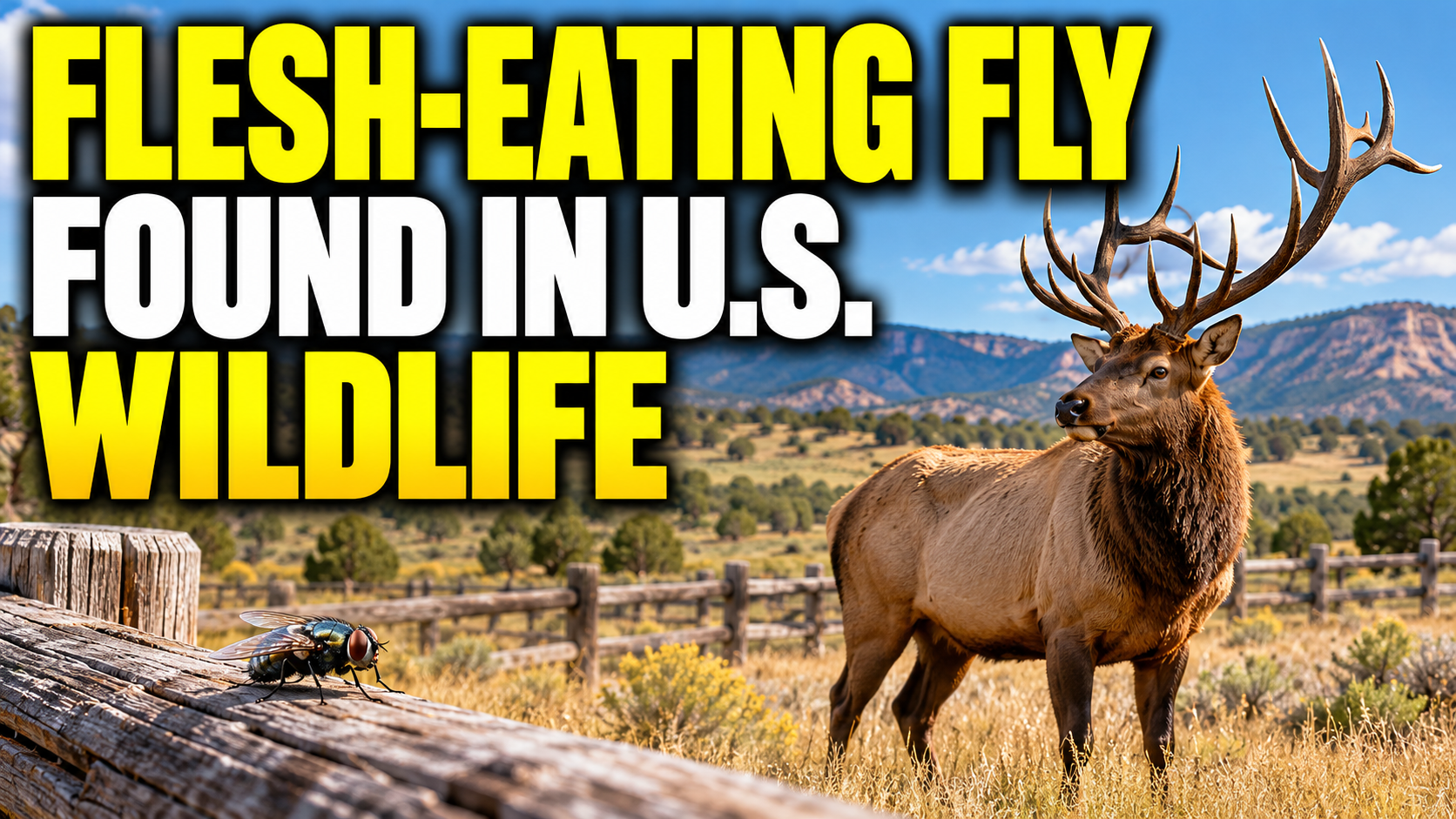
USDA Confirms Screwworm in U.S. Wildlife after laboratory testing identified the parasite in a hunter-harvested elk in Pecos County, Texas. Announced on October 21, the discovery represents the first confirmed infection in U.S. wildlife during the current New World screwworm outbreak, not the first screwworm case ever recorded in the country. The invasive fly’s larvae feed on living tissue, putting livestock, wildlife and pets at risk. Federal and state agencies are now conducting additional wildlife surveillance and adjusting an existing Texas infested zone. The latest finding raises an important question: how far might the parasite have spread among animals that are rarely examined by people?
Texas Elk Detection Marks a New Stage in the Outbreak
The U.S. Department of Agriculture confirmed New World screwworm in an elk from a game ranch in Pecos County, Texas, making it the first confirmed U.S. wildlife detection in the current outbreak. The animal was a female elk harvested by a hunter, and the infection was confirmed from a collected sample. In its official wildlife detection announcement, USDA said the discovery underscores why hunters, landowners and wildlife professionals should report suspicious wounds and larvae. The milestone does not mean this is the first U.S. screwworm case in history, or even the first domestic animal case in the current outbreak. It specifically identifies the first confirmed wildlife case in the United States during the ongoing resurgence.
How Officials Identified the Infected Elk
On October 21, the Texas Parks and Wildlife Department said the hunter-harvested elk sample had been identified and confirmed as New World screwworm at the USDA Agricultural Research Service’s Knipling-Bushland U.S. Livestock Insects Research Laboratory in Kerrville. According to the department’s October 21 news release, the Texas Animal Health Commission will modify an already established infested zone, while USDA and state wildlife officials conduct additional surveillance. The announcement did not establish how many other wildlife animals might be infected in the area. Wildlife infections can be harder to identify because free-ranging animals are not inspected as frequently as livestock, making reports from hunters and landowners particularly important.
Why New World Screwworm Is Different From an Ordinary Fly
New World screwworm, scientifically known as Cochliomyia hominivorax, is a parasitic fly whose larvae feed on living tissue. Female flies can lay eggs on wounds or vulnerable body openings of warm-blooded animals. After hatching, the larvae invade tissue and can produce deep, painful injuries. Cattle, other livestock, wildlife and pets are vulnerable, and people can be affected in rare circumstances. That makes screwworm very different from the common nuisance flies residents typically encounter around trash or kitchens. PestMarket’s Fly Control Guide covers familiar household fly problems, but suspected screwworm requires prompt veterinary or public-health attention rather than ordinary home fly-control measures.
Why the First Wildlife Detection Matters
The newly confirmed elk infection raises questions about whether the pest may also be affecting other wildlife near the established Texas response zone. Wildlife can move across property boundaries and may be difficult to examine before an infestation becomes severe. However, one verified elk case does not establish a statewide wildlife outbreak or demonstrate sustained transmission across the country. Investigators need more surveillance and laboratory-confirmed findings before they can assess the extent of wildlife involvement. The announcement is significant because it broadens the types of animals in which officials have documented infection during the present outbreak, beyond previously confirmed domestic animal detections.
What Hunters and Ranchers Are Asked to Watch For
Texas wildlife officials are encouraging hunters to inspect harvested animals before field dressing or moving carcasses. Warning signs include visible larvae in wounds, foul odors, open or draining injuries, signs of distress, and abnormal behavior such as weakness or isolation. Particular attention should be given to the eyes, ears, nose, mouth, genital region and any wounds, including around the feet. Landowners and livestock handlers should also examine animals promptly when wounds appear. Suspicious findings should be reported to the appropriate state animal health or wildlife authorities rather than ignored or self-diagnosed. Early reporting can help agencies identify affected locations and plan targeted surveillance.
What USDA Is Doing to Slow the Spread
USDA and state partners have already been coordinating surveillance, infested-zone controls and sterile insect releases as part of their response to New World screwworm. The sterile insect technique involves releasing sterilized flies so mating with wild flies does not produce viable offspring, gradually reducing the population where it is effectively deployed. Officials have used the strategy for decades, including in earlier eradication efforts. The new wildlife finding is prompting more monitoring and a change to an existing Texas infested zone, not a claim that the entire country is affected. Further confirmed detections and agency updates will be needed to understand whether response measures should change.
Is There a Risk to People and Pets?
The potential consequences of an untreated screwworm infestation can be serious, but the wildlife detection should not be interpreted as evidence of widespread human infection. In its October 7 outbreak summary, the Centers for Disease Control and Prevention said the current U.S. public risk was very low and that no locally acquired human cases had been reported at that time. The newly reported elk case does not itself change those human-case figures. Pet owners and livestock caretakers should monitor wounds and seek veterinary care promptly for unusual larvae or worsening injuries. A person with a suspicious wound or suspected infestation should seek medical evaluation rather than attempting treatment based on a fly’s appearance.
Why Correct Identification and Reporting Matter
Not every maggot or metallic-colored fly is New World screwworm, and confusing it with a common fly can cause unnecessary alarm. USDA notes that even sterile flies released during control programs can resemble wild individuals. People should focus on abnormal animal wounds and seek confirmation from appropriate authorities. For general household flying-insect identification and prevention, readers can explore PestMarket’s Pest Control Guides. But a potential screwworm infestation in an animal is a specialized veterinary and agricultural concern. The next important development will be whether surveillance uncovers additional confirmed wildlife cases or results in further changes to Texas response zones.
What Happens Next?
The immediate priority is surveillance, laboratory confirmation and rapid reporting of suspicious animal injuries. Texas and federal agencies have not said that the elk discovery proves a widespread wildlife epidemic. Instead, the confirmed case provides a new warning that the ongoing response must account for wildlife as well as livestock. Hunters, ranchers and veterinarians can help by inspecting animals and promptly reporting suspicious wounds or larvae. Future findings, rather than speculation from a single case, will determine how much the known geographic picture changes.