
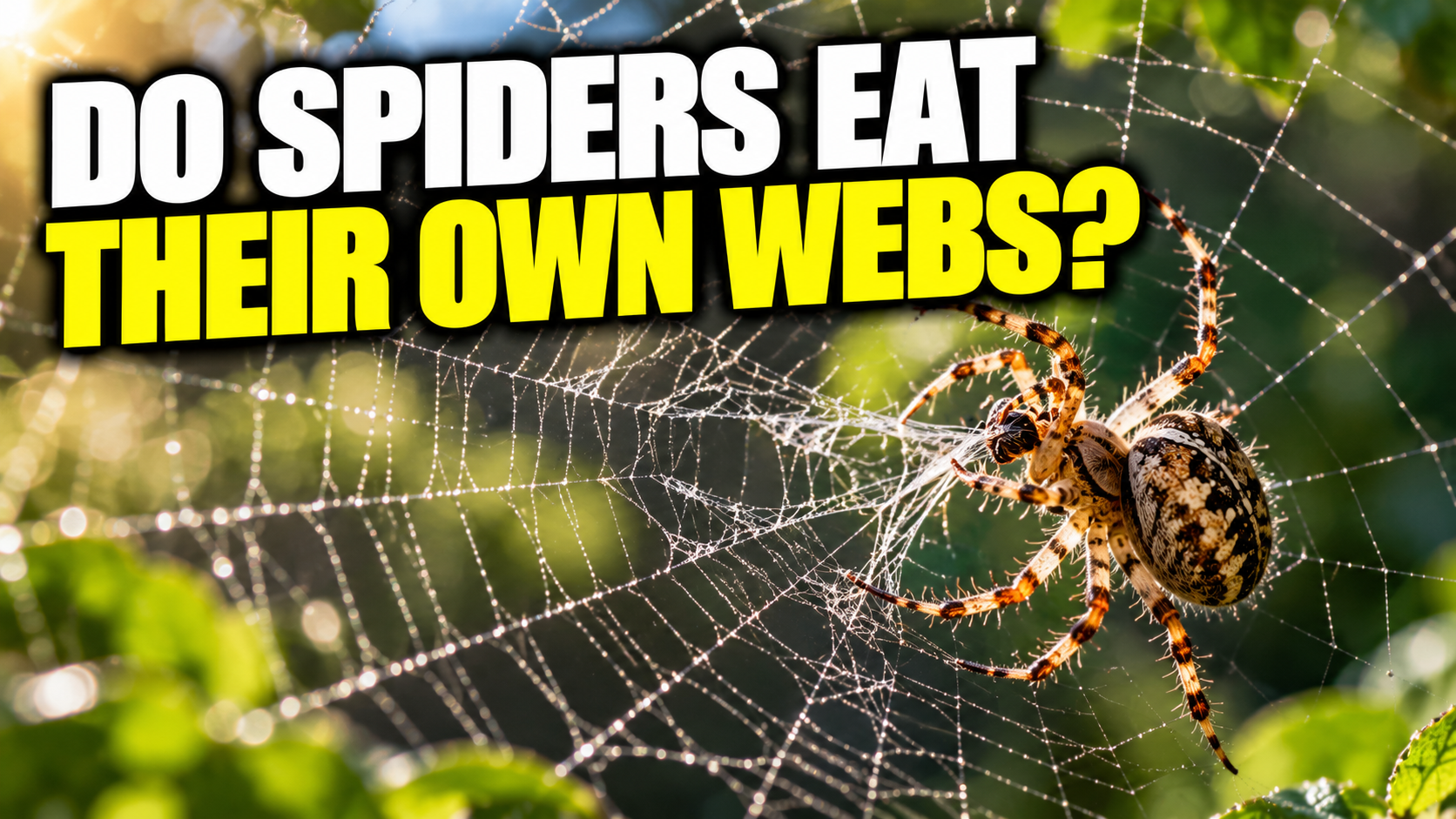
Do Spiders Eat Their Own Webs? Surprisingly, some spiders do exactly that. A web may look like a permanent home, but for many orb-weaving spiders it is a temporary hunting device that can be taken apart and replaced. Instead of leaving every old thread behind, these spiders may consume the silk and reuse some of its valuable building materials. That behavior raises fascinating questions: why would an animal eat something it worked so hard to produce, what happens to the silk after swallowing it, and do all spiders follow the same routine? PestMarket Investigates examined museum explanations and scientific research to uncover the biology behind this unusual form of recycling.
Why Would a Spider Eat Its Own Web?
Building a web requires raw materials. Spider silk consists largely of specialized proteins, and producing it involves biological resources that could otherwise support other functions. Many orb-weaving spiders dismantle older capture webs and ingest the threads rather than discard all of the material. The Smithsonian’s explanation of how spiders make webs describes silk consumption as a way to replenish a spider’s silk supply. The behavior is not a spider becoming confused and mistaking its web for an insect. It is part of the life cycle of a temporary trap that may need to be renewed after exposure to weather, dust, damage, or prey activity.
How Does a Spider Recycle Silk Proteins?
An orb-weaver can bring old web strands toward its mouth and swallow them as it takes the structure down. Once ingested, silk proteins can be broken down during digestion, making some of their components available again for the spider’s metabolism and future silk production. This is resource recovery, not a magical process in which an entire thread immediately becomes a new thread. A 2013 PLOS ONE study of pollen in orb-weaver diets explicitly describes regular web ingestion as a means of efficiently recycling silk proteins. Reclaiming nutritional material can be useful because rebuilding a capture web repeatedly is an ongoing investment, especially when prey is scarce.
Do Spiders Rebuild Their Webs Every Day?
Some orb-weaving spiders construct fresh capture webs frequently, often around a daily cycle, but there is no rule that every spider must build an entirely new web every morning or night. Timing depends on species, weather, web condition, feeding opportunities, and the spider’s life stage. One spider may consume much of an aging orb before spinning another; another may repair damaged portions or retain its structure longer. An abandoned-looking web therefore does not automatically mean the spider has died or permanently left. Many familiar geometric webs are temporary traps whose architecture changes as the spider responds to its surroundings.
Do All Spiders Eat Their Own Webs?
No. The behavior is best documented in a number of orb-weaving spiders, and it should not be attributed to every spider that produces silk. In fact, many spiders never make the classic circular capture web at all. The Burke Museum’s spider-myth guide explains that active hunters such as jumping spiders and wolf spiders do not depend on prey-catching webs, although they still use silk for other purposes. Other web-building species produce sheets, funnels, or irregular tangles that may persist and be maintained differently. The familiar image of a spider eating a beautiful circular web is real, but it represents a particular strategy rather than a universal spider habit.
Can a Spider’s Web Contain More Than Silk?
A capture web does not remain perfectly clean. Wind can deposit fine particles, including pollen and spores, onto sticky strands, while small insects or fragments can become trapped in the structure. Researchers studying orb-weavers have examined whether pollen caught in webs may contribute nutrients when the spiders consume silk. The scientific question is interesting because it expands our understanding of what a spider may ingest during routine web recycling. However, it would be misleading to suggest that spiders deliberately build webs to farm pollen, or that every orb-weaver obtains a meaningful share of its diet this way. Trapped insects remain a central food source for most web-building spiders, and the nutritional significance of incidental material varies by circumstance.
Why Doesn’t a Spider Just Leave the Old Web Behind?
Leaving old silk in place could save the immediate effort of taking it down, but an aging web may become less effective as a capture device. Broken strands, dust, rain, and the aftermath of struggling prey can alter the web’s structure and performance. Rebuilding lets a spider restore the spacing and arrangement of threads in an area where insects may pass. Consuming portions of the old structure can also recover resources rather than wasting them. The balance between repair, replacement, and abandonment varies with the species and local conditions. Seen this way, web consumption is not a bizarre snack but one part of the maintenance routine of a highly specialized predator.
What Does This Mean for Spider Webs Around Your Home?
Homeowners may notice a circular web appear overnight and seem to disappear the next day, sometimes with little trace remaining. That can be consistent with a web being dismantled, although wind, cleaning, weather, or disturbance are other possibilities. Many spiders around homes help capture flies, mosquitoes, and other small insects, so the presence of an occasional web is not automatically a serious infestation. PestMarket’s Spider Control Guide explains how to reduce recurring indoor activity through web removal, housekeeping, exclusion, and management of insect prey. The broader DIY Pest Control Guides provide related prevention advice. If a web repeatedly returns in the same corner, look for protected shelter and a dependable supply of prey before assuming chemical treatment is necessary.
The PestMarket Verdict
Do Spiders Eat Their Own Webs? Yes, many orb-weaving spiders consume old silk and recover nutritional components that can support future silk production. The behavior is documented in scientific literature and recognized by natural-history institutions. However, not all spiders weave the same type of web, and not all dismantle or ingest silk in the same way. The claim is accurate when applied to the appropriate web-building spiders, but too broad when presented as something every spider does. What looks like an animal eating its home is better understood as an efficient form of material recycling.
Evidence Grade: STRONG EVIDENCE
Regular web consumption by orb-weaving spiders and recycling of silk proteins are supported by established behavioral observations and published research. The strength of the evidence applies to those documented groups, not to every spider species. Specific rebuilding schedules and the nutritional contribution of material trapped on webs can differ across species and conditions.