
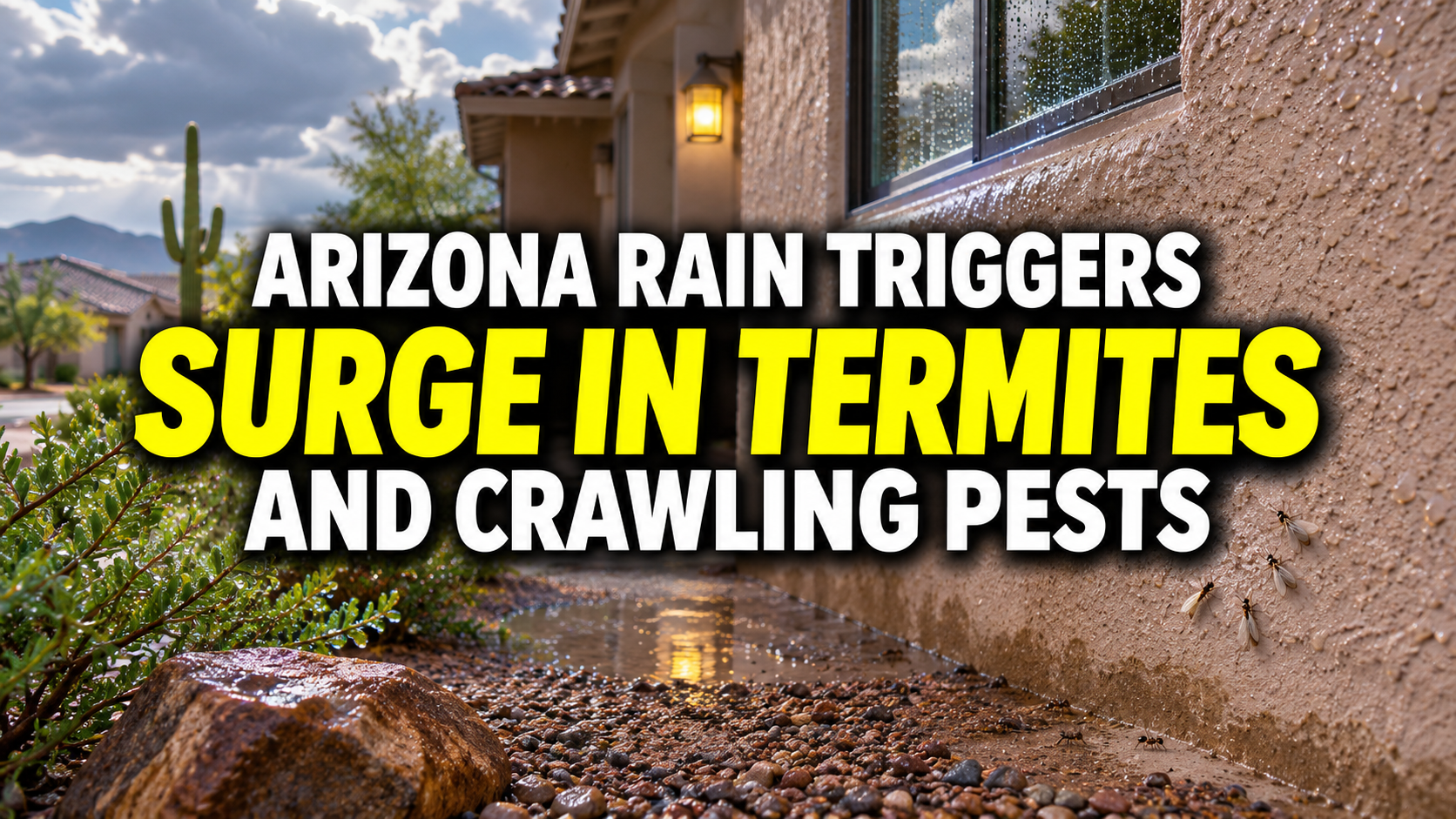
Arizona Rain Triggers Surge in Termites and Crawling Pests as monsoon moisture and storm-related disruption bring more insects into view, especially termites, ants, cockroaches and mosquitoes. Arizona experts are not describing a new statewide emergency, but they are warning that rain can create the exact conditions that make these pests more active, more visible and more likely to show up around homes. In recent guidance, the University of Arizona Cooperative Extension said monsoon weather can bring a surge of pests into homes and communities, with termites and ants swarming, cockroaches moving indoors and mosquitoes benefiting from new standing water. For Arizona homeowners, that means post-rain pest activity is not just an annoyance. In some cases, it can signal a larger structural or sanitation problem.
Why Rain Changes Pest Activity in Arizona
Arizona’s dry climate can make it easy to forget how strongly pests respond to moisture. When heavy rain arrives, some pests gain new breeding sites while others are driven out of their normal hiding places. According to the University of Arizona, changing monsoon conditions can bring “unwanted creepy crawlies to life” and force some pests inside homes. That matters because the same rain that creates puddles for mosquitoes can also soften soil, increase moisture near foundations and trigger reproductive activity in termites and ants. Homeowners often notice the results suddenly, but the underlying colonies and harborages may have been present long before the storm.
Arizona Rain Triggers Surge in Termites and Crawling Pests
The phrase Arizona Rain Triggers Surge in Termites and Crawling Pests is accurate as a weather-driven service headline, but it should be understood carefully. There is no public statewide count showing a quantified spike in every pest category after the latest rain. What Arizona’s official and university guidance does show is that wet weather creates favorable conditions for several of the state’s most common nuisance and structural pests. The University of Arizona specifically highlights cockroaches, mosquitoes, ants and termites as common monsoon-associated visitors, while Arizona regulators note that rain and irrigation can compromise termite barriers around homes. In other words, the concern is real even when it does not come in the form of a single statewide alert.
Why Termites Become More Visible After Rain
Termites are the most important part of this story because they can cause expensive structural damage. The University of Arizona’s wet-weather pest guidance describe how ants and termites with wings, known as alates, often leave their nests during monsoon, and that people are likely to see more of them during this reproductive period. Swarming itself does not mean a house is doomed, but it does mean colonies are trying to expand. Some termites may be native species that are not major structural pests, but subterranean termites remain a serious concern for many Arizona homes. If homeowners see mud tubes, swarming winged termites, discarded wings or unexplained soft wood, they should take those signs seriously. PestMarket’s Termite Control Guide explains the common warning signs and why fast identification matters.
Rain Can Also Weaken Existing Termite Protection
Post-rain termite concerns are not limited to new swarms. Arizona’s Office of Pest Management warns that a home’s chemical barrier can be compromised when rain or irrigation cause erosion and soil movement. The agency also notes that cracks in foundations can create easy entry points for termites, and that excessive moisture around a structure is one of the issues a proper termite inspection should identify. This is one reason some homeowners are surprised to discover termites even though the house was previously treated. Weather, soil movement, landscaping changes and foundation changes can all reduce the effectiveness of earlier protection.
Cockroaches, Ants and Mosquitoes Also Respond Quickly
Termites may be the most financially damaging post-rain pest, but they are not the only ones homeowners notice. University of Arizona guidance says summer rain and construction can push American cockroaches out of sewers and into homes, while standing water helps mosquitoes breed rapidly. The same guidance notes that mosquitoes can go from eggs to adults in about 10 days, which helps explain why yards, drains, neglected planters and containers can become a problem soon after storms. Meanwhile, ants and termite alates may appear in or around homes during their reproductive period. Homeowners dealing with multiple pests at once often need to address both moisture and exclusion, not just kill the insects they can see. PestMarket’s Cockroach Control Guide and mosquito resources can help homeowners think beyond temporary cleanup.
What Arizona Homeowners Should Look For Right Now
After a stretch of rain, the most practical approach is inspection. Around the outside of the home, look for mud tubes on foundation walls, moisture near wood, pooling water, overflowing irrigation, clogged gutters and debris against the structure. Indoors, pay attention to winged insects near windows, cockroaches in kitchens or bathrooms, and unexpected insect activity around baseboards or drains. Homeowners should also check for conditions that invite pests, such as stored cardboard, leaking pipes, unsealed door gaps and standing water in plant saucers or buckets. If a problem appears suddenly after rain, that visibility may be new even if the infestation is not.
What to Do Before the Next Storm
The good news is that many post-rain pest risks can be reduced with maintenance. Remove standing water, fix leaks, keep firewood and mulch away from direct contact with the home, seal door sweeps and utility penetrations, and reduce clutter in garages and storage areas. If termites are suspected, homeowners should avoid disturbing mud tubes until a professional can inspect them, because visible tubes can provide useful evidence. If cockroaches are appearing from drains or low areas, drain covers, sanitation and targeted baiting may help, but recurring activity may point to deeper harborage. The University of Arizona promotes integrated pest management, which means combining prevention, monitoring and targeted control rather than relying only on pesticide use.
Why This Story Matters
Rain-related pest stories can sound repetitive, but this one matters because Arizona homeowners often notice the problem only after moisture makes hidden activity visible. A termite colony can be underground for a long time before swarmers show up. A cockroach population can stay out of sight until rain or construction disrupts it. And a mosquito issue may begin with something as ordinary as storm water collecting in containers around a yard. That is why the most useful takeaway is not panic but timing. After significant rain is one of the best times to inspect the home, document any warning signs and address conditions that give pests food, water and shelter.