
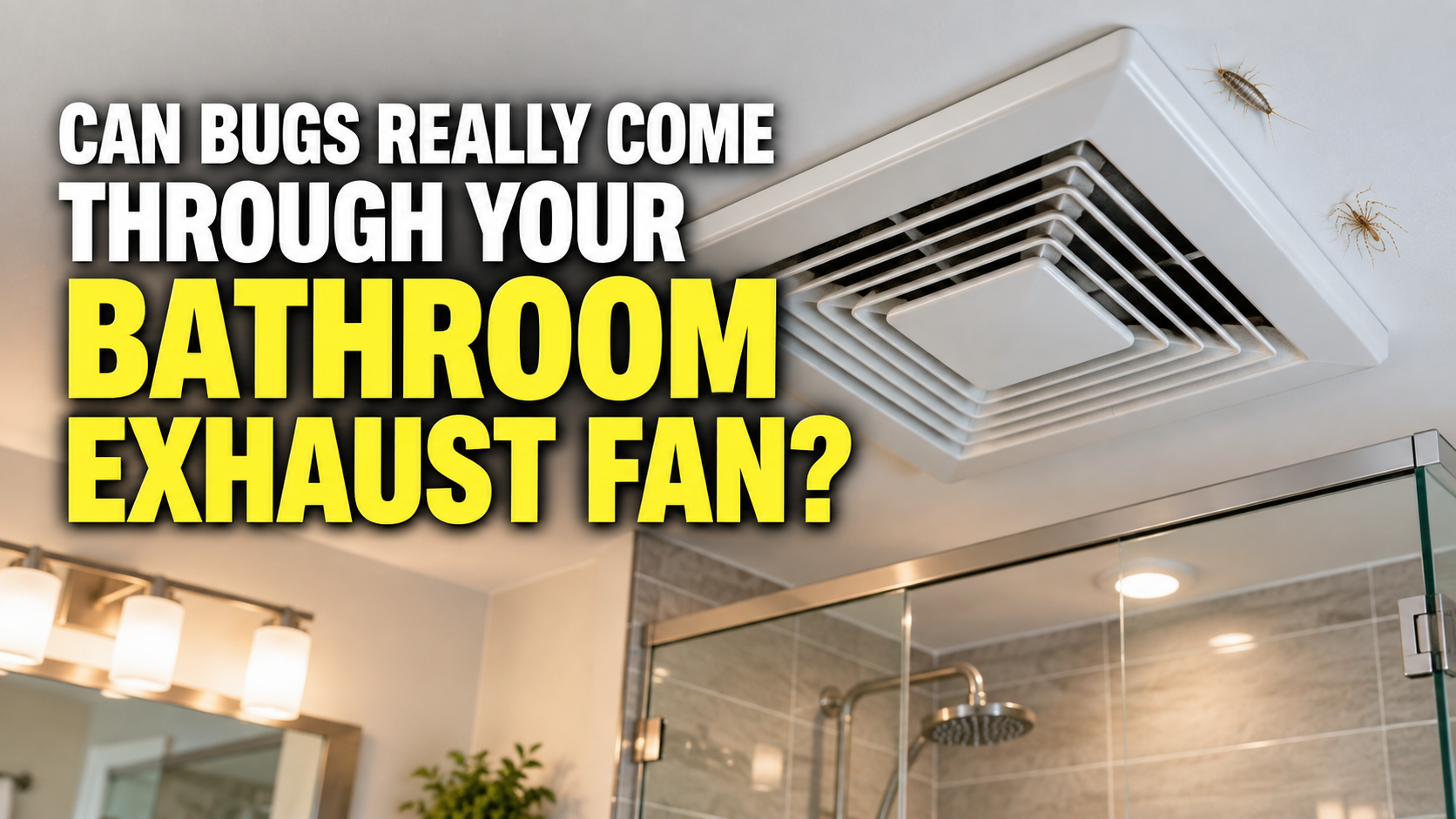
Can Bugs Really Come Through Your Bathroom Exhaust Fan? Yes, it can happen. A bathroom exhaust fan connects the room to ductwork, an attic space or an exterior vent, and those spaces are not necessarily insect-proof. Silverfish, spiders, centipedes, gnats and other small pests can move through gaps around the fan housing, duct connections or surrounding ceiling cavity and eventually appear in the bathroom below. That does not mean the fan is actively pulling bugs into the room, but it can become part of the route they use when pests are already living nearby.
The Fan May Be Connected to a Bug-Friendly Space
Many bathroom fans exhaust through a duct that passes through an attic before reaching the roof or an exterior wall. If insects or spiders are already present in that attic, the fan opening may provide a path toward the bathroom. Gaps between the fan housing and drywall can also connect the room to ceiling voids even when the duct itself is intact. Damp attics, roof gaps, insulation and stored materials can create hiding places for insects, while spiders and centipedes may follow prey into the same spaces.
Silverfish Are Especially Drawn to Moisture
Silverfish are commonly associated with bathrooms because they prefer humid environments. They often hide in cracks, behind trim, under flooring and in other protected locations where moisture remains high. If a bathroom stays humid after showers, silverfish may already be living nearby and simply appear around the fan because the ceiling opening connects to another sheltered space. A recent homeowner report described silverfish repeatedly appearing directly beneath a bathroom fan in a room with roughly 60 percent humidity, illustrating why moisture and vent access are often discussed together. That case is anecdotal, but the pattern fits what pest experts know about silverfish behavior.
House Centipedes May Follow Other Bugs
House centipedes are another pest people sometimes see near bathrooms, basements and other humid rooms. The Penn State Extension says house centipedes prefer dark, damp, cool locations and may enter structures through drains and sump pumps. They feed on silverfish, cockroaches, spiders and other small arthropods, which means frequent centipede sightings can sometimes indicate that plenty of prey is available nearby. A centipede near a bathroom exhaust fan may therefore be following the same moisture and prey conditions attracting other insects rather than being attracted to the fan itself.
Spiders Can Use the Same Pathways
Spiders are not usually attracted to bathroom fans specifically, but vents and attic spaces can provide shelter and access to insects. If gnats, moths, silverfish or other small prey are present around a ceiling cavity, spiders may establish themselves nearby. This is why people sometimes notice a spider or web near the exhaust grille. The fan becomes a visible endpoint of a larger hidden space rather than the source of the infestation.
Can Gnats Come Through the Fan Too?
Yes, especially if the attic or exterior vent area gives small flying insects access to the duct or ceiling cavity. However, gnats in bathrooms can also come from drains, houseplants, organic buildup or other moisture sources, so the fan should not automatically be blamed. The important question is whether insects repeatedly appear from the same ceiling opening or whether they are distributed throughout the room. If several different pest species are showing up near the fan, that can point toward a shared structural access route.
Humidity Can Make the Problem Worse
Bathrooms naturally produce moisture, and poor ventilation can make them even more attractive to pests that prefer damp conditions. Penn State notes that house centipedes favor damp environments, while University of Minnesota Extension says centipedes commonly occur indoors where conditions remain moist. Reducing humidity with a properly working exhaust fan, dehumidification and leak repair can make the room less hospitable. University of Minnesota Extension
Should You Seal the Fan?
Do not simply block or disable the bathroom exhaust fan because ventilation is important for controlling moisture. Instead, inspect the fan housing, duct connections and exterior termination point. Gaps around the ceiling opening can often be sealed without obstructing airflow. Exterior vent covers should be intact and properly fitted, and attic access points should be checked for larger pest problems. PestMarket’s Pest Control Guide includes additional information on household pest entry points and prevention.
The PestMarket Verdict
Can Bugs Really Come Through Your Bathroom Exhaust Fan? Yes. Bugs can appear through or around a bathroom exhaust fan when insects or spiders are already present in connected attic spaces, ducts or ceiling voids. The fan itself is usually not the root cause. Moisture, gaps around the housing and pest activity in nearby hidden spaces are more important factors.
Evidence Grade: LIMITED EVIDENCE
There is strong evidence that silverfish, centipedes, spiders and other household pests favor damp areas and move through structural gaps, but direct scientific research specifically measuring insects traveling through bathroom exhaust fans is limited. The pathway is plausible and supported by building layout, pest behavior and repeated homeowner reports, but the exact source should be confirmed before assuming the fan is responsible.