
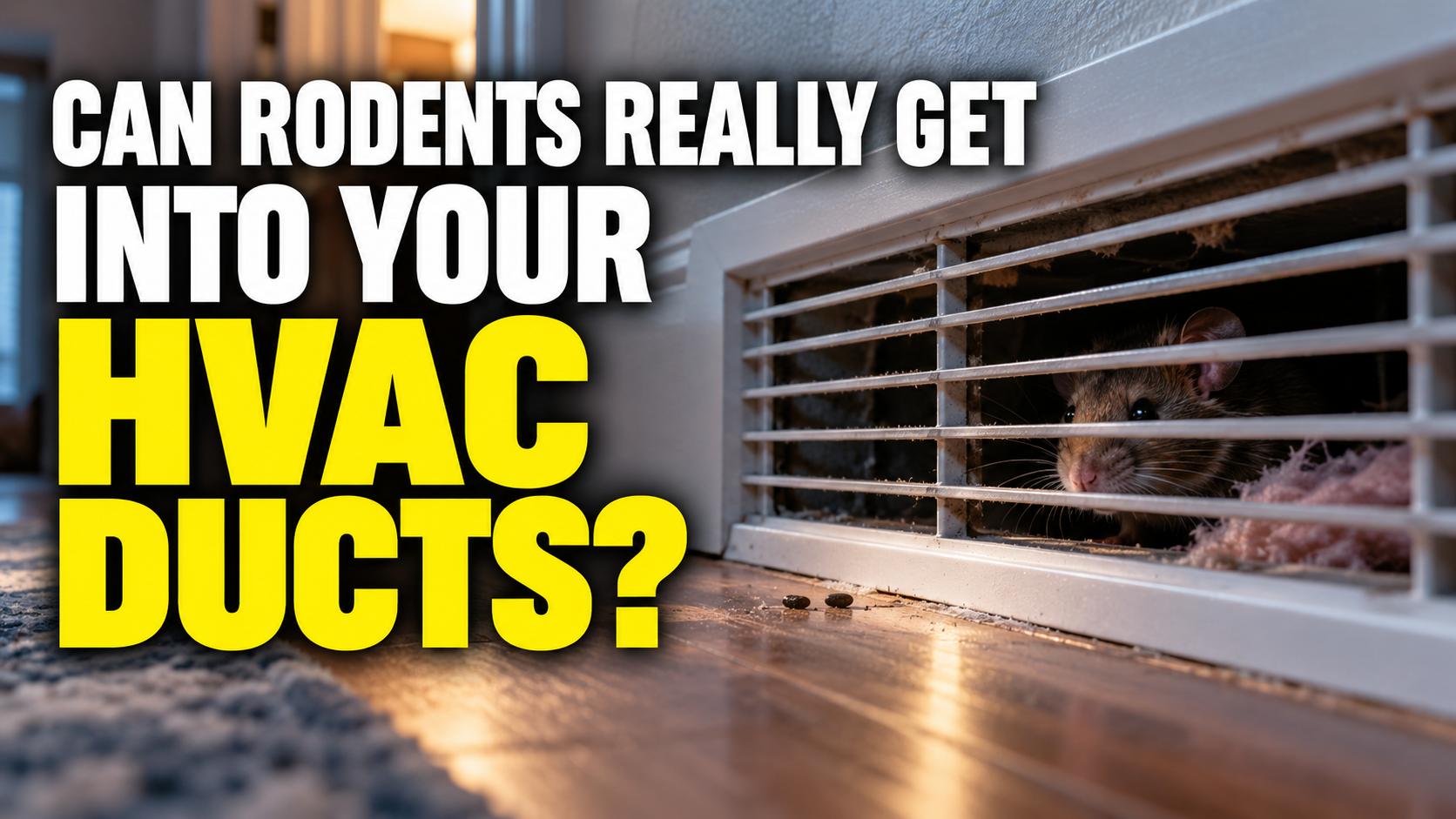
Can Rodents Really Get Into Your HVAC Ducts? Yes. Mice and rats can access parts of a home’s heating and cooling system through floor vents, damaged ductwork, attic or crawl-space openings and gaps around pipes or utility lines. That does not mean every scratching sound in a vent is a rodent, but HVAC systems can provide hidden pathways between different parts of a house. If rodents get inside, the problem can go beyond noise. Droppings, urine, nesting material and even dead rodents can contaminate areas connected to the air-distribution system.
HVAC Systems Can Become Rodent Pathways
The CDC specifically addresses rodent activity in heating and cooling ventilation systems. Its guidance says that when there is evidence rodents have accessed these systems, homeowners should contact a professional rodent exterminating service, and duct-cleaning companies may also be needed because they are familiar with contamination inside ventilation systems. Rodents do not necessarily need to enter through the supply register in a room. They may reach ductwork from an attic, crawl space, basement or mechanical area and then move through openings connected to the HVAC system.
How Do Rats or Mice Get In?
The CDC’s prevention guidance lists several common entry points around homes, including floor air vents, dryer vents, gaps around water heaters and furnaces, attic and crawl-space vents, and holes around electrical, plumbing, gas and sewer lines. Mice can fit through an opening about the width of a pencil, roughly 1/4 inch, so a gap that looks insignificant can still be large enough for entry. Once inside an attic or crawl space, rodents may follow duct lines or enter damaged or poorly sealed sections of the system. (CDC)
What Are the Signs?
Scratching, rustling or movement sounds near vents can be a clue, especially at night when rodents are most active. Other signs may include droppings near floor registers, unusual odors when the HVAC runs, shredded insulation, damaged duct material or nesting debris near the air handler. A dead rodent somewhere in the duct system can also produce a strong odor that seems to move through the house when air circulates. One sign alone is not proof, but several together can justify a closer inspection.
Can Rodents Contaminate the Air?
Rodent urine, droppings and nesting material can create contamination concerns, particularly if disturbed. The CDC warns against vacuuming or sweeping dry rodent droppings because this can send contaminated particles into the air. Rodent urine can also contain proteins that become airborne after drying, and public-health guidance treats contaminated ventilation systems as a situation that should be handled carefully.
Should You Clean the Ducts Yourself?
Not if there is clear evidence of rodent contamination inside the HVAC system. The CDC specifically recommends professional help when rodents have accessed heating or cooling ventilation systems. That is different from routine duct cleaning. The goal is not simply to remove dust but to deal safely with rodent waste, nesting material and the rodents themselves. If droppings or nesting material are present in accessible areas, they should be thoroughly wetted with disinfectant before removal rather than swept or vacuumed dry.
Sealing Entry Points Matters More Than Cleaning Alone
Even a perfectly cleaned duct can be reinfested if rodents still have access to the house. Check gaps around floor vents, furnace lines, utility penetrations, attic vents and crawl-space openings. Damaged ductwork should be repaired, and food, pet food and garbage should be sealed so rodents have less reason to remain indoors. PestMarket’s Rodent Control Guide covers additional signs of rodent activity and exclusion steps that can help prevent repeat infestations.
What If You Hear Something in the Vent?
Do not immediately remove vent covers and reach inside. If a rodent is trapped, injured or nesting nearby, disturbing it may cause it to move deeper into the system or into another part of the house. Start by looking for droppings or other evidence around registers and mechanical areas. If the sounds continue or contamination is visible, a pest-management professional can determine whether the animal is in the duct itself or simply moving through nearby walls, ceilings or crawl spaces.
The PestMarket Verdict
Can Rodents Really Get Into Your HVAC Ducts? Yes. Rats and mice can access heating and cooling systems through vents, damaged ductwork and nearby structural gaps, and they can leave droppings, urine, nesting material and odors behind.
Evidence Grade: STRONG EVIDENCE
CDC guidance directly addresses rodents in heating and cooling ventilation systems and recommends professional rodent removal when there is evidence of access. The most effective response is usually a combination of removal, safe cleanup and sealing the entry points that allowed rodents into the structure in the first place.