
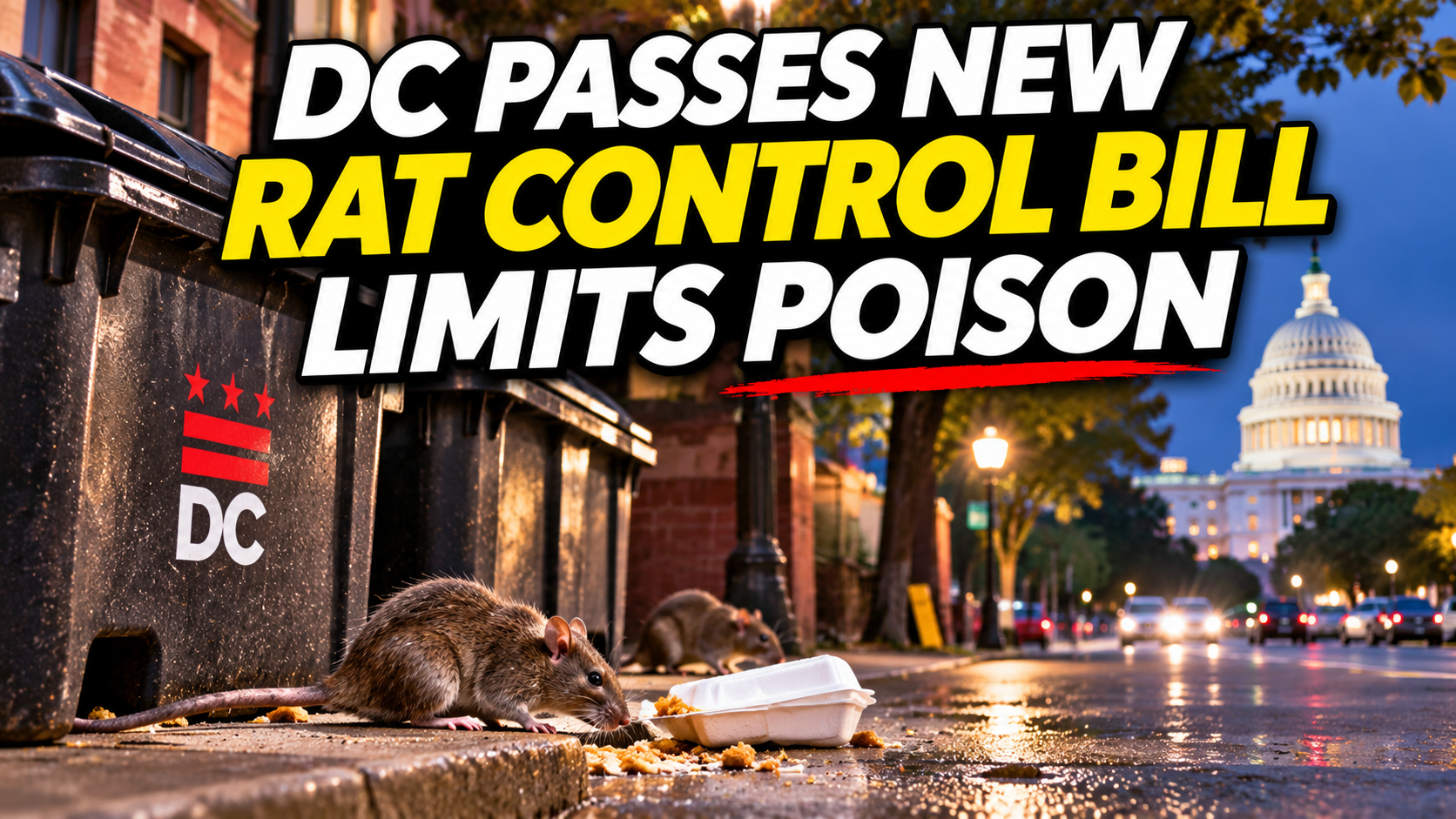
DC Council Passes New Rat Control Bill, Limits Poison. The D.C. Council approved an amended version of Bill 26-707, the Rodent Education and Management Yields (REMY) Results Amendment Act of 2026, on November 10. The measure aims to make trash less accessible to rats while tightening rules around certain poison baits and strengthening the city’s prevention and enforcement tools. The official council meeting transcript shows members accepting an amendment focused on commercial trash compactors before approving the amended bill without recorded opposition. Importantly, this was a council vote on legislation, not proof that every provision is already enforceable law. The next steps in the legislative process and any funding requirements still matter.
DC Council Passes New Rat Control Bill, Limits Poison: Key Changes
The proposal combines waste prevention, selective rodenticide rules, and additional property oversight. The legislative vote advances those policies, but it does not by itself establish an effective date or guarantee the proposed grants will be funded.
Why Washington, DC Is Targeting Rats Differently
Rats flourish where streets, alleys, restaurant corridors and buildings provide reliable food, water and shelter. Officials are trying to reduce those conditions rather than rely entirely on repeated poisoning after infestations have taken hold. The REMY proposal links rodent prevention to waste handling, neighborhood business districts, public education and stronger oversight. This is especially relevant for restaurants and other commercial establishments that generate high volumes of food waste. Even diligent pest-control treatments can have limited lasting effects if surrounding trash remains accessible. A comprehensive approach must reduce the food supply, manage nesting opportunities and track problems over time. Whether this legislation achieves those goals will depend on how programs are funded, used and evaluated after enactment.
Rat-Resistant Trash Bins Become a Central Strategy
A prominent component is a proposed pilot grant program to help eligible business districts and commercial corridors obtain rodent-resistant trash receptacles. Containers with properly secured lids and stronger construction can make discarded food harder for rats to reach. The bill also highlights dumpsters and compactors, which can help businesses manage large quantities of waste more securely. That does not make any container completely rat-proof under all conditions; collection frequency, overflowing trash and surrounding litter still matter. The practical goal is to interrupt a predictable food source before it attracts repeated rodent activity. The approach reflects basic prevention advice already explained in PestMarket’s rat control guide, which emphasizes sealed garbage, food removal and exclusion.
A New Amendment Addresses Commercial Trash Compactors
During the November 10 debate, Councilmember Brooke Pinto proposed restoring authorization for a commercial trash compactor grant program, and the amendment was accepted without objection. The November 10 council proceedings explain that the proposal would permit up to $2 million in funding per fiscal year, including limits of $12,000 for leasing and $36,000 for purchasing a compactor, if money is subsequently provided. These figures are proposed authorization ceilings, not payments already made or a guarantee that every applicant will receive assistance. Council discussion explicitly described the added authority as permissive and subject to funding. That distinction is vital for businesses deciding whether to budget for new equipment now or wait for a formal funded program.
What the Proposal Means for Rat Poison
The legislation also seeks to restrict certain anticoagulant rodenticides, commonly called rat poisons, through tighter conditions on who may use them. Accounts of the measure describe requirements tied to training and certification rather than an immediate universal ban on all rodent-control products. These restrictions are intended to reduce avoidable exposure among people, pets and wildlife, including predators that consume poisoned rodents. In its November 10 coverage, The Washington Post described the broader push toward safer and more targeted rodent management. Property owners should not assume that every bait product has been outlawed, or that the amended bill’s proposed limits are already in force. The final enacted text and implementing rules will determine exact requirements.
Stronger Property Enforcement and Public Reporting
Another part of the REMY approach would strengthen the District’s ability to require rodent abatement plans from properties with persistent activity. The proposal also contemplates public education and reporting tools designed to show where rodent complaints and treatment activity are concentrated. Such programs could help identify recurring hot spots and whether interventions are reaching the neighborhoods most affected. But a dashboard alone does not reduce a rat population, and an abatement plan is only useful when property conditions actually change. Officials will need clear standards, adequate staffing and reliable follow-up. The bill therefore represents a proposed framework for accountability, not a verified reduction in rodent sightings or complaints. Those outcomes can only be evaluated after implementation.
How Much Will the Rat Control Plan Cost?
Public reporting has characterized the principal REMY package as roughly a $3 million effort over several years, but that should not be confused with the newly accepted compactor amendment’s separate authorization for up to $2 million per fiscal year. The numbers refer to different elements of the legislative discussion and should not simply be added together as if all money had already been appropriated. During the council debate, members discussed a fiscal impact estimate of about $2.4 million for the underlying bill and described the compactor provision as contingent on future funding. Precise implementation expenses, program start dates and grant availability therefore require follow-up once the final budget and legislative text are settled. Until then, projected expenditures are not confirmed payouts.
What Homeowners and Restaurants Should Do Now
The policy debate does not change the fundamentals of rodent prevention. Homeowners can reduce exposed food, seal entry gaps, keep outdoor garbage closed and remove shelter around buildings. Restaurants should pay close attention to waste storage between pickups, especially in shared alleys where food scraps or overflowing receptacles can attract animals from several properties. Businesses with recurring activity need documented inspections and coordinated responses, rather than treating each sighting as an isolated incident. PestMarket previously covered how neighborhood conditions can sustain rodent complaints in Boyle Heights after a warehouse cleanup. That experience illustrates why cleaning one site may not end a wider neighborhood problem. Professional inspection is appropriate when activity is persistent or difficult to trace.
What Happens Before the Bill Becomes Law?
On November 10, councilmembers unanimously approved the amended measure in the legislative meeting, following an earlier unanimous first-reading vote on October 20. However, an approved council measure does not automatically mean every proposed restriction, grant or enforcement authority is operational. Final legislative processing, applicable executive review, publication and effective-date requirements must be followed, and funding-dependent programs may need appropriations before they begin. The official Bill 26-707 legislative record is the appropriate place to track subsequent actions. Pest control operators, property managers and residents should check that record and later agency guidance before treating the proposed provisions as binding requirements. The immediate news is a major council vote, not a citywide overnight change in pest-control rules.
What This Could Mean for Other Cities
The District’s strategy may attract attention from other urban areas struggling with rodents, particularly where restaurant-heavy corridors, shared dumpsters and older buildings concentrate food and shelter opportunities. The policy combines familiar integrated pest management principles with possible financial incentives and regulatory oversight. Its appeal is straightforward: limit the resources supporting rats, then use targeted control where infestations persist. Still, it is too early to say whether the bill will lower rat populations, cut service calls or reduce poison exposure. A credible assessment would compare complaints, inspections and outcomes over time while accounting for changes in reporting practices. For now, Washington is testing a different policy emphasis, and PestMarket will follow the legislation’s final status and eventual results.