
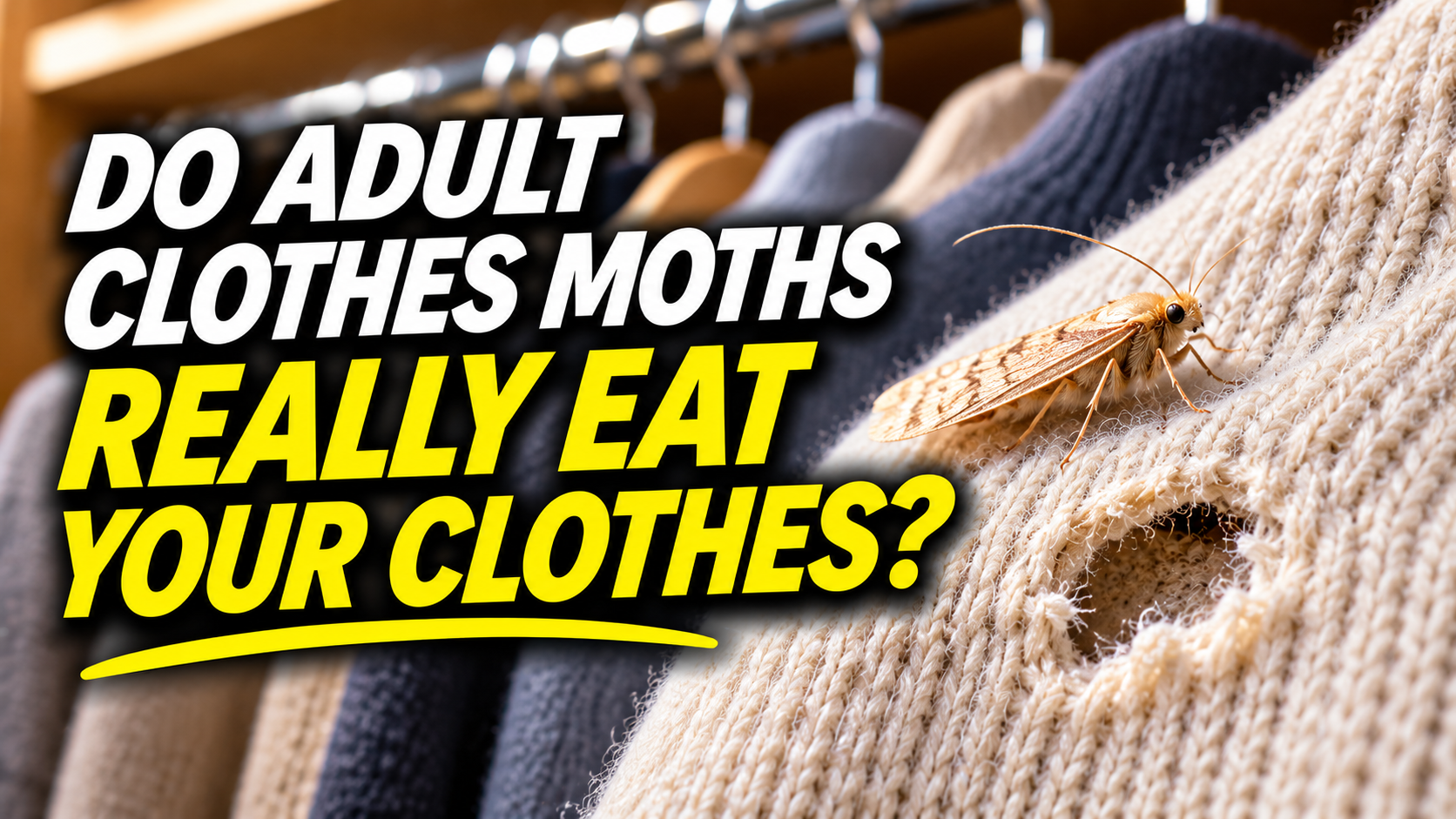
Do Adult Clothes Moths Really Eat Your Clothes? If you find tiny holes in a favorite wool sweater and then notice a small beige moth fluttering near the closet, the connection seems obvious. But the insect you see flying is not necessarily the one chewing your clothes. Two common fabric pests, the webbing clothes moth and the casemaking clothes moth, damage household textiles during their immature stages. Understanding which stage feeds is the key to finding the source rather than simply chasing visible moths.
Do Adult Clothes Moths Really Eat Your Clothes? What the Evidence Shows
The University of California Statewide Integrated Pest Management Program identifies the larva as the damaging stage of clothes moths. After eggs hatch, caterpillar-like larvae feed on suitable materials while hiding in folds, seams and dark, undisturbed locations. The adult moths seen fluttering nearby are the reproductive stage, not the stage responsible for chewing fabric. That does not make adult sightings irrelevant: a female can lay eggs near a suitable food source, creating the conditions for the next generation of larvae. Killing a flying adult alone does not repair existing damage or eliminate hidden eggs and larvae.
Why Clothes Moth Larvae Eat Wool and Other Fabrics
Clothes moth larvae are adapted to feed on animal-derived materials, particularly textiles containing wool, fur and feathers. Wool sweaters, rugs, blankets, felt, upholstered furniture and stored natural-fiber garments can all be vulnerable. The exact risk depends on the material and the conditions of storage. A clean synthetic shirt is much less attractive than a neglected wool coat, but blended fabrics containing wool may still be attacked. Food residue, perspiration and other soiling can make susceptible clothing more appealing. The damage typically begins where larvae can feed without being disturbed, rather than on the most visible surface of the garment.
What Happens During the Clothes Moth Life Cycle?
Clothes moths develop through egg, larva, pupa and adult stages. Adult females deposit eggs on or near materials that can support the young larvae. Once an egg hatches, the larva starts feeding and may remain in that stage for a prolonged period depending on temperature and food quality. Eventually it pupates and emerges as a moth. The University of California notes that heated buildings may support development during winter, so an infestation is not strictly a summer problem. The important distinction is functional: larvae need nutrition to grow, while adult moths serve primarily to reproduce and disperse. A fluttering moth may therefore be a warning sign of damage occurring somewhere less visible.
Where to Look for Evidence Inside Your Closet
Begin with wool garments that have been stored for long periods, especially under collars, along cuffs, inside folds and around seams. Look for irregular holes or surface grazing that makes fabric appear thinned. Webbing clothes moth larvae leave silken tubes or patches that may contain fibers and droppings. Casemaking clothes moth larvae carry small portable silken cases, often colored like the fabric they have eaten. Inspect rugs beneath heavy furniture, wool blankets and upholstered furniture as well. A flying moth near a closet is a clue, but evidence on damaged material is much stronger than a sighting by itself.
Could Carpet Beetles Be Responsible Instead?
Not every hole in clothing is caused by moths. Carpet beetle larvae can also consume wool, fur, feathers and other animal-derived materials. They leave shed skins and small fecal pellets rather than the silk webbing characteristic of clothes moth larvae. The UC IPM carpet beetle guide explains that damage patterns can overlap, so holes alone are not a reliable species identification tool. For additional identification and prevention guidance, see PestMarket’s carpet beetle control guide. Correct identification matters because treating the wrong pest can leave the actual source untouched.
Are Pantry Moths the Same as Clothes Moths?
No. Several moth species may fly indoors, and a moth found near a light or kitchen cabinet should not automatically be blamed for damaged wool. Pantry moths such as Indianmeal moths are associated with stored foods, including grains and dry ingredients, rather than wool garments. Clothes moth adults tend to stay close to infested items and often avoid brightly lit areas. The University of Minnesota Extension identification guide describes the webbing clothes moth’s appearance and its association with animal-based fabrics. If moths are appearing around cereal, flour or pet food, PestMarket’s pantry pest guide is a more appropriate starting point.
Why Killing the Flying Moths May Not Solve the Problem
The adult moth is the most noticeable stage, which can tempt homeowners to focus on catching every insect they see. But larvae and eggs may remain hidden in the fabric, in storage boxes or in nearby lint and natural-fiber debris. Pheromone traps can help monitor specific clothes moth species, particularly adult males, yet traps by themselves do not remove all immature stages. A persistent infestation requires locating the feeding source and addressing infested materials. Otherwise, a closet may appear quiet for a while only for another generation of adults to emerge later.
How to Protect Clothes Without Damaging Them
Start by carefully inspecting vulnerable garments and isolating items showing signs of activity. Clean clothing before long-term storage, paying attention to laundering and care-label restrictions. Professional dry cleaning may be more suitable than hot washing for delicate wool. Vacuum closet corners, baseboards, cracks and areas beneath furniture, and promptly dispose of collected debris. After confirming that garments are pest-free, store them in tightly sealed containers or protective bags. Do not expose delicate fabrics to extreme heat or cold without checking whether the treatment could harm them. Mothballs are pesticides, not harmless fragrances, and must be used strictly according to label directions in appropriate sealed spaces.
How to Tell Whether an Infestation Is Still Active
Fresh larvae, new silk webbing, live cases or continued damage after cleaning may suggest ongoing activity. Old holes alone cannot establish that an infestation is still present because fabric damage remains after insects disappear. Photograph suspicious areas, inspect items periodically and use species-appropriate monitoring traps when helpful. If the insects cannot be identified, damage continues despite cleaning, or expensive carpets and textile collections are involved, professional identification can prevent unnecessary treatment. The goal is to establish whether active feeding is taking place and eliminate its source rather than treating every moth in the home as proof of an infestation.
The PestMarket Verdict
No. Adult clothes moths do not chew holes in your clothes. The damaging stage is the larva, which feeds on suitable fabrics and may hide for long periods before becoming visible as an adult moth. Seeing a small moth near a closet is a reason to inspect vulnerable materials, not proof that the adult itself ate the garment. Identify larvae or their signs, check for carpet beetles and pantry moths, and address the actual source of the damage.
Evidence Grade
Proven — High confidence. University extension and integrated pest management guidance consistently identifies clothes moth larvae as the fabric-feeding stage. The distinction between adults and larvae is well established. However, a particular hole in an individual garment cannot be attributed to clothes moth larvae without inspecting the fabric and checking for other possible causes.