
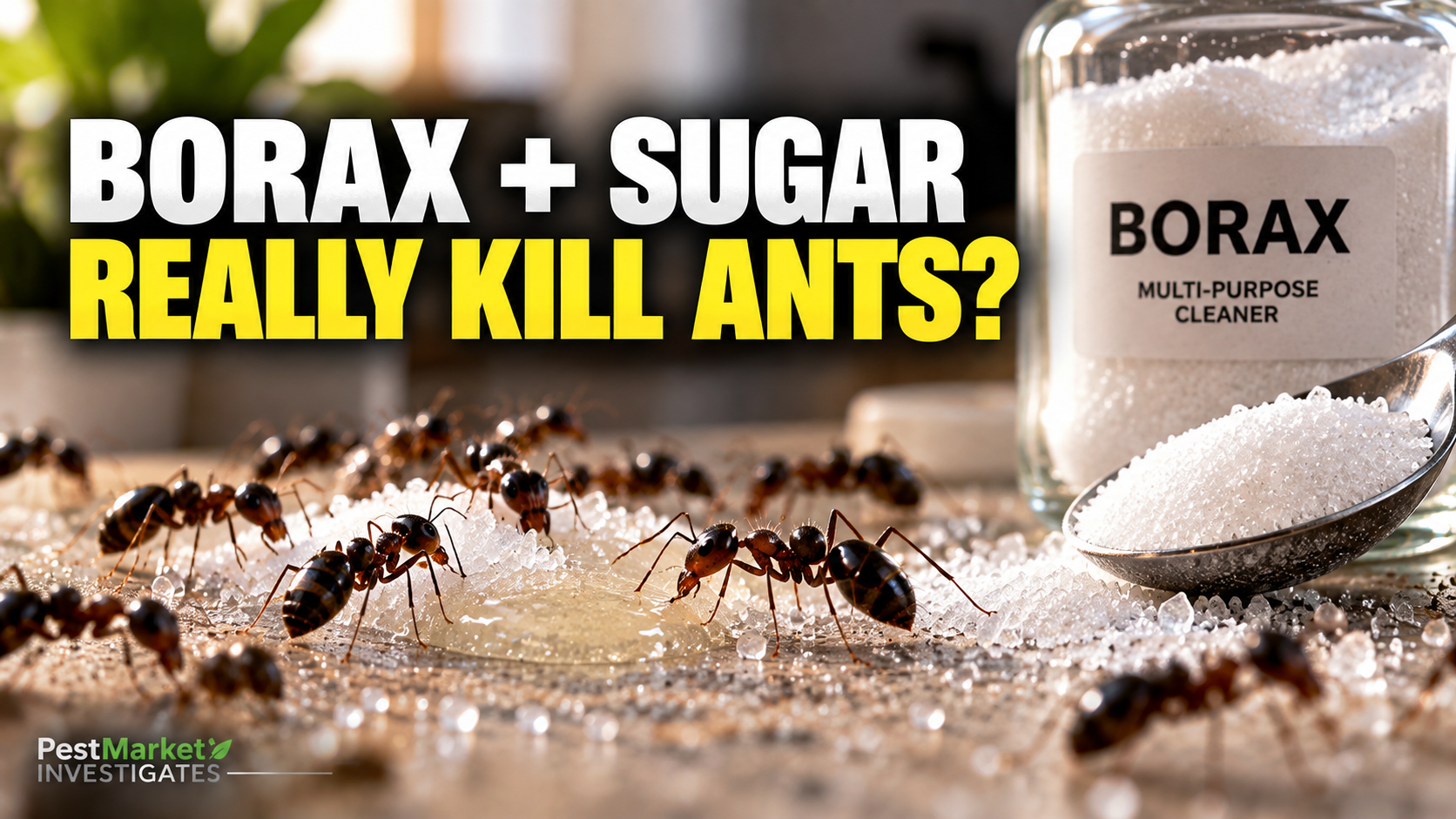
Does Borax and Sugar Really Kill Ants? It’s one of those home pest-control tricks that has been passed around for years. The idea sounds almost too simple. Ants come for the sugar, eat the borax with it, carry it back toward the colony, and eventually disappear.
But can borax and sugar kill ants well enough to control an infestation, or is this another DIY remedy that sounds better than it works? This one actually has science behind it. The catch is that concentration matters, the type of ant matters, and making the mixture stronger can actually make it less effective.
Why Borax and Sugar Can Work
Sugar isn’t what kills the ants. It acts as an attractant for ants looking for carbohydrates, while the borate is the toxic part of the bait. The idea is different from spraying the ants you see. A slow-acting bait gives workers time to feed and potentially carry it back toward the colony.
According to the University of California Statewide Integrated Pest Management Program, worker ants carry bait back to the nest and share it with other ants, including larvae and queens. That’s why bait can potentially reach parts of a colony that killing individual workers on a kitchen counter never will.
The Biggest Mistake May Be Using Too Much
This is where the popular DIY advice gets interesting. If a little borax works, adding more sounds like it should work faster. Research suggests the opposite can happen.
UC IPM recommends liquid sugar baits containing roughly 0.5% to 1% borate for severe Argentine ant infestations. A University of California Riverside study also found that Argentine ants consumed significantly less sugar solution when boric acid concentrations rose above 1%.
In other words, stronger isn’t automatically better. If ants find the bait less attractive and stop feeding on it, less toxicant may make its way back toward the colony.
Do Borax and Sugar Kill Ants in the Colony?
There is evidence that they can. USDA Agricultural Research Service research tested a 1% boric acid and 10% sugar-water bait against three urban pest ant species. Researchers reported substantial reductions in workers and brood, although the results varied by species and exposure conditions.
That helps explain why baiting is fundamentally different from spraying visible ants. Contact sprays can kill exposed workers quickly. A properly designed bait works more slowly, allowing foraging ants to continue interacting with the colony. Homeowners also shouldn’t expect instant results. UC IPM says it can take 5 to 10 days to see fewer ants, while complete control with bait may take longer.
Why It Won’t Work the Same on Every Ant
Not every ant wants sugar all the time. Argentine ants are strongly attracted to sweet liquid baits, but other species may prefer proteins, fats or oils. Food preferences can also change with the season and the needs of the colony.
That means ants ignoring a sugar bait doesn’t necessarily prove borax doesn’t work. They may simply not be interested in that particular food source. If you’re dealing with a persistent infestation, PestMarket’s Ant Control Guide covers identification, prevention and additional ways to control ants around the home.
Is Homemade Borax Ant Bait Safe?
Homemade doesn’t mean harmless. The University of Florida IFAS Extension warns that boric-acid ant bait should be kept where children and pets cannot reach it because ingestion can cause illness.
UC IPM also recommends enclosed prepackaged or refillable bait stations as among the safest and easiest ways for homeowners to use ant bait. Anyone using a registered pesticide product should follow its label rather than changing the concentration or intended use.
Does Borax and Sugar Really Kill Ants?
Yes, the basic idea is supported by research. Borate mixed with a food attractant can work as a slow-acting ant bait, and low concentrations can allow workers to continue feeding long enough for the bait to potentially move through the colony.
But the viral DIY version often leaves out the most important details. More borax isn’t necessarily better, not every ant is attracted to sugar, and placement and patience matter. So this isn’t just another bogus home remedy. There is legitimate pest-control science behind it, but getting the principle right matters more than simply mixing two household ingredients together.
Evidence Grade: STRONG EVIDENCE