
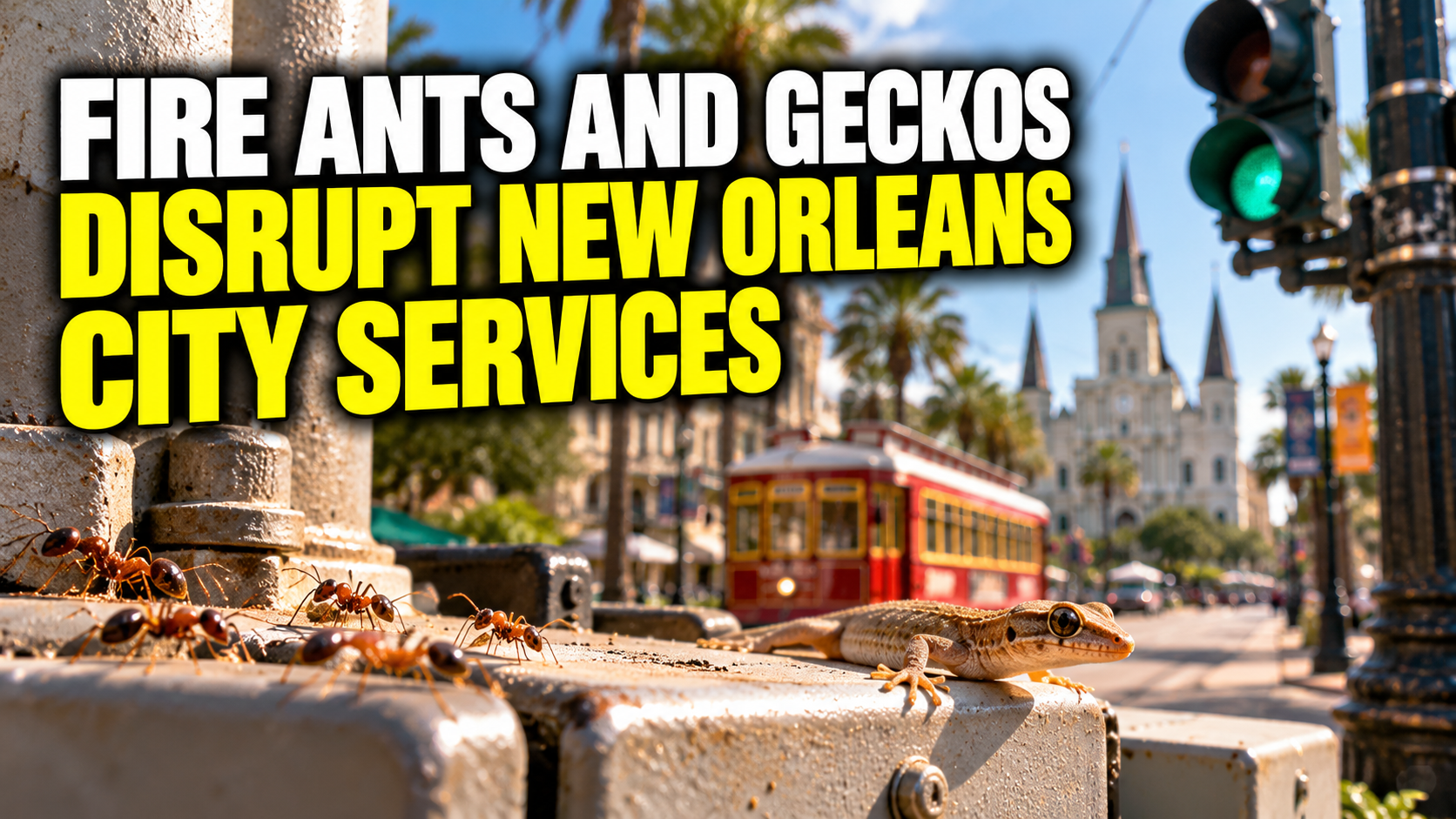
Fire ants and geckos disrupt New Orleans city services in an unusual series of infrastructure problems involving traffic signals, public-library air conditioning and other pest-related headaches. The latest attention followed an October 13 roundup of animal-related disruptions around the city, but the most concrete incidents were documented separately: a city infrastructure official described fire ants damaging electrical tape in a traffic-signal installation, while public-library maintenance records identified a gecko as the cause of damage to an HVAC control board. The cases illustrate how a small animal can create a problem far larger than its size, especially when it reaches vulnerable electrical equipment.
Fire Ants Damaged Electrical Tape in a Traffic Signal
The fire ant problem emerged during an October 5 city budget meeting, according to Axios New Orleans reporting on the infrastructure briefing. Deputy Chief Administrative Officer for Infrastructure Steve Nelson discussed traffic signals that had flashed during or after rain and said crews were investigating the underlying causes. In one instance, workers found fire ants had damaged electrical tape, leaving wiring compromised. The report does not establish that ants caused every malfunctioning traffic light across New Orleans, nor does it provide a citywide count of affected intersections. It does reveal a specific equipment vulnerability in an essential public-safety system.
A Gecko Damaged a Public Library Air-Conditioning Component
In another incident, a small reptile was implicated in trouble at a public facility. The New Orleans Public Library maintenance updates say a vendor discovered on September 9 that a gecko had damaged an HVAC control board at Nora Navra Library. The library subsequently continued repairs and requested additional work on the system. That is a documented piece of equipment damage, not evidence that geckos are broadly attacking buildings or that every library HVAC problem has the same cause. Small animals can enter utility spaces and enclosed machinery, where a single encounter with sensitive components may require repairs and downtime.
Rats and Other Animals Add to the City’s Pest Problems
A separate October 13 Axios roundup of New Orleans animal-related disruptions also recalled past complaints about rats at police facilities and recurring pressure from termites, mosquitoes and other animals. Those examples span different dates and circumstances; they should not be mistaken for a single new outbreak. Reports about rodents in police evidence areas drew attention previously, while officials discussing cleanup in October indicated the earlier evidence-room problem had been addressed. The more important pattern is that pest and wildlife issues do not stop at kitchens and yards. They can extend into storage rooms, public buildings and systems that residents rely on every day.
Why Small Pests Can Cause Outsized Damage
Infrastructure contains narrow openings, protective coverings, wiring and warm or sheltered spaces that can attract or admit animals. Fire ants may nest near equipment, while rodents can gnaw material and leave contamination where they travel. A gecko does not have to be large to affect a sensitive electrical component. However, the mechanisms and degree of risk vary by species and device, so one striking incident should not be used to suggest that every traffic signal, HVAC unit or electrical cabinet is vulnerable in the same way. Inspection and maintenance matter because the cost of a small point of failure can extend beyond the damaged part itself.
What New Orleans Residents Should Report
Residents who see a malfunctioning traffic signal should report it rather than trying to inspect public electrical equipment themselves. The city’s NOLA 311 service portal accepts requests involving traffic signals and signs as well as mosquito, termite and rodent control. For suspected infestations, the city also provides a dedicated reporting route through its pest-control services. Homeowners can reduce pest pressure around their own properties by managing garbage, limiting food and water access, sealing entry gaps where practical and requesting professional help when activity persists. Exposed or energized utility equipment should be handled only by qualified personnel.
Why This Story Matters Beyond New Orleans
These incidents are a reminder that pest management is not only about discomfort or property appearance. A traffic signal or cooling system contains components that must function reliably, and an insect or small animal can create an unexpected maintenance issue when it reaches the wrong spot. For homeowners dealing with persistent insect trails or ant colonies, PestMarket’s Ant Control Guide covers identification and practical prevention steps. For signs of rodent activity, the Rat Control Guide explains how to recognize and reduce common risks. The lessons for public agencies are different in scale but similar in principle: identify the source, correct the access point and protect the equipment rather than treating visible pests alone.
The Bottom Line
The confirmed story is more precise, and more interesting, than a claim that pests have taken over New Orleans. A fire ant incident involving compromised traffic-signal wiring was described during a city budget meeting, and a public-library record separately attributed HVAC control-board damage to a gecko. Other rodent and wildlife stories provide useful context, but they are not all new October 2026 events. Together, the examples show why cities need to account for pests and wildlife when maintaining public facilities and infrastructure.