
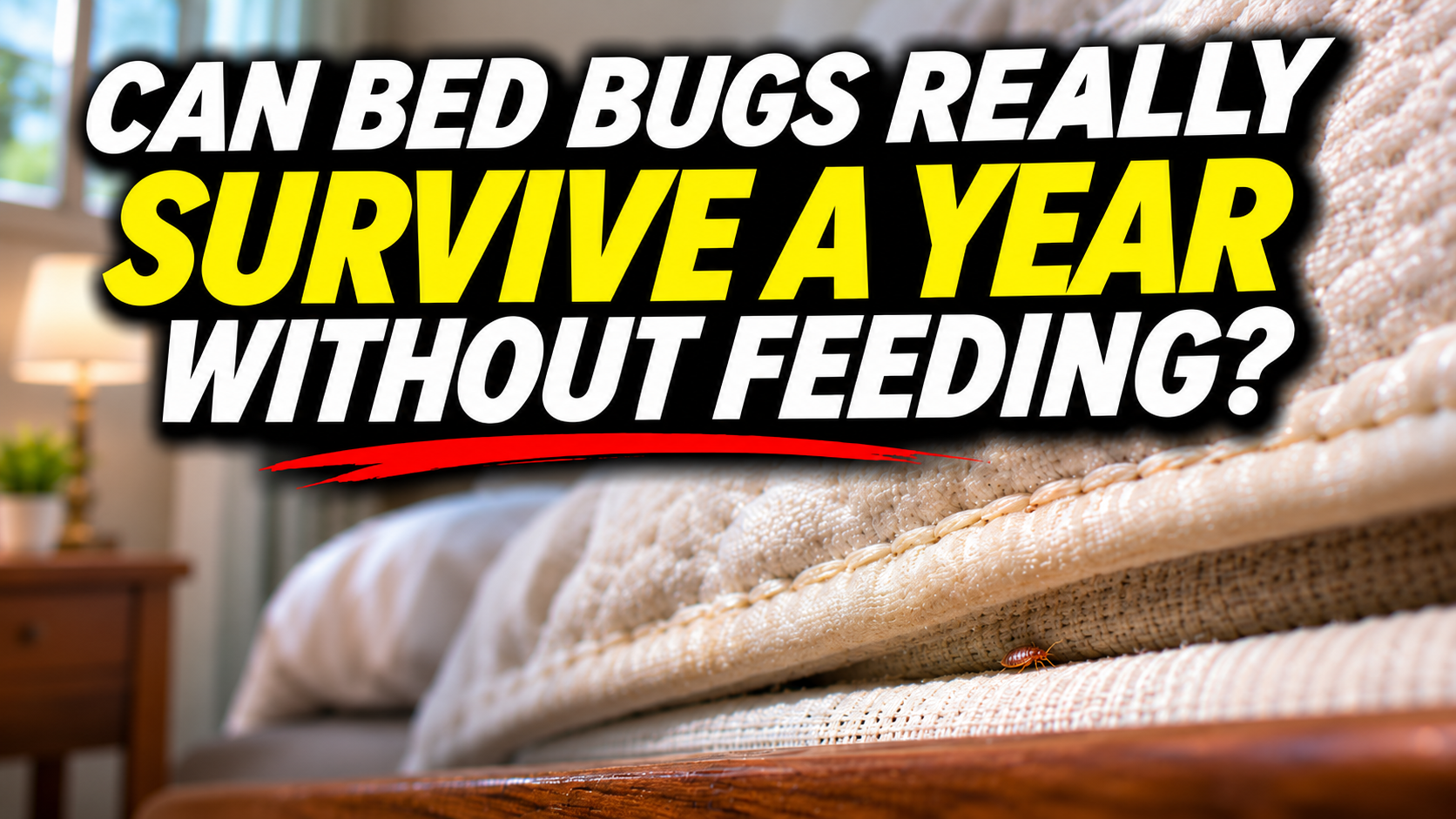
Can Bed Bugs Really Survive a Year Without Feeding? The claim appears in pest-control advice, online discussions, and conversations about vacant apartments. It sounds like a simple yes-or-no question, but decades of observations and more recent laboratory experiments point to a more complicated answer. Bed bugs require blood to grow and reproduce, yet they can slow their activity when food is unavailable. The crucial variables include temperature, humidity, life stage, and the particular bed bug population being studied. Some exceptionally long survival claims come from cool laboratory conditions; shorter survival times have been measured under warmer conditions that more closely resemble occupied homes. That distinction matters for anyone wondering whether leaving a bedroom, rental unit, or vacation cabin empty will make an infestation disappear.
Why the One-Year Survival Claim Became So Popular
Bed bugs are notorious for persisting after occupants leave a building, and that reputation has a scientific basis. The University of California Integrated Pest Management program says bed bugs can survive without feeding for roughly 20 to 400 days, depending on temperature and humidity, and notes that adults have survived for more than 400 days in laboratories at low temperatures. These observations make a year-long survival period biologically possible in special circumstances, but they do not establish a fixed survival time for every bed bug found in a heated bedroom. The range is wide because a warm room, an unheated cabin, and a climate-controlled research chamber place very different demands on an insect’s energy reserves.
Can Bed Bugs Really Survive a Year Without Feeding?
The best answer is that unusually long survival has been documented, but a full year is not the expected outcome in every environment. A major laboratory study conducted by Virginia Tech researchers compared four strains of the common bed bug, Cimex lectularius, with different levels of pyrethroid insecticide resistance. Their findings, published in the peer-reviewed journal Insects in 2011, reported mean starvation survival of 13.8 to 36.3 days for first-stage nymphs and 41.5 to 142.6 days for fifth-stage nymphs and adults across the tested strains. These are measured group averages, not guaranteed maximum survival times for every individual. The contrast with historical year-long claims shows why research conditions and precise wording are essential.
Temperature Can Change Everything
Temperature affects how quickly bed bugs use stored energy. In cooler conditions, their metabolism can slow, potentially allowing them to survive longer without another blood meal; in warmer conditions, energy use generally rises. A home kept at ordinary indoor temperatures therefore cannot be assumed to have the same outcomes as a cool laboratory setting. The University of California’s long-survival examples specifically emphasize low-temperature conditions. Cooler does not mean safely frozen, either: gradual seasonal cooling may let some bugs persist, while controlled extreme temperatures require careful exposure to reach lethal levels. This is why leaving a house unheated during winter, or switching off the air conditioning for a few weeks, is not an evidence-based substitute for a coordinated treatment plan.
Young Bed Bugs Are Not as Tough as Adults
Age matters almost as much as temperature. Bed bugs pass through five immature stages before becoming adults, and each nymphal stage requires a blood meal to molt to the next stage. Recently hatched nymphs generally have less reserve energy than older nymphs and adults, which helps explain why the Virginia Tech researchers found shorter average starvation survival among the youngest individuals. The same study found notable differences among bed bug strains. This is an important warning against treating the entire infestation as a single organism with a single survival deadline: a hidden group can contain eggs, small nymphs, older nymphs, and adults with different feeding histories and different chances of surviving until another host becomes available.
What a Virginia Tech Study Actually Measured
The 2011 study is particularly valuable because it challenges a common shortcut in pest advice. The researchers found that more insecticide-resistant bed bug strains survived starvation for shorter periods than the susceptible strains in their experiment. That observation does not mean resistance can be used as a practical way to starve bugs out of a home, and it does not prove the same pattern will occur in every population. It does show that a bed bug’s physiological background can affect the outcome. Equally important, an average survival period is not a countdown for a homeowner. A few hidden survivors may be enough to frustrate attempts to declare a room clear without continued monitoring and properly targeted interventions.
Will Leaving an Apartment Empty Make Bed Bugs Disappear?
Vacating a room might remove an accessible food source, but it is an unreliable control strategy. Some bed bugs can remain hidden for months, and the insects may respond to new occupants when people return. In multiunit buildings, insects may also move between rooms or apartments, so an empty unit does not guarantee that the broader infestation has stopped. Cornell University’s bed bug guidance specifically advises against leaving a home unoccupied through winter as a control measure because bed bugs can survive for many months under cooler conditions. A vacant property may create fewer feeding opportunities, but a lack of bites or visible activity does not prove that every insect has died.
What Happens When a Blood Meal Returns?
Bed bugs are attracted to suitable hosts and typically emerge from protected hiding places to feed. A starving insect that survives until people or other suitable hosts are present may become active again. Blood meals are essential not just for nourishment but also for normal development and reproduction. Females require feeding to continue laying eggs, and nymphs must feed to advance through their stages. That means starvation can slow the growth of an infestation without necessarily eliminating it. For someone returning to a previously empty room, renewed bite reports may indicate surviving bed bugs, new introductions, or movement from a neighboring area; those explanations cannot be distinguished by timing alone. Physical inspection and identification are needed before choosing a response.
Why Visible Bites Are Not a Reliable Clock
People sometimes conclude that an infestation is gone because no one has been bitten recently. This assumption is weak for two reasons. First, bites are not always noticed, and skin reactions vary widely. Second, hidden bugs can remain alive without feeding for substantial periods. The better approach is to look for actual evidence: live insects, shed skins, dark fecal spots, eggs, and other signs around beds, frames, furniture, and wall junctions. Our PestMarket Bed Bug Control Guide explains how to recognize these clues and avoid relying on a bite pattern alone. A room should be assessed through inspections and ongoing monitoring rather than a calendar-based guess about when starvation should have killed the population.
What Works Better Than Waiting for Starvation
An effective response focuses on finding and eliminating the insects rather than hoping they run out of food. The U.S. Environmental Protection Agency recommends an integrated pest management approach that can combine inspection, clutter reduction, careful treatment of items, mattress and box-spring encasements, interceptors, and appropriate pesticide use when needed. Heat treatment and cold treatment can also be effective under controlled conditions, but the temperatures must reach the insects in their hiding places for sufficient time. Do not rely on a space heater, thermostat setting, unmeasured freezer, or fogger to substitute for proper methods. If the infestation persists or affects multiple rooms, professional assessment may be warranted; PestMarket’s professional pest-control resources can help homeowners plan next steps.
The PestMarket Verdict
So can bed bugs really survive a year without feeding? In unusually cool laboratory conditions, yes, evidence supports survival beyond 400 days for some adults. But the familiar claim becomes misleading when applied to every bed bug in every house. Modern laboratory work documented substantially shorter mean survival times for multiple strains and developmental stages, while other sources continue to acknowledge much longer survival under cooler conditions. For homeowners, the practical conclusion is straightforward: moving out, avoiding a room, or waiting through the winter is not a dependable way to get rid of bed bugs. Reliable identification, treatment, and follow-up monitoring offer a safer and more defensible path.
Evidence Grade
STRONG EVIDENCE for the conclusion that bed bugs can survive without a blood meal for weeks or months, and that temperature, developmental stage, and population differences affect starvation survival. MODERATE, CONDITION-DEPENDENT EVIDENCE for survival beyond one year in exceptional low-temperature laboratory settings, as summarized by university extension guidance; this should not be presented as a typical indoor survival time. The 2011 Virginia Tech experiments provide strong direct measurements under their tested conditions, but they do not determine survival in every home. There is no sound evidence that simply leaving a home vacant for a set period will reliably eradicate an infestation.