
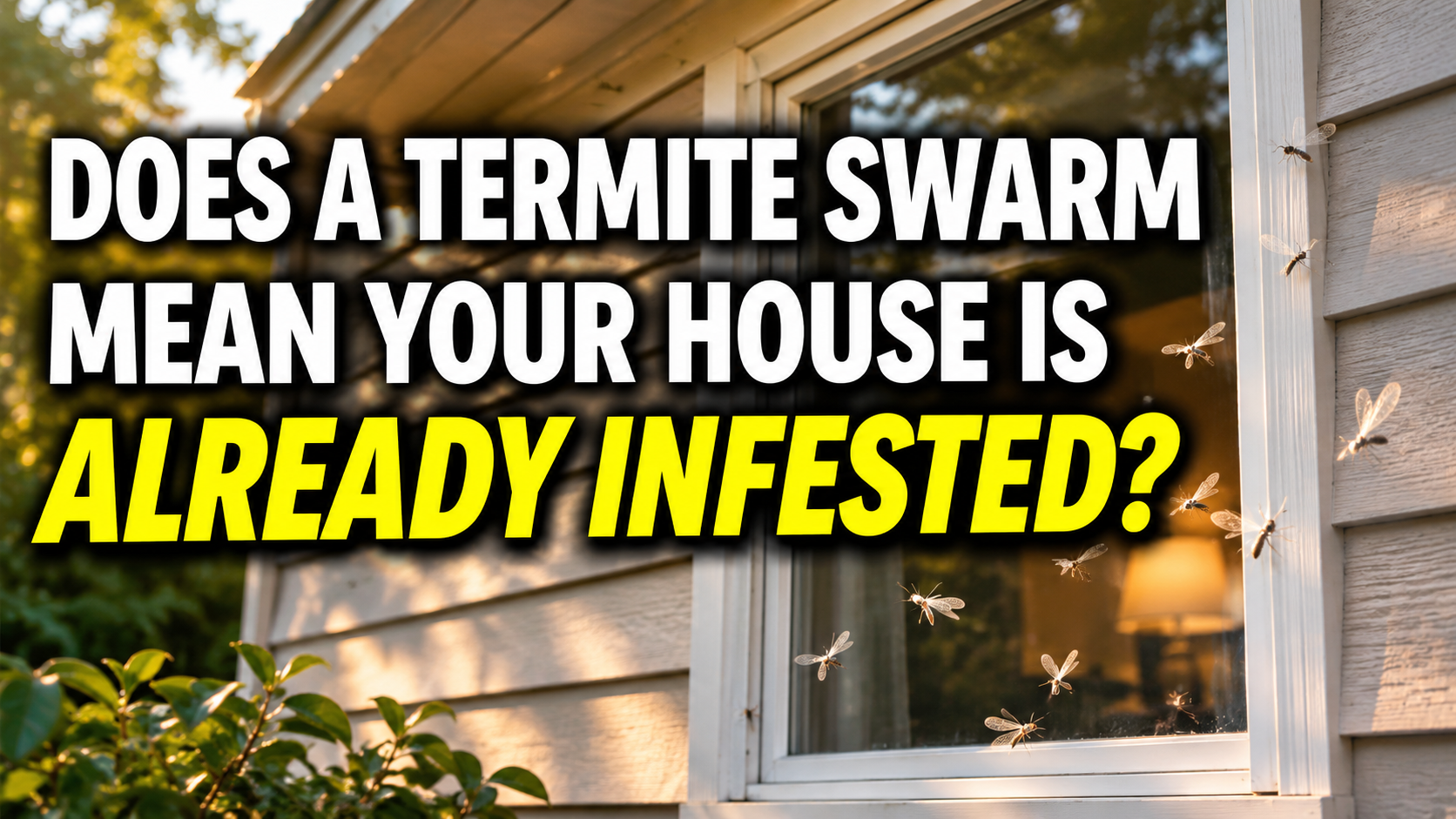
Does a Termite Swarm Mean Your House Is Already Infested? Not automatically. The most important question is where the winged termites came from. A swarm that emerges from a wall, floor, or beam inside a home is a serious indicator that termites are already established in or feeding on the structure. Yet a swarm flying outdoors, even close to a house, may originate in a tree stump, buried wood, or another colony outside. Some winged termites are drawn indoors by lights and open windows. The same alarming sight can therefore have very different implications, and treating every swarm as proof of a damaged house is as misleading as ignoring an indoor emergence.
Why Termites Swarm in the First Place
Termite colonies produce winged reproductive adults, often called alates or swarmers, when colonies reach the appropriate stage and environmental conditions favor dispersal. These insects leave an established colony to seek mates and attempt to start new colonies. Moisture, rainfall, temperature, season, and species all affect the timing. Most swarmers never successfully establish a nest, but their presence shows that a mature colony exists somewhere in the surrounding environment. It does not identify exactly where that colony is living. Termites also differ from nuisance insects that enter just to look for food: a termite swarm is part of the colony’s reproductive cycle, and the flying adults may shed their wings after landing.
Does a Termite Swarm Mean Your House Is Already Infested?
The answer changes dramatically when swarmers are seen coming out of the structure itself. If you watch dozens or hundreds of winged termites emerge from a crack in a baseboard, interior wall, wooden door frame, ceiling, or floor, the source is no longer just a passing outdoor flight. University extension specialists consider an indoor emergence a major sign of a structural infestation. By contrast, a swarm outside the building can originate from soil, landscaping timbers, an old stump, or other nearby wood. The University of California Integrated Pest Management program emphasizes that flying termites alone do not always mean a building is infested, and diagnosis commonly requires an inspection.
What If You Find Winged Termites Inside the House?
Location matters, but so does the route of entry. Large numbers appearing from an interior opening, or repeated masses of shed wings near the same point, deserve prompt professional attention. However, termites that fly toward porch lights can sometimes slip through open doors or windows, especially during evening swarms. The Mississippi State University Extension Service describes an important exception involving Formosan subterranean termites: a small number may wander indoors from outside because they are strongly attracted to light. That exception is not permission to dismiss swarms. Photograph the insects, note their entry point and time, and request an inspection when their origin is uncertain. A professional should determine the species and whether a colony is actually using the building.
Why an Outdoor Swarm Near Your Foundation Still Matters
Seeing termites launch from a crack in soil directly alongside the foundation is more concerning than watching them disperse from a distant log, but proximity by itself does not confirm they are feeding inside the house. A subterranean colony can have multiple foraging routes and may occupy material outdoors while never entering a well-protected structure. On the other hand, an old treatment can deteriorate or previously unnoticed entry conditions may allow movement into the building. Instead of estimating infestation from distance alone, inspect accessible foundation surfaces, crawl spaces, stored wood, and contact points between soil and wooden framing. Note whether the swarm seems to emerge from the ground, a stump, a deck, or the home itself.
How to Tell Termite Swarmers From Flying Ants
Flying ants are frequently mistaken for termite swarmers, and this error can send homeowners toward the wrong treatment. A typical termite swarmer has a relatively broad waist, straight or beadlike antennae, and two pairs of wings of roughly equal length. Winged ants generally have pinched waists, elbowed antennae, and front wings that are noticeably longer than their hind wings. Color and size alone are unreliable because multiple termite species and ant species occur across the country. Collect a few intact specimens or clear photos of wings, antennae, and body shape rather than crushing every insect immediately. Correct identification should precede a costly structural treatment or a claim that the building is infested.
Other Warning Signs That Matter More Than a Passing Swarm
A swarm is one clue in a larger inspection, not a complete diagnosis. Subterranean termites may build earthen shelter tubes along foundations, supports, or other surfaces so workers can travel while protected from drying out. Damage can appear as weakened or hollowed wood, blistered surfaces, or galleries revealed during repairs. Drywood termites may leave small, hard fecal pellets beneath tiny exit holes, although pellets alone do not establish how extensive or active the infestation is. The U.S. Environmental Protection Agency recommends identifying swarms and inspecting accessible wood for hollow areas while emphasizing that structural termiticide applications usually require trained professionals. A lack of visible swarmers does not prove that hidden activity is absent.
Subterranean and Drywood Termites Are Not the Same
The term termite covers different groups with different nesting and treatment needs. Subterranean species commonly live in soil and reach wood through concealed passages or mud tubes. Drywood species can establish colonies entirely inside sound, relatively dry timber without any soil connection. In Southern California, drywood termite swarms can occur in warm seasons, so homeowners should not assume that every winged termite near a house originated underground. A careful inspection should identify which type is present before recommending bait systems, soil barriers, localized wood treatments, or other measures. The source of a swarm, the life history of the species, and the construction of the home all determine what an effective response looks like.
What Should You Do Right After Seeing a Termite Swarm?
Start by documenting the evidence without destroying useful clues. Take close photographs, note the date, time, weather, exact location, and whether termites emerged from a wall or flew in from outside. Save a few specimens or shed wings for identification and inspect accessible places for mud tubes or suspicious wood damage. Do not pry open electrical equipment, tear apart finished walls, or drill into structural members to chase insects. Vacuuming swarmers may remove visible insects, but it does not eliminate the hidden parent colony. If you already have a termite service agreement, notify the provider and ask for an inspection. If not, compare the findings and proposed treatment plans of qualified, licensed professionals. PestMarket’s termite identification and control guide provides a practical overview of signs, prevention, and treatment options.
Can a House Be Infested Without Any Visible Swarm?
Absolutely. Termite colonies are concealed by design, and residents may miss a brief swarm or never see reproductive flights at all. Work can continue quietly in soil, wall voids, attic timbers, or other structural locations. That is why regular inspections and managing conducive conditions matter more than waiting for flying insects. Keep wood and stored lumber away from soil contact where practical, address plumbing leaks, and monitor areas where water or damp conditions persist. These actions reduce risk but cannot certify that a building is termite-free. If you see suspicious mud tubes, unexplained pellet accumulations, or structural weakening, arrange an assessment even when no swarm has ever been observed. Homeowners comparing treatment options can also consult PestMarket’s professional pest control directory.
When Does a Professional Inspection Become Urgent?
Arrange a prompt inspection when a swarm is clearly coming from inside the home, large numbers repeatedly gather in an interior room, wings accumulate around the same opening, or visible tubes and damaged wood accompany the swarm. If a few winged termites are merely seen near an outdoor porch light, the concern is lower, but their identity and the home’s protection history still matter. A good inspector should explain exactly what evidence supports a diagnosis, identify the likely termite group, show affected or vulnerable areas, and distinguish active infestation from conditions that increase future risk. If treatment is recommended, request a written explanation of the target pest, treatment method, expected results, follow-up plan, and limitations before making a decision.
The PestMarket Verdict
A termite swarm does not automatically mean your house is already infested. Winged termites outdoors may come from a perfectly ordinary colony in nearby soil or dead wood, and a few light-attracted swarmers sometimes enter a building without nesting there. However, termites visibly emerging from interior walls, floors, or wooden structures are strong evidence of established activity that demands inspection. The decisive issue is not simply whether a swarm happened, but where the insects originated, whether they have entered structural wood, and what additional signs an inspection uncovers. Do not buy a treatment based on fear alone, and do not dismiss a clear indoor emergence just because the flying termites have disappeared.
Evidence Grade
STRONG EVIDENCE that termite swarmers are reproductive adults from established colonies and that swarmers emerging directly from a structure are a serious warning of an active infestation. STRONG EVIDENCE that swarms observed outside do not, by themselves, prove a house is infested. MODERATE, CONDITION-DEPENDENT EVIDENCE applies to interpreting small numbers of swarmers indoors because outdoor entry varies by termite species, seasonal flight patterns, lighting, and building openings. INSUFFICIENT EVIDENCE to infer a home’s damage severity, colony size, or treatment needs from a single sighting without identifying the insects and inspecting the structure.