
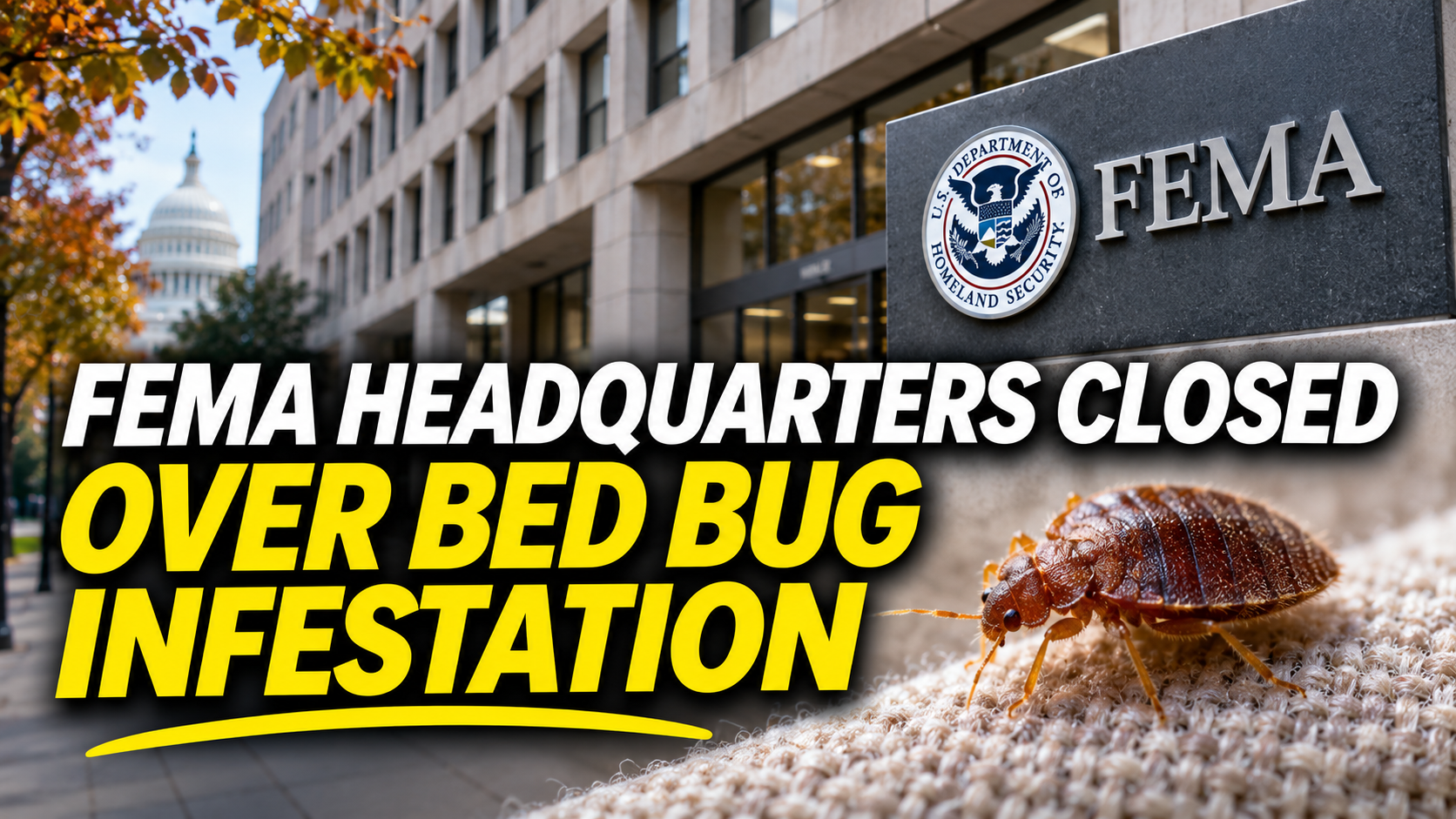
FEMA Headquarters Closed Over Bed Bug Infestation became an unexpected federal workplace disruption on November 19, 2026, when the Federal Emergency Management Agency temporarily closed its Washington, D.C., headquarters for urgent pest control treatment. More than 1,000 employees were directed to work remotely after bed bugs were reported inside the building. According to CNN, insects had reportedly been found on multiple floors, prompting a building-wide treatment. However, the Department of Homeland Security (DHS) stated that the incident was limited to a few offices. That distinction is important: a building-wide treatment does not mean every floor or office had a confirmed infestation.
FEMA Headquarters Closed Over Bed Bug Infestation Following Emergency Notice
According to CNN’s November 19 reporting, employees received an internal email on Wednesday evening, November 18, informing them that headquarters would be closed for urgent pest control treatment. The notice described a comprehensive treatment of the building to address an active pest issue and maintain a safe working environment. By Thursday, reports indicated that bed bugs had been discovered on multiple floors. The agency did not provide a specific reopening date in the message, instead indicating that employees would receive further instructions after the problem had been addressed. The closure attracted national attention because FEMA is responsible for coordinating federal disaster response, yet the agency was facing an unexpected pest management problem inside its own headquarters.
More Than 1,000 FEMA Employees Ordered to Work Remotely
The temporary closure required more than 1,000 FEMA employees to work from home while pest control operations took place. The number reflects employees affected by the building closure, not the number of people exposed to bed bugs or experiencing bites. Public reporting did not establish how many individual offices contained insects, how long the problem had been developing, or whether any employees had experienced physical symptoms. Although the disruption affected access to the headquarters, DHS maintained that FEMA remained fully operational and prepared to respond to disasters and emergencies. This distinction matters because a temporary building closure does not necessarily mean an agency’s essential operations have stopped. Remote work allowed staff to continue their responsibilities while the facility underwent treatment.
DHS Says the Bed Bug Problem Was Limited to a Few Offices
Despite reports of bed bugs on multiple floors and the decision to treat the entire building, DHS told CNN that the incident was limited to a few offices. These statements are not necessarily contradictory. Reports of sightings in different locations may lead facility managers to conduct broader inspections or treatments without confirming an established infestation throughout the entire property. The extent of an infestation must be determined through inspections, accurate identification, and evidence of continued insect activity. In FEMA’s case, officials did not publicly provide a detailed map showing confirmed infestation locations. Therefore, describing the incident as a building-wide treatment is supported by reporting, while claiming that every office was infested would go beyond the available evidence.
Why Bed Bugs Can Become a Problem in Government Office Buildings
Bed bugs are commonly associated with residential bedrooms and hotels, but they can also enter offices, schools, public transportation, and other shared environments. For readers unfamiliar with the insects, PestMarket’s bed bug identification and control guide explains the signs of activity and practical prevention measures. Unlike pests that depend on food waste or moisture, bed bugs feed on blood and can travel between locations by hiding in luggage, bags, clothing, and other personal belongings. An employee or visitor can unintentionally transport an insect into a workplace without realizing it. Once introduced, bed bugs may hide in furniture seams, upholstered chairs, storage areas, or other protected spaces. However, the introduction of one insect does not necessarily establish a reproducing population. Whether an infestation develops depends on several factors, including opportunities to feed, available hiding places, and whether the insects are detected and removed.
EPA Warns That Offices Can Become Bed Bug Transfer Points
The U.S. Environmental Protection Agency’s guidance on bed bugs in public places explains that established infestations are relatively unlikely in offices, classrooms, and other nonresidential environments, although they remain possible. More importantly, these locations can serve as transfer points where insects move between workplaces and homes. EPA recommends reducing clutter, keeping personal belongings separate when practical, and paying particular attention to break rooms, coat storage areas, and upholstered furniture. The agency also emphasizes that a single bed bug sighting should not automatically be classified as an infestation. Multiple sightings in the same area may indicate either an established population or repeated introductions. Proper identification and monitoring are therefore essential before determining the appropriate response.
What Building-Wide Bed Bug Treatment Actually Involves
Treating bed bugs in a large office building can be more complicated than treating an isolated room. Pest management professionals may need to inspect furniture, shared spaces, storage areas, and locations connected to confirmed sightings. The EPA’s integrated pest management recommendations describe a combination of nonchemical and chemical techniques that can be used to control bed bugs. Depending on the circumstances, these methods may include vacuuming, monitoring devices, heat treatment, targeted pesticide applications, and follow-up inspections. Bed bug eggs can survive some treatment methods, making continued monitoring particularly important. However, FEMA has not publicly confirmed which specific products, temperatures, equipment, or treatment procedures were used at its headquarters. It would therefore be inaccurate to describe a particular treatment method as confirmed solely because the building underwent pest control operations.
Can Bed Bugs Spread From an Office Building Into Employees’ Homes?
The possibility of bringing bed bugs home is one reason workplace incidents deserve careful attention. Bed bugs can hide inside bags, folded clothing, coats, and other belongings before being transported to another location. PestMarket has also examined how bed bugs can travel home in luggage, a related concern when personal items move between shared spaces. However, visiting or working in a building where bed bugs have been reported does not automatically mean someone will carry insects home. The risk depends on whether belongings come into contact with infested areas and whether insects have opportunities to hide in them. Employees in affected workplaces can reduce potential exposure by keeping personal belongings away from upholstered furniture and shared storage areas when possible. If a confirmed infestation exists, workers should follow instructions from building management and pest control professionals rather than attempting unapproved pesticide treatments. Accurate information can help prevent unnecessary alarm while supporting effective containment.
Why Early Reporting Matters in Large Workplaces
Early identification is especially important in workplaces where employees and visitors move between offices, meeting rooms, and shared facilities throughout the day. A suspected bed bug should be reported promptly to facility management so that trained personnel can confirm the species and determine whether additional inspection is necessary. Misidentification can create confusion because several other insects may resemble bed bugs at certain life stages. Similarly, skin irritation alone cannot establish that bed bugs are present. Effective workplace pest management requires clear reporting procedures, appropriate inspections, communication with employees, and a coordinated treatment strategy when necessary. EPA also advises against creating stigma around bed bug discoveries, because embarrassment or fear can discourage reporting and delay a response.
What the FEMA Incident Reveals About Workplace Pest Management
The FEMA headquarters closure illustrates how a pest issue can disrupt operations even inside a major federal agency. Unlike a residential infestation involving one household, a large office building presents challenges involving employee access, shared furniture, communication, and coordinated treatment. The decision to temporarily close headquarters demonstrates the operational impact that pest concerns can create, regardless of whether the confirmed infestation is widespread. Nevertheless, the case should not be interpreted as evidence that federal buildings are unusually vulnerable to bed bugs. The public reporting establishes a specific incident at FEMA, not a broader pattern across government facilities. The more useful lesson for property managers is that an effective response depends on distinguishing confirmed pest activity from assumptions and selecting control measures appropriate to the documented problem.
What Happens Next at FEMA Headquarters
As of November 20, 2026, the reviewed reporting had not established a confirmed reopening date for FEMA headquarters. Officials had also not publicly disclosed the total treatment cost, the identity of the pest control contractor, or the number of rooms with confirmed bed bug activity. DHS maintained that FEMA remained operational despite the temporary closure, but additional information would be needed to determine whether the treatment successfully resolved the problem. Future developments should be evaluated against official agency statements or verified follow-up reporting rather than speculation about how long the infestation existed or where the insects originated. For employees and building managers, the incident reinforces the importance of timely reporting, professional inspection, appropriate treatment, and continued monitoring when bed bugs are discovered in shared workplaces.