
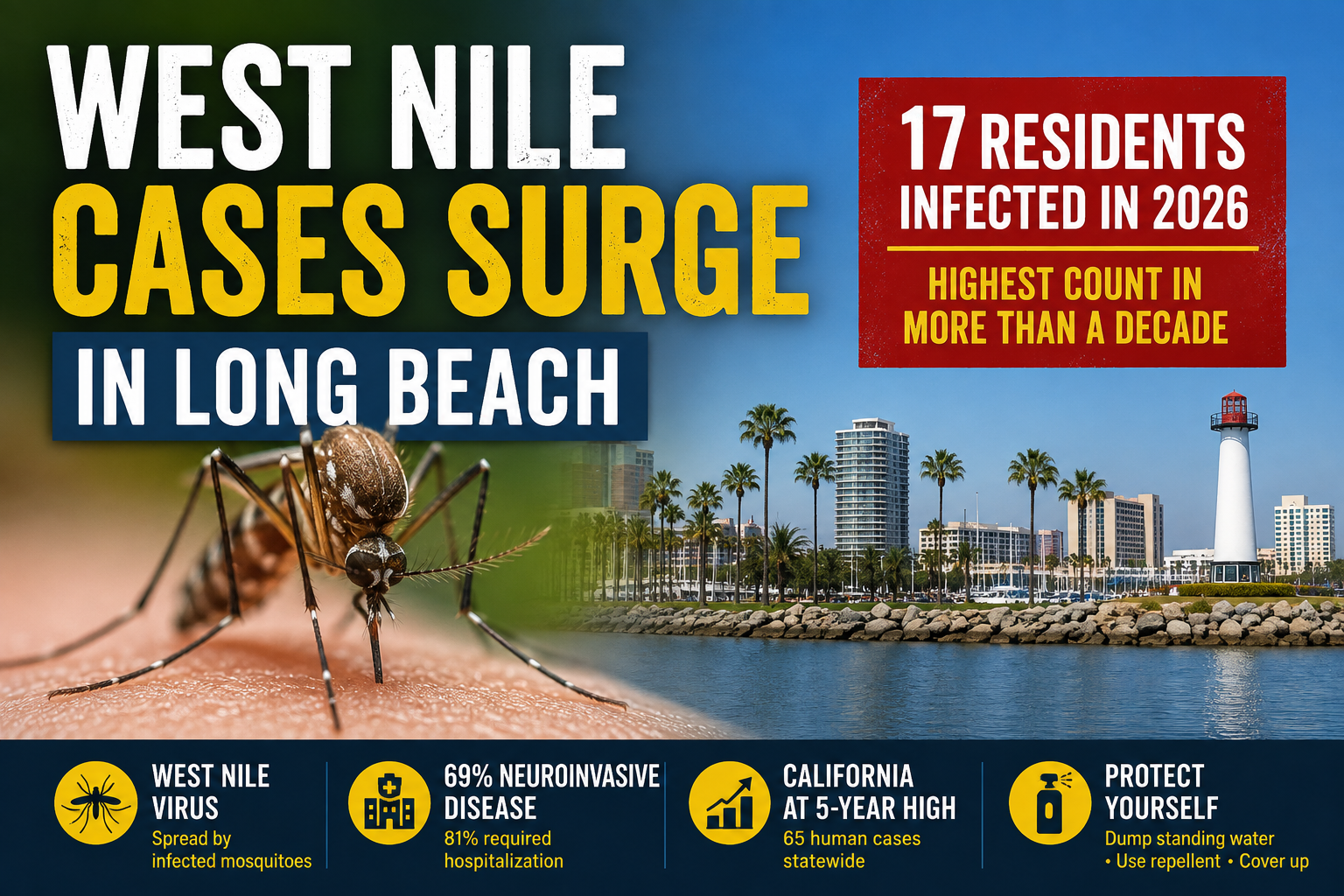
West Nile in Long Beach has climbed to 17 human cases this year, marking the city’s highest case count in more than a decade as California experiences elevated virus activity statewide.
The Long Beach Post reported Wednesday that 17 residents have contracted West Nile virus in 2026, citing the city’s health department. That’s one more case than the 16 reported by the City of Long Beach in an official update issued Aug. 28.
The increase is particularly notable after several years with few reported infections. Long Beach recorded just one human case in 2025, none in 2024, one in 2023 and four in 2022. The last year with a higher total was 2014, when the city recorded 56 cases.
Most Long Beach Cases Have Required Hospitalization
The numbers also stand out because of the severity of the illnesses reported.
According to the city’s Aug. 28 update, 69% of cases involved neuroinvasive West Nile disease, the severe form of the illness that affects the brain or nervous system.
The city also reported that 81% of infected residents required hospitalization.
Most people infected with West Nile virus never develop symptoms. When illness does occur, symptoms can include fever, headache, body aches, rash, nausea and vomiting.
A much smaller proportion of infections can progress to serious neurological illness such as encephalitis, meningitis or paralysis.
There is currently no licensed human vaccine or specific medication to prevent West Nile virus disease.
Infected Mosquitoes Were Detected Months Ago
Long Beach’s first human cases emerged in late June, but infected mosquitoes had already been detected in the city in May.
Health officials expect West Nile activity to continue into early fall, with infections typically peaking around September.
The virus is transmitted to people primarily through the bite of infected Culex mosquitoes.
Long Beach’s Vector Control Program is continuing mosquito surveillance and control efforts in coordination with regional mosquito and vector control agencies.
City of Long Beach West Nile Virus Update
California West Nile Activity Is at a Five-Year High
Long Beach isn’t the only area seeing increased activity.
The California Department of Public Health announced Aug. 20 that West Nile virus activity across the state had reached its highest level in five years.
California’s latest statewide surveillance update, dated Aug. 28, shows:
- 65 human cases across 16 counties
- 5 West Nile-related deaths
- 3,001 positive mosquito samples
- 481 positive dead birds
- West Nile-positive mosquito samples reported in 29 counties
The state recorded 19 new human cases during the most recent reporting week alone.
Los Angeles County’s statewide surveillance totals show 11 human cases, 432 positive mosquito samples and 96 positive dead birds. Those human-case figures do not include Long Beach’s separately administered health jurisdiction.
Long Beach itself has recorded 14 West Nile-positive dead birds this year, according to California’s surveillance system.
California West Nile Virus Surveillance Dashboard
Why Is West Nile So Active This Year?
There isn’t one confirmed explanation.
Long Beach City Health Officer Dr. Cliff Okada told the Long Beach Post that he couldn’t give a definitive reason for this year’s unusually high case count. Potential contributing factors discussed included warmer temperatures and improved local surveillance.
California health officials similarly say West Nile activity can be influenced by multiple factors, including climate, mosquito and bird populations, and the level of immunity to the virus among birds.
That makes it difficult to attribute this year’s increase to any single cause.
How Long Beach Residents Can Reduce Mosquito Exposure
With September typically falling within California’s peak West Nile transmission period, health officials are urging residents to reduce opportunities for mosquito bites.
The City of Long Beach recommends using EPA-registered insect repellents containing ingredients such as DEET, picaridin, IR3535 or oil of lemon eucalyptus, particularly when spending time outside.
Residents should also:
- Dump, drain and scrub containers that collect standing water.
- Clean outdoor drains where stagnant water can accumulate.
- Repair damaged window and door screens.
- Wear long sleeves and pants when outdoors around dawn and dusk.
- Report dead birds without handling them with bare hands.
Even small amounts of standing water can provide mosquitoes with breeding habitat, making routine checks around yards and homes an important part of mosquito prevention.
For more information on reducing mosquitoes around a home, see PestMarket’s Mosquito Control Guide.
The CDC says preventing mosquito bites remains the best way for individuals to reduce their risk of West Nile infection.
CDC West Nile Prevention Guidance
With Long Beach cases already at their highest level since 2014 and California entering a period when West Nile transmission often peaks, mosquito activity will remain something to watch through the early fall.