
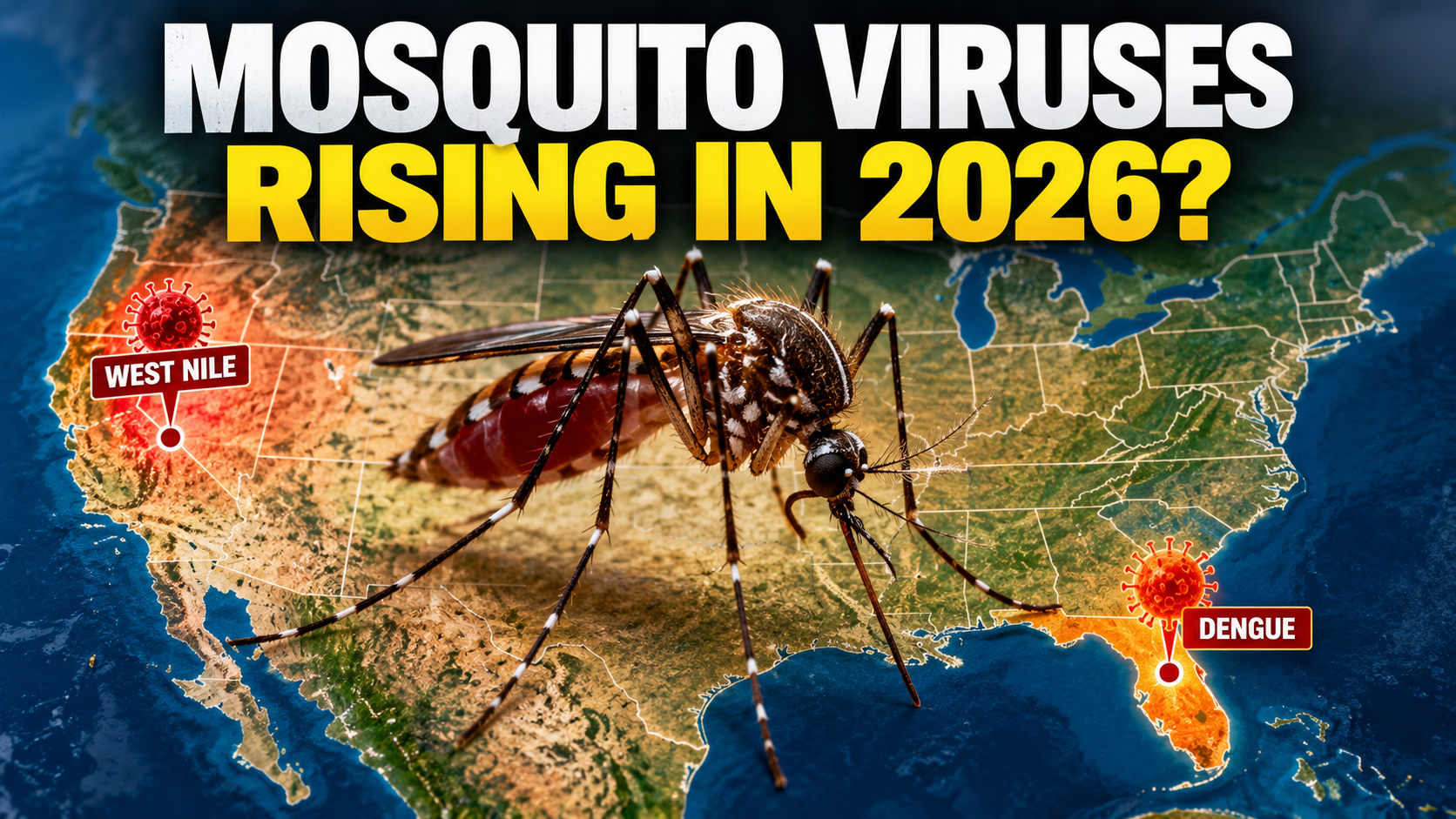
Something feels different about mosquito season this year. West Nile virus got off to an unusually early start, mosquito traps around Tampa are now showing dengue virus activity, and the United States just came through its hottest summer on record.
With all of that happening at once, why are mosquito viruses rising across the U.S. in 2026? Record heat may be part of the story, but the connection between weather, mosquitoes and disease is more complicated than it might seem.
The U.S. Just Had Its Hottest Summer on Record
According to the National Centers for Environmental Information, the average temperature across the contiguous United States from June through August was 74.4°F, 3.0°F above the 20th-century average. That made summer 2026 the warmest in the country’s 132-year temperature record.
Temperature matters because mosquitoes are cold-blooded. Warmer conditions can affect their development, survival and activity, as well as how quickly some viruses develop inside mosquitoes. A warming climate can also change how long mosquitoes remain active during the year. But hotter weather doesn’t automatically mean more mosquitoes or more disease.
West Nile Got an Unusually Early Start
The warning signs appeared before the hottest part of summer. On July 1, the CDC reported an unusually early West Nile season, with at least 48 human disease cases reported through June 30. Of those, 38 were severe neuroinvasive cases. Since 2004, an average of just 10 human cases had been reported by the end of June.
West Nile activity had also been reported in 23 states, the highest number at that point in the year during the previous decade. Still, West Nile naturally varies from year to year. The virus is primarily maintained between birds and Culex mosquitoes, so mosquito abundance, bird populations and local environmental conditions all matter.
Dengue Activity Is Showing Up Around Tampa
Florida is now dealing with a different mosquito-virus concern. On September 9, Hillsborough County announced expanded mosquito treatments after traps in multiple neighborhoods showed dengue virus activity in mosquito populations. Officials expanded aerial and ground treatments, including nighttime control of adult mosquitoes and daytime treatment targeting larvae.
West Nile and dengue shouldn’t be treated as the same outbreak. Dengue is mainly spread by Aedes mosquitoes, and human travel can play an important role in introducing the virus. According to the CDC’s U.S. dengue data, most dengue cases reported in the continental United States occur in travelers infected elsewhere, although local transmission can occur because mosquitoes capable of spreading dengue are already present in many areas.
Is Global Warming Part of the Story?
There is good reason to take the connection seriously. Long-term warming can change mosquito habitat, seasonal activity and the geographic areas where certain mosquito species can survive. But this doesn’t mean climate change caused every West Nile case or dengue detection we’re seeing this year.
Rainfall, drought and standing water also matter. International travel is particularly important for dengue, while bird populations play a major role in West Nile. Urban development, irrigation, mosquito species and local mosquito-control efforts can all change what happens from one community to another.
Even heat itself isn’t simple. Extremely high temperatures can reduce survival for some mosquitoes. Rain can create breeding sites, while heavy rainfall can disrupt them. That’s why one unusually hot summer can’t explain mosquito activity across an entire country by itself.
Why Are Mosquito Viruses Rising Across the U.S. in 2026?
There isn’t one clear answer. What makes 2026 notable is the combination of an unusually early West Nile season, dengue virus activity detected in Florida mosquitoes and a historically hot summer.
Global warming may be changing some of the background conditions that allow mosquitoes and the viruses they carry to thrive, but current evidence doesn’t support blaming this year’s activity on climate change alone. For homeowners, the basics still matter: remove standing water, maintain window and door screens, and use an appropriate mosquito repellent when mosquitoes are active.
For more ways to reduce mosquitoes around your property, see PestMarket’s Mosquito Control Guide.