
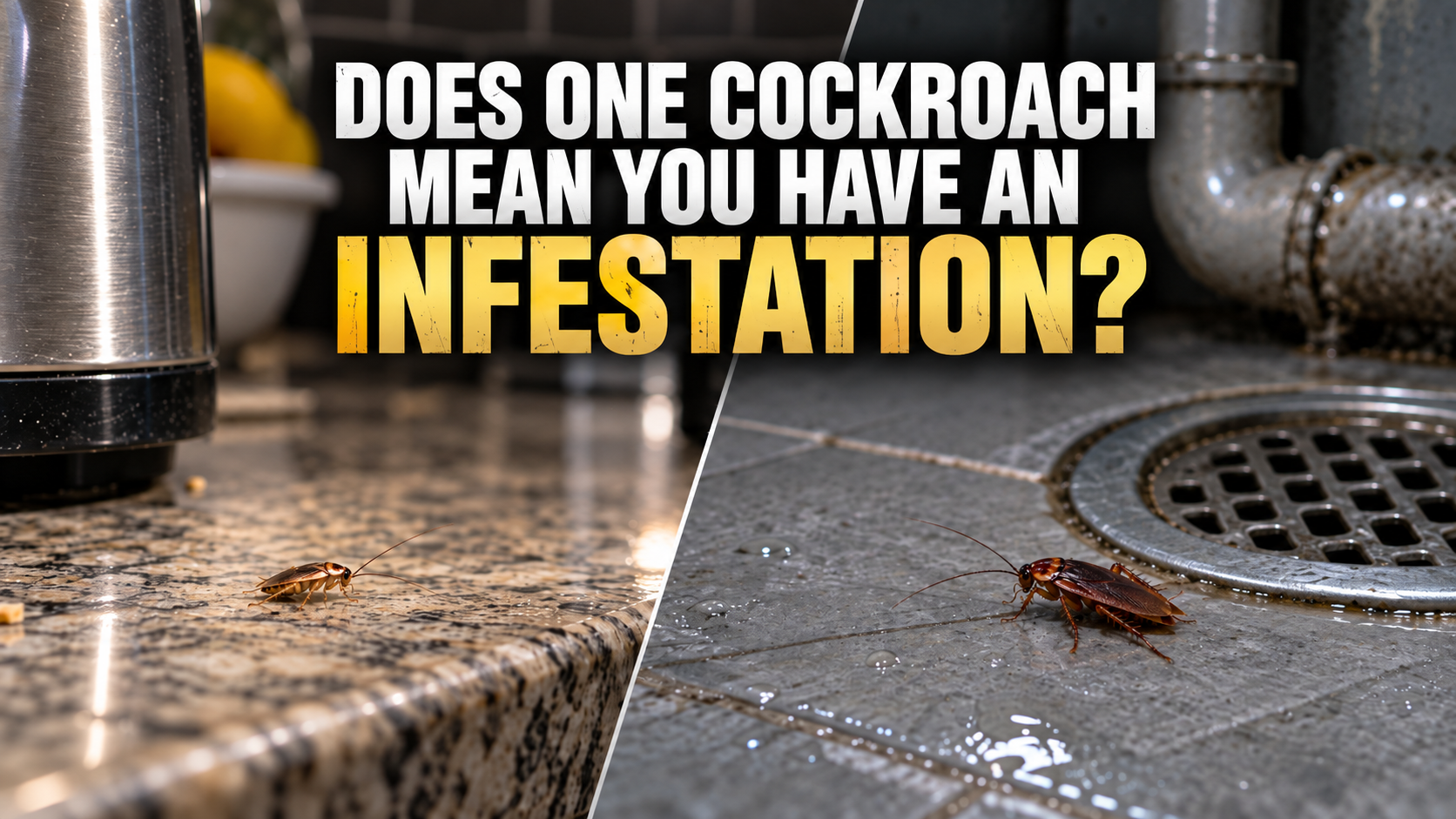
You walk into the kitchen at night, turn on the light and see one cockroach disappear under the refrigerator. The immediate thought is usually the same: if there is one, are there dozens more hiding somewhere? Does One Cockroach Mean You Have an Infestation? Not necessarily. But the answer changes dramatically depending on what kind of cockroach you saw. A single German cockroach inside a kitchen can be a much stronger warning sign than one large American cockroach found near a bathroom, garage or exterior door.
The Species Matters More Than the Number
The UC Statewide IPM Program separates common cockroaches into two important groups. German and brownbanded cockroaches live and reproduce indoors, while American, Oriental and Turkestan cockroaches commonly live outdoors and may occasionally enter buildings. That means simply counting how many roaches you see can be less useful than identifying the species first. A single outdoor species may have wandered inside looking for food, moisture or shelter. A single indoor-breeding species is more concerning because its normal habitat may already be somewhere inside the building. UC IPM specifically recommends identifying the cockroach before deciding how serious the problem is or how to control it.
One German Cockroach Deserves Immediate Attention
German cockroaches are small, usually about half an inch long, light brown or tan, with two dark parallel stripes behind the head. According to Penn State Extension, they are among the most common cockroaches found in houses, apartments, restaurants and other buildings and are especially associated with kitchens and bathrooms. Seeing one does not prove that a large colony exists, but it should not be dismissed as a random outdoor visitor. The University of Georgia Cooperative Extension describes the German cockroach as an indoor pest that is rarely found outdoors. If you see one in a kitchen, especially at night, monitoring should start immediately.
One American Cockroach Can Mean Something Different
American cockroaches are much larger, often around 1½ inches long, reddish brown and commonly associated with warm, damp areas. Penn State Extension notes that they can be found around basements, floor drains, pipe chases, sewers and other moist environments. UC IPM explains that American cockroaches can live outdoors and may enter buildings from sewers or other areas, particularly where plumbing, drain traps or structural openings allow access. So finding one large American cockroach near a bathroom or ground-floor entry does not automatically mean it is breeding inside your home. Repeated sightings, however, deserve investigation.
What Signs Make One Cockroach More Concerning?
The location matters. One small German cockroach under a refrigerator, dishwasher or kitchen sink is more concerning than a large outdoor species found next to a door. Nymphs are another warning sign because immature cockroaches suggest reproduction may be occurring nearby. Egg cases, droppings and shed skins can also point toward an established population.
The time of day can offer another clue. Cockroaches are primarily nocturnal, according to UC IPM. Seeing roaches repeatedly during daylight can occur when hiding places are disturbed or populations are high, although a single daytime sighting alone is not enough to determine how severe a problem is.
Sticky Traps Can Tell You Much More Than One Sighting
Instead of guessing based on one cockroach, place sticky monitoring traps along walls and in likely activity areas such as under the kitchen sink, behind the refrigerator, near the stove and around bathrooms. UC IPM recommends sticky traps for both identifying cockroach species and monitoring activity. Penn State Extension also recommends strategic trapping to help determine the extent of an American cockroach problem because even a careful visual inspection can miss hidden harborages. If traps start catching multiple roaches, especially adults and nymphs together, that is much stronger evidence of an established population.
Do Not Just Spray the Cockroach You See
Killing the visible cockroach may make the problem feel solved, but it tells you almost nothing about what is happening behind cabinets, appliances or walls. UC IPM recommends sanitation, exclusion and reducing food and moisture sources, and notes that pesticides alone do not solve cockroach problems. When treatment is needed, baits are often more useful than routine spraying.
Check for plumbing leaks, food debris, gaps around pipes, cracks beneath cabinets and openings around doors or baseboards. For outdoor species such as American cockroaches, sealing likely entry points can be just as important as treatment. For German cockroaches, repeated indoor sightings usually call for a more aggressive bait-and-monitoring approach. See the PestMarket Cockroach Control Guide for more help.
The PestMarket Verdict
So, Does One Cockroach Mean You Have an Infestation? No, not automatically. A lone American cockroach may have entered from outdoors, a sewer or another nearby harborage. One German cockroach inside the kitchen is substantially more concerning because that species is adapted to living and reproducing indoors. The best response is not panic, but it is not ignoring the sighting either. Identify the species, place sticky traps, inspect the surrounding area and watch for additional adults, nymphs, egg cases or droppings. One cockroach may truly be just one cockroach, but the species and surrounding evidence tell you whether that sighting is probably an accident or the first visible sign of a hidden infestation.
Evidence Grade: STRONG EVIDENCE