
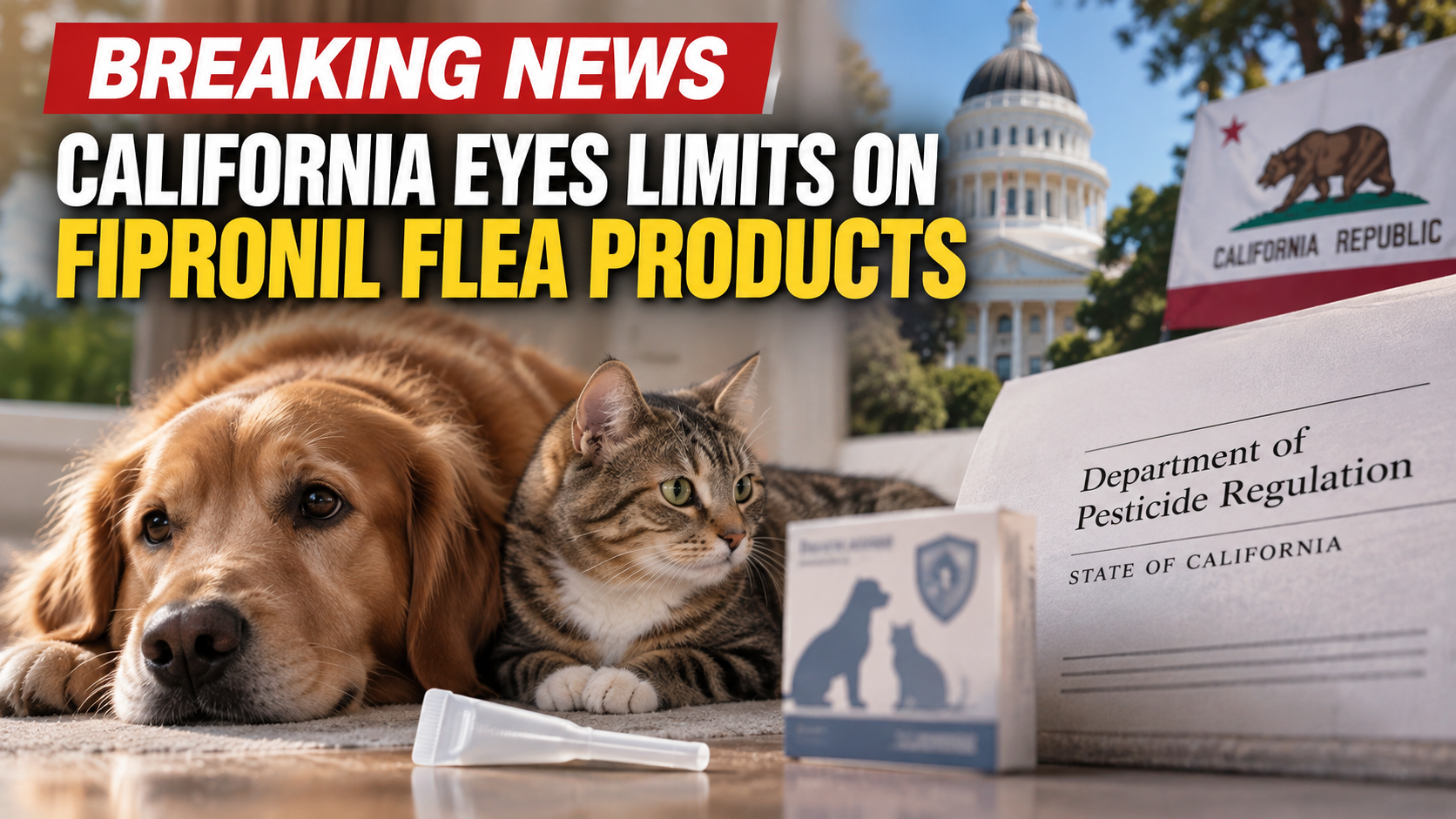
California regulators are considering new restrictions on flea and tick products containing fipronil, a widely used insecticide applied to dogs and cats. California Eyes Limits on Fipronil Flea Products after the California Department of Pesticide Regulation released a new mitigation-options memo on Sept. 16 outlining possible ways to reduce human and environmental exposure. The proposals include limits on how often products can be applied each year, lower application rates, waiting periods before treated pets are bathed, restrictions on professional groomer use and potentially classifying fipronil as a restricted material. Importantly, none of those options is a final ban or rule yet. DPR is asking the public and affected industries for feedback before deciding what measures to pursue. The agency is accepting comments through Nov. 16. Read the California DPR announcement.
Why California Is Looking at Fipronil
Fipronil is used in spot-on and spray flea and tick products for pets, but California has been reevaluating how those products may affect people and the environment after use. DPR says its earlier human-health assessment identified concerns involving pet groomers, people applying fipronil products to animals at home and children who have close contact with treated pets. Separately, the department has been studying how residues from pet treatments can eventually reach wastewater, including when treated animals are bathed or residues are washed from household surfaces and fabrics. In July, DPR released its final aquatic risk evaluation for fipronil pet products, concluding that potential risks to aquatic life warranted further consideration of mitigation measures. The agency says continuous pesticide evaluation can ultimately lead to label changes, regulatory changes or other restrictions when new risks are identified.
Several Restrictions Are Now on the Table
The newly released Fipronil Mitigation Options document does not choose a single solution. Instead, DPR is evaluating several possible approaches. Those include setting annual limits on the number of applications, reducing the amount of active ingredient applied per treatment, requiring a waiting period before a treated pet can be bathed and restricting occupational use by pet groomers. One of the stronger possibilities would be designating fipronil as a restricted material, which could trigger additional permitting requirements for certain uses. DPR is also considering a less regulatory approach involving voluntary stewardship and consumer education aimed at retailers, professionals and pet owners. Exactly which measures, if any, eventually become mandatory will depend on the department’s continuing review and public-input process.
This Is Not a California Fipronil Ban
Pet owners who currently use a fipronil flea or tick treatment do not need to assume their product has suddenly become illegal. The Sept. 16 announcement begins another stage of California’s risk-management process rather than announcing an immediate prohibition. Products remain subject to their existing labels while DPR gathers comments on the proposed mitigation options. That distinction is especially important because headlines suggesting California has “banned” common flea medications would overstate what the state actually announced. DPR is asking for feedback on possible restrictions, a possible restricted-material designation and its analysis of alternatives. Public comments can be submitted through the agency’s online portal until Nov. 16, 2026.
California Says Pet Owners Have Other Options
DPR says California consumers would still have multiple flea and tick-control choices if access to fipronil products were reduced in the future. According to the department, its current alternatives analysis identified 89 spot-on products that do not contain fipronil, in addition to medicated collars, sprays, shampoos and oral medications. The state also evaluated the economic and pest-management implications of reducing fipronil availability in its Economic and Pest Management Evaluation of Fipronil Spot-On Pet Products. DPR also points to nonchemical practices such as vacuuming, regularly laundering pet bedding, flea combing and keeping indoor and outdoor areas clean as parts of an integrated flea-control strategy. Pet owners should still follow product labels and consult a veterinarian when choosing treatments appropriate for an individual dog or cat.
Why Wastewater Is Part of the Debate
The environmental issue is not limited to what happens directly on the animal. DPR’s evaluation focuses in part on the possibility that fipronil from topical pet treatments can move into household wastewater and eventually reach waterways, where aquatic organisms may be exposed. That connection is one reason options such as waiting periods before bathing are being considered. California’s July aquatic-risk memo followed an earlier draft and public-comment period and will now help guide what mitigation measures DPR decides are practical. The state says the purpose is to reduce exposure while preserving effective flea and tick control, rather than simply removing pest-control options without considering alternatives.
What Happens Next
DPR will collect comments from consumers, veterinarians, groomers, product manufacturers, retailers and other interested parties before moving further in the mitigation process. Feedback can address proposed use limits, the potential restricted-material designation and whether the alternatives identified by DPR are practical. For now, Californians using flea and tick treatments should continue following the label exactly rather than changing dose or frequency on their own. PestMarket will watch for any final regulatory decision because new California restrictions could affect how some pet owners and professionals manage fleas and ticks. For more information about pest prevention and treatment options around the home, visit the PestMarket Pest Control Guides.