
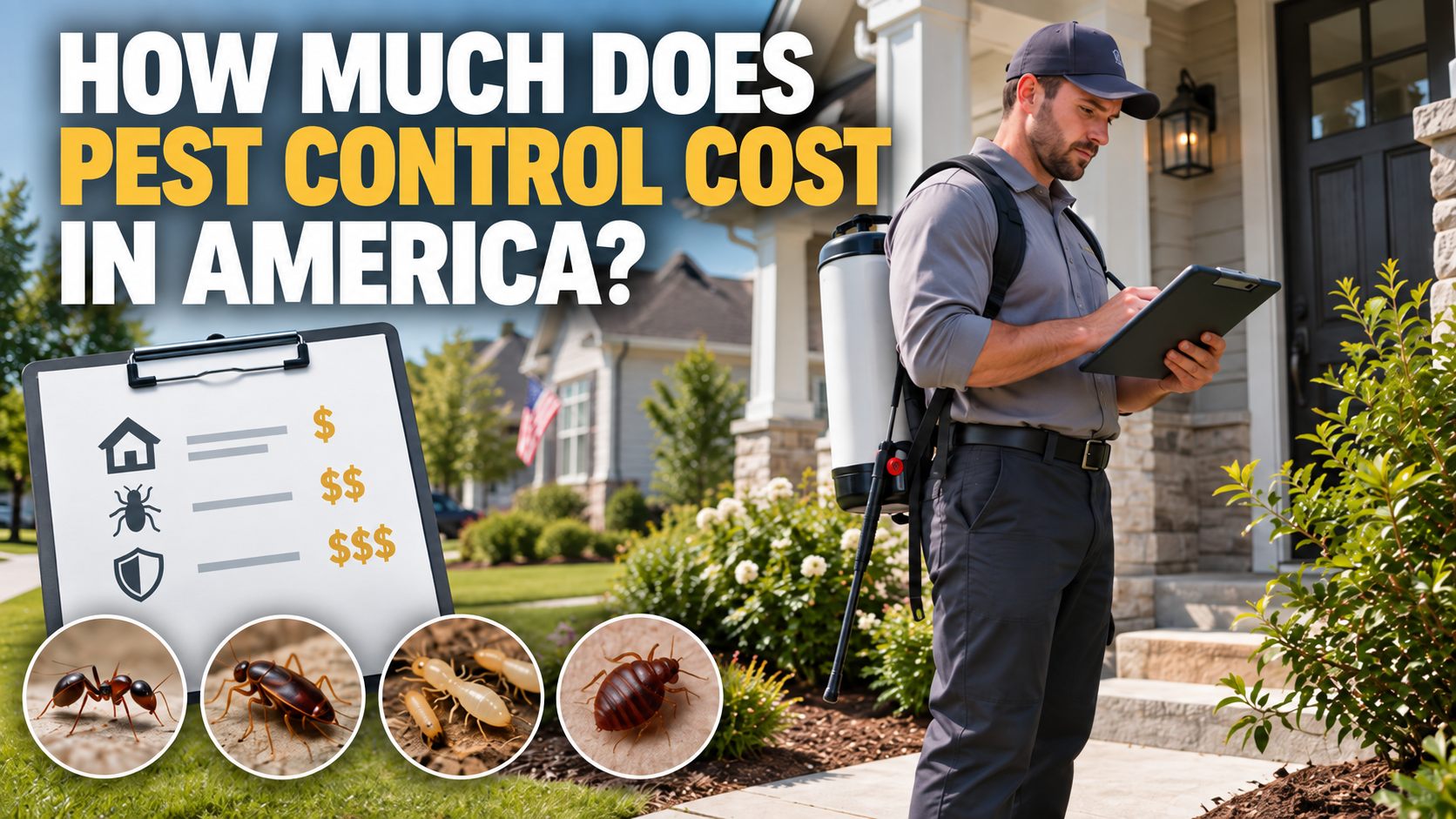
Ask how much pest control costs in America and you can get wildly different answers. One homeowner may pay less than $200 for a straightforward treatment, while another can spend thousands dealing with bed bugs, termites or a severe infestation. How Much Does Pest Control Cost in America? There is no single official federal number showing what the average household spends every year, and current consumer pricing databases do not all measure the same thing. But when we compared recent 2026 pricing guides, one thing became clear: the pest itself, the severity of the problem, where you live and whether you buy one-time or recurring service can change the bill dramatically.
A Typical Pest Control Visit Is Usually in the Hundreds
Current national estimates give homeowners a useful starting point, but they vary depending on what counts as a typical job. Angi’s 2026 pest-control pricing data puts a one-time service for a roughly 1,500-square-foot home at about $300 to $550, while an initial visit for ongoing service commonly falls around $150 to $300. HomeAdvisor’s 2026 national data reports a lower typical range of $108 to $261, with an average near $172. Those numbers are not necessarily contradictory because the services, markets and projects included in each dataset differ. The practical takeaway is that there is no universal “normal” bill. A simple inspection and targeted treatment may cost relatively little, while a larger one-time extermination can cost several hundred dollars.
Recurring Service Changes the Math
Many homeowners do not hire pest control only after something goes wrong. They pay for monthly or quarterly service designed to keep ants, spiders, cockroaches and other common pests from becoming established. Angi currently lists national averages of roughly $40 to $70 per monthly visit and $100 to $300 per quarterly visit, after an initial ongoing-service visit that can cost $150 to $300. That can make individual recurring visits cheaper than calling a company for a new one-time problem, but the homeowner is paying throughout the year. Whether that makes financial sense depends heavily on the property and local pest pressure. A home that repeatedly deals with ants, roaches or seasonal pests may get more value from prevention than a home that rarely has a problem.
The Pest You Have Can Matter More Than the House
The biggest price difference often comes from what is actually living in the home. Current HomeAdvisor cockroach pricing puts professional cockroach treatment at roughly $100 to $600 per treatment, with an average around $200. Bed bugs are in a completely different category: HomeAdvisor’s 2026 bed bug data puts the average treatment around $2,500, with a typical range from $1,000 to $4,000 and severe cases reaching even higher. Termites can also become expensive. Angi’s current termite cost guide lists a national treatment average of about $621, with a range from $75 to $1,750 before potential structural repairs are considered.
Where You Live Can Change the Price
Geography matters more than many homeowners expect. Labor costs, housing density, home size, climate and the pests common to a region all influence local pricing. For example, Angi’s current Los Angeles data lists one-time visits around $380 to $700, monthly visits around $50 to $90 and quarterly service around $130 to $380. By comparison, its current Phoenix estimates put overall pest-control costs much lower, with many jobs ranging from roughly $59 to $144. That means a “national average” can be useful for budgeting, but a homeowner in Southern California, Texas, Florida or New York may receive a quote that looks very different from the number shown in a nationwide cost guide.
DIY Is Cheaper Until It Is Not
For a small, clearly identified problem, DIY pest control can cost far less than hiring a professional. Cleaning food residue, eliminating standing water, sealing gaps and using properly labeled traps or baits can sometimes prevent a minor issue from becoming a larger one. The EPA recommends starting with prevention, including removing food, water and shelter and closing entry points before relying on pesticides. But difficult infestations can reverse the economics quickly. Bed bugs are a good example: the EPA notes that successful bed bug control often requires multiple chemical and nonchemical methods, careful monitoring and sustained participation. Buying several ineffective DIY products before eventually calling a professional can sometimes make the supposedly cheaper option more expensive.
Waiting Can Be the Most Expensive Option
The cheapest pest-control bill is often the one that prevents a small problem from becoming a large one. Termites illustrate the risk particularly well. Angi’s current termite data estimates that repairs to damaged wood, drywall and other materials can add roughly $250 to $6,000 beyond the actual treatment cost. Bed bug treatment can also climb sharply as an infestation spreads through additional rooms or furniture. That does not mean every ant or cockroach requires an emergency service call, but it does mean homeowners should distinguish between a nuisance and a pest capable of reproducing, spreading or damaging the building. Identification and early monitoring can be financially valuable even when professional treatment is not immediately necessary.
So What Should an American Household Budget?
There is no honest single dollar figure that applies to every household. A home with occasional ants may spend almost nothing beyond basic prevention, while a homeowner using recurring professional service will pay throughout the year. A serious termite or bed bug problem can suddenly move pest control from a routine household expense into a four-figure project. The better question is not simply what the “average American” spends, but what type of pest you have, whether it is established inside the home, how quickly it can spread and whether paying for prevention is cheaper than waiting for an infestation. Before paying for treatment, compare the diagnosis, treatment plan, follow-up policy and total expected cost rather than choosing a company based only on the first advertised price. For help identifying common household pests before deciding what kind of treatment you need, visit the PestMarket Pest Control Guides.
The PestMarket Verdict
How Much Does Pest Control Cost in America? For ordinary professional service, expect the conversation to start in the low hundreds of dollars, but that number can become misleading very quickly. Recurring plans may cost less per visit, while termites, bed bugs and severe infestations can push the total into the thousands. The biggest lesson from current 2026 pricing is that pest control is not one standardized service with one standardized price. The pest, infestation level, home, location and treatment strategy matter far more than any national average. Prevention may not eliminate every pest-control bill, but the EPA’s integrated pest management approach supports addressing food, water, shelter and entry points early, before a manageable problem becomes a costly one.
Evidence Grade: STRONG EVIDENCE