
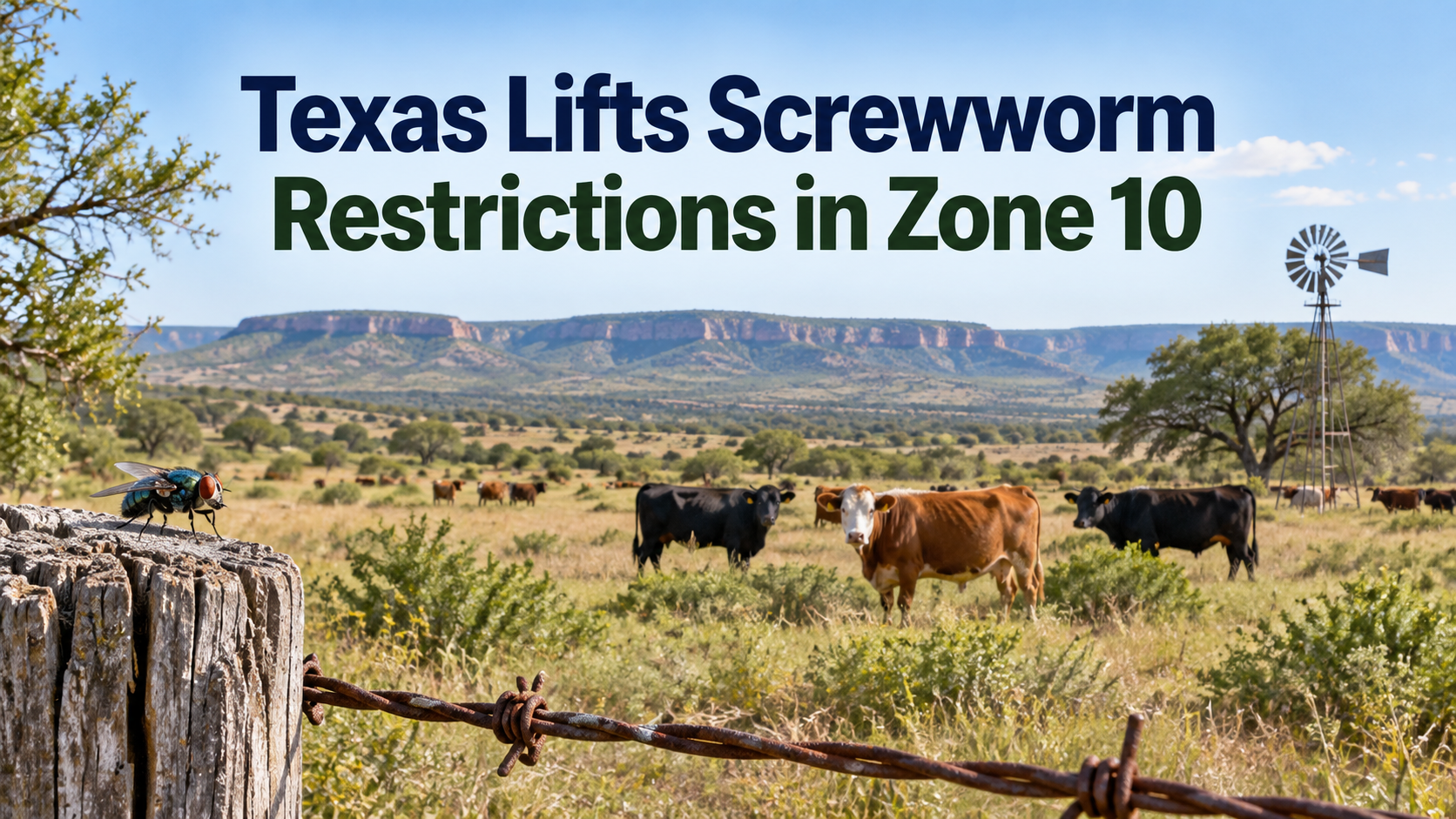
Texas Lifts Screwworm Restrictions in Zone 10 after state and federal animal-health officials determined that the affected area met the requirements needed to remove New World screwworm controls. The U.S. Department of Agriculture’s Animal and Plant Health Inspection Service announced the release on September 18 with the Texas Animal Health Commission, marking another step in the continuing response to New World screwworm in the state. The action removes screwworm-specific movement requirements from Infested Zone 10, but it does not mean the broader threat in Texas is over. Several other infested areas remain subject to restrictions.
Why Zone 10 Was Released
USDA APHIS said state and federal specialists determined that Infested Zone 10 met the requirements in the agency’s New World Screwworm Response Playbook before restrictions could be lifted. Response efforts have included animal inspections, movement controls, wildlife and fly surveillance, early detection work and releases of sterile New World screwworm flies. These measures are designed to identify new infestations quickly while reducing the ability of wild fly populations to reproduce. The decision to release the zone was based on surveillance and control criteria being met rather than simply on how much time had passed since the original detection.
What the Change Means for Animal Owners
Releasing the zone removes New World screwworm-related movement requirements for livestock and pets within the released area. Other interstate animal-movement rules and international export requirements still apply, however, and Texas continues to have active screwworm restrictions elsewhere in the state. The Texas Animal Health Commission’s New World screwworm page provides current zone information, movement requirements and guidance for animal owners. Anyone transporting livestock or pets from an affected area should check the latest official map and restrictions before moving animals rather than assuming the Zone 10 release applies statewide.
Sterile Flies Remain a Key Part of the Response
Sterile insect releases remain one of the most important tools used against New World screwworm. Male flies are sterilized and released in large numbers over targeted areas. When sterile males mate with wild females, viable offspring are not produced, gradually suppressing the population as releases continue. This technique helped eliminate New World screwworm from the United States decades ago and is again central to current response efforts. USDA is expanding sterile-fly production and dispersal capacity while continuing surveillance along the U.S.-Mexico border and coordinating with state agencies and animal-health officials.
Texas Is Not Yet Clear of Screwworm
The release of Zone 10 is a positive development, but it should not be interpreted as eradication of New World screwworm from Texas. Other infested zones remain active, and state and federal officials are continuing surveillance and response operations. New World screwworm can infest wounds in livestock, wildlife and pets, and human cases are also possible. Because zone boundaries and restrictions can change as surveillance results come in, animal owners should rely on current official information rather than older reports or maps.
Why New World Screwworm Gets So Much Attention
New World screwworm is different from most household pests because its larvae feed on living tissue after adult flies lay eggs in wounds or other vulnerable areas of warm-blooded animals. That can lead to serious injury if an infestation is not identified and treated quickly. For agriculture and animal-health agencies, the concern is not only individual animal health but also the possibility of spread across livestock-producing regions. USDA currently describes the overall risk to people and animals in the United States as very low, but the agency continues an aggressive response because of the potential consequences if the pest becomes established.
Surveillance Continues After the Release
USDA continues to track detections, surveillance and response measures through its New World screwworm response hub. Officials are asking animal owners to watch for suspicious wounds, larvae or signs of myiasis and to report possible cases promptly. Early detection is important because lifting a quarantine means the area met release criteria during a defined surveillance period, not that the pest can never return. For homeowners dealing with more common insects and rodents, PestMarket’s Pest Control Guide covers identification, prevention and treatment options for household pest problems. The release of Zone 10 shows that targeted surveillance and control can lead to restrictions being removed, while continued monitoring will determine how quickly additional areas can follow.