
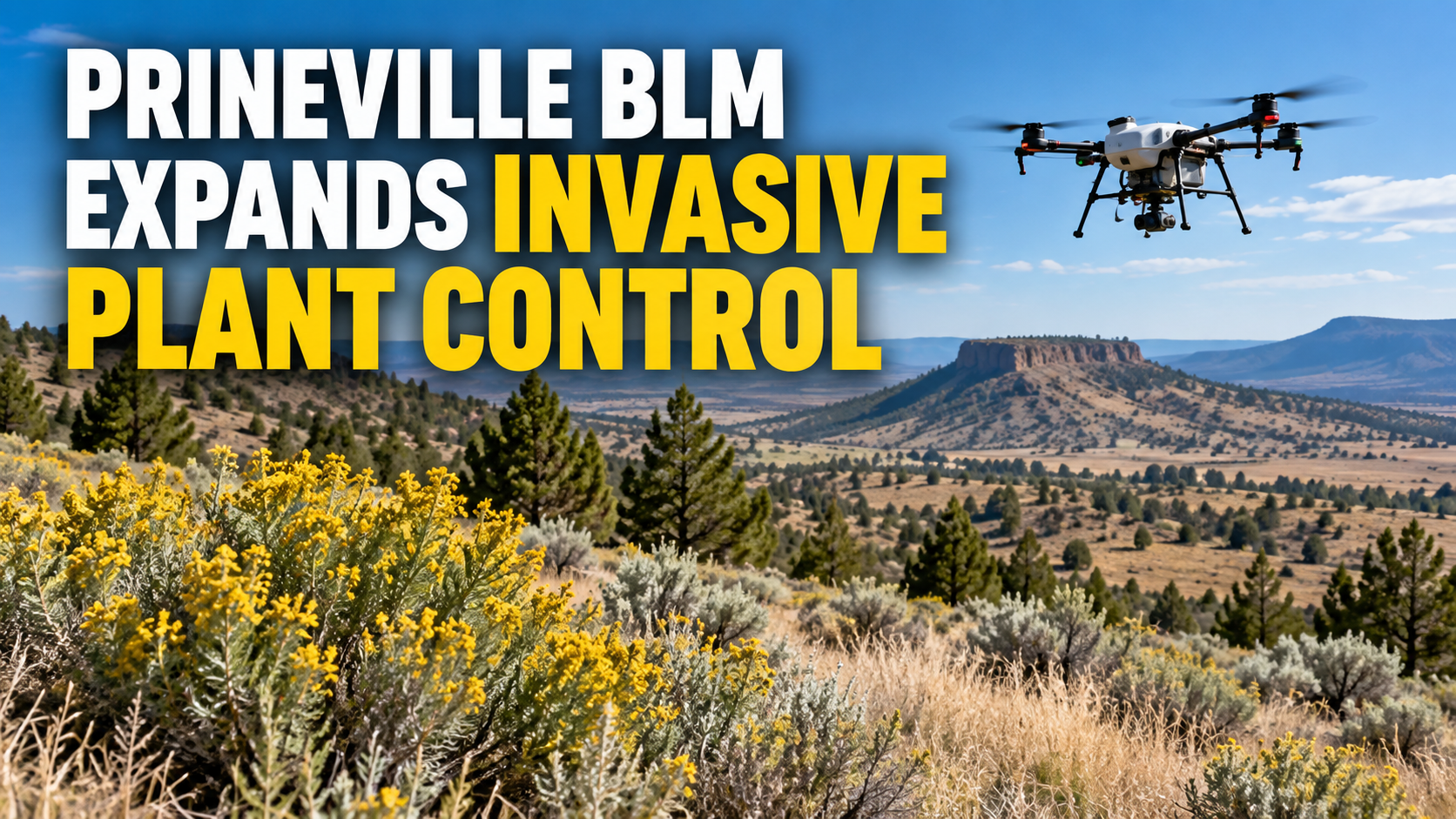
Prineville BLM Expands Invasive Plant Control after federal land managers approved a major update to the program used to fight invasive vegetation across public lands in Central Oregon. The Bureau of Land Management announced the decision September 25, one day after the Prineville District signed a Finding of No Significant Impact and Decision Record. The updated program gives land managers additional treatment options, including new herbicide active ingredients and the potential use of drones for aerial applications and monitoring. A 30-day appeal period is now underway.
The Existing Program Is Getting a Major Update
The Prineville District already uses several methods to control invasive plants, including hand pulling, plowing, mowing, prescribed fire, biological controls and herbicides. The existing program was evaluated under a 2016 environmental assessment, but BLM says its treatment options and the areas where work may be needed have changed over the past decade. The newly approved plan expands that toolkit rather than replacing it with one single approach. BLM describes the strategy as integrated invasive plant management, meaning managers can choose different control methods depending on the plant species, location and conditions at a particular site.
Drones Could Become Part of Invasive Plant Control
One of the more noticeable changes is the addition of newer technology. According to the BLM project record, the updated program allows the use of drones for aerial herbicide applications and monitoring. That could give crews another way to reach difficult terrain or closely target areas where invasive plants have been detected. The plan also adds 10 herbicide active ingredients to those already available to Prineville District managers, including aminopyralid, clethodim, flumioxazin, imazamox and indaziflam. Use of any treatment will still depend on the site, target species and applicable restrictions.
Some of the Pest Control Is Done With Insects
Chemical treatment is only part of the program. Biological control insects are already one of the tools used against invasive weeds in Oregon. The concept is different from spraying or mechanically removing a plant. Carefully selected insects that feed on a specific invasive plant can sometimes reduce its growth, seed production or ability to spread over time.
The Oregon Department of Agriculture maintains biological control programs for several invasive weeds. Oregon has used beetles, flies, weevils and other approved biological control agents against plants including St. Johnswort, knapweeds and yellow starthistle. State records also show biological control releases benefiting Prineville BLM lands in previous years. These programs are closely managed because introducing an organism as a control agent requires careful evaluation of what it will attack.
Why Invasive Plants Matter in Central Oregon
An invasive plant problem can spread well beyond the patch where it first becomes visible. Some species compete with native vegetation, reduce habitat quality, interfere with recreation and grazing, and alter how an ecosystem responds to wildfire. Once a large population becomes established, removal can become considerably more difficult and expensive.
That is why land managers often combine early detection with multiple treatment methods instead of waiting for a weed population to dominate a large area. Monitoring is an important part of the process because crews need to know not only where invasive plants are spreading but whether previous treatments actually worked.
The Decision Followed a Public Review
BLM released its environmental assessment for public review on June 1 and accepted comments through July 1. The agency says it received seven comment letters before completing a revised environmental assessment and Finding of No Significant Impact. The Prineville District signed the final decision documents on September 24.
The decision does not end the administrative process immediately. Issuing the Decision Record started a 30-day appeal period that runs through October 25. Details about the appeal process are included in the federal project record.
What Happens Next
With the decision signed, BLM now has an updated framework for deciding how invasive vegetation will be treated across Prineville District lands. That does not mean every available herbicide or drone treatment will suddenly be used everywhere. The integrated approach gives managers a larger set of options that can be selected according to individual locations and invasive species.
For homeowners facing unwanted pests closer to home, PestMarket’s Pest Control Guide covers prevention and control options for common residential pest problems.
For Central Oregon, the Prineville decision is ultimately about getting more tools in place before invasive plants become harder to contain. With new treatment options, biological controls and drone technology now part of the program, the district will have more ways to find and manage invasive vegetation across a large and varied landscape.