
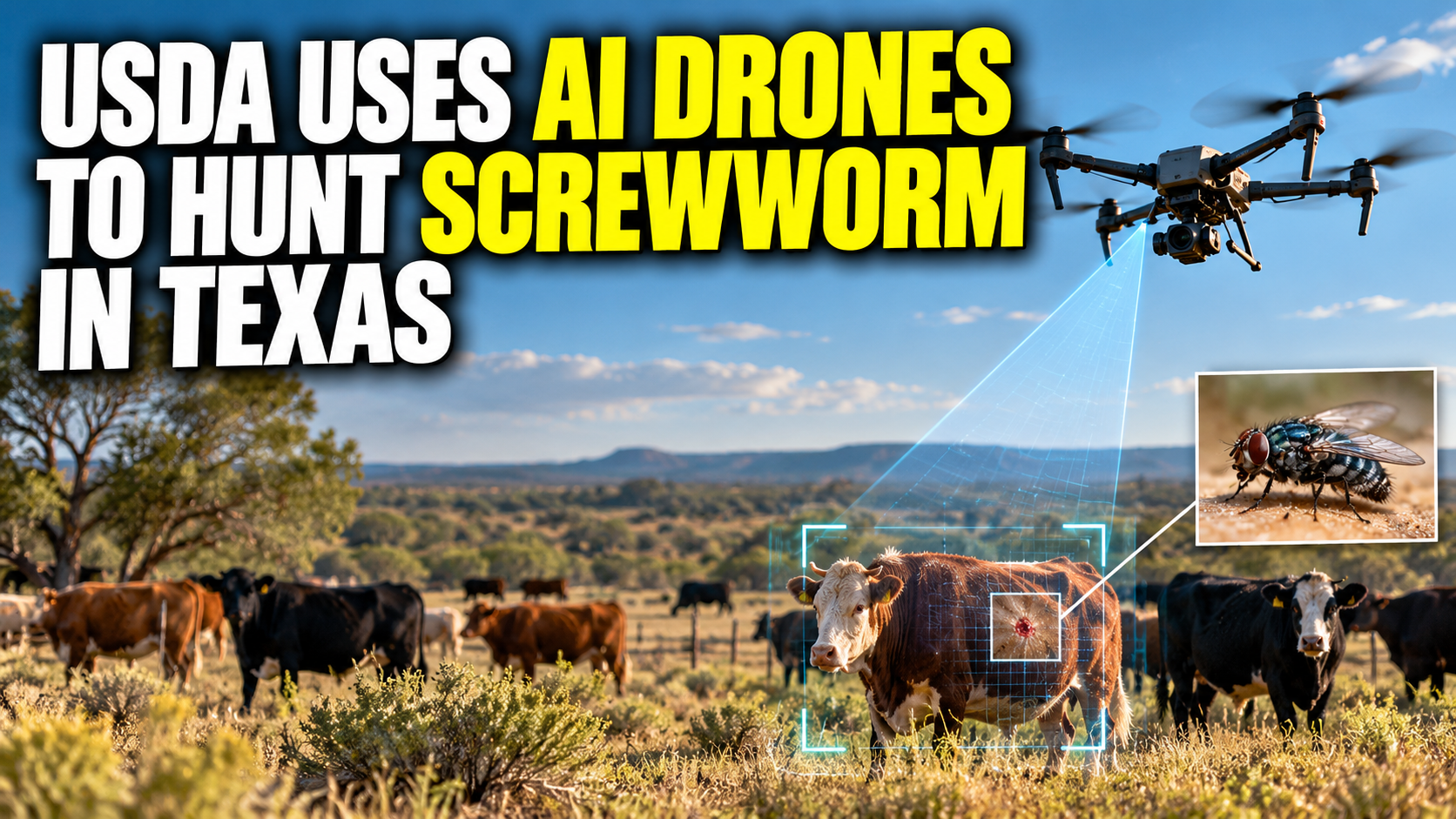
USDA Uses AI Drones to Hunt Screwworm in Texas as federal officials expand a high-tech surveillance campaign against the flesh-eating parasite. Since June, the U.S. Department of Agriculture says drones have flown more than 2,000 missions across Texas and observed more than 36,000 animals. According to a new October 12 report from KRGV Channel 5 News, none of those drone observations identified a New World screwworm case. USDA officials say artificial intelligence is helping teams inspect visible animal wounds more efficiently, although drones are not considered foolproof and suspicious animals still require closer examination.
More Than 2,000 Drone Flights Since June
The newest numbers show how quickly aerial surveillance has expanded. Earlier USDA figures reported more than 1,000 drone flights and over 20,000 animals observed in Texas. The latest count has now passed 2,000 flights and 36,000 animals. That makes drones much more than a small experimental tool. They have become one part of a broader surveillance network designed to watch livestock and wildlife across large areas where traditional ground inspections can be difficult.
How AI Is Helping Search for Screwworm
The phrase “AI drones” can make the system sound more autonomous than it really is. The drones capture aerial imagery of cattle and other animals, while artificial intelligence helps personnel review visible wounds and abnormalities that may deserve closer attention. The technology is being used as a screening aid rather than a final diagnostic system. A suspicious wound seen from the air does not prove that an animal has screwworm, and laboratory or direct field examination is still needed before an infestation can be confirmed.
Why Officials Are Looking for Wounds
New World screwworm, Cochliomyia hominivorax, is especially dangerous because its larvae feed on living tissue. Female flies lay eggs around wounds or body openings, and the larvae burrow into flesh after hatching. Infestations can expand rapidly and become severe or fatal if untreated. Livestock are a major concern, but pets, wildlife and, more rarely, people can also be affected. That makes animals with visible wounds an important target for early surveillance.
Drones Are Only One Part of the Search
USDA is combining aerial surveillance with several other detection methods. The agency’s official New World screwworm response page says teams have also monitored footage from more than 130 trail cameras in Texas, observing nearly 17,000 additional animals. Field personnel, wildlife surveillance, insect traps and public reporting are also part of the response. Together, those methods give officials multiple chances to identify suspicious animals or flies before an infestation spreads farther.
Why Texas Is Difficult to Monitor
Texas presents a major logistical challenge for surveillance. Ranches can cover thousands of acres, cattle may be scattered across remote pastures and wildlife cannot be routinely handled for inspection. Ground crews can only cover so much territory each day. Drones give officials a way to repeatedly scan larger areas from above and identify animals that may need a closer look. That does not replace veterinarians or inspectors, but it can help focus their attention where it is most needed.
No Drone Detections Does Not Mean the Threat Is Gone
The zero detections from more than 2,000 drone flights sound encouraging, but they need context. They do not mean Texas is free of New World screwworm. The United States has confirmed animal cases during the 2026 outbreak, and USDA maintains a confirmed New World screwworm detections dashboard that tracks validated animal cases and wild-fly detections separately. Drone surveillance is therefore one piece of the monitoring system, not a substitute for confirmed diagnostic data.
Surveillance Is Paired With Sterile Fly Releases
Finding possible cases is only half of the response. USDA is also using the sterile insect technique, a long-established biological-control strategy in which massive numbers of sterile male screwworm flies are released into targeted areas. When wild females mate with sterile males, they do not produce viable offspring. Repeated releases can suppress the wild population over time. Surveillance helps officials understand where control efforts may need to be concentrated and whether the threat is moving into new areas.
Why Early Detection Matters
New World screwworm can become far more difficult and expensive to control once it becomes widely established. Early identification allows infected animals to be treated, surrounding areas to be investigated and control measures to be intensified before additional flies reproduce. That is why an apparently simple drone flight can matter. One suspicious wound identified early could trigger a much more detailed investigation on the ground.
What the Drone Program Tells Us About Modern Pest Control
The Texas response shows how pest management is changing. Controlling an invasive parasite no longer depends only on traps, insecticides or boots on the ground. It can also involve aerial imaging, artificial intelligence, veterinary diagnostics, large-scale insect breeding and real-time surveillance. PestMarket’s Pest Control Guide covers the more familiar pests people encounter around homes and properties, but New World screwworm shows what pest management looks like when agriculture and animal health are at stake.
What Happens Next
USDA is continuing surveillance even though more than 2,000 drone flights have produced no screwworm detections through that particular program. That is because the absence of a finding from the air cannot rule out infestations elsewhere. Officials continue to rely on field inspections, traps, public reporting, diagnostic testing and sterile-fly releases to track and suppress the pest. For now, the newest drone numbers are encouraging, but they are not a declaration that the problem is over.