
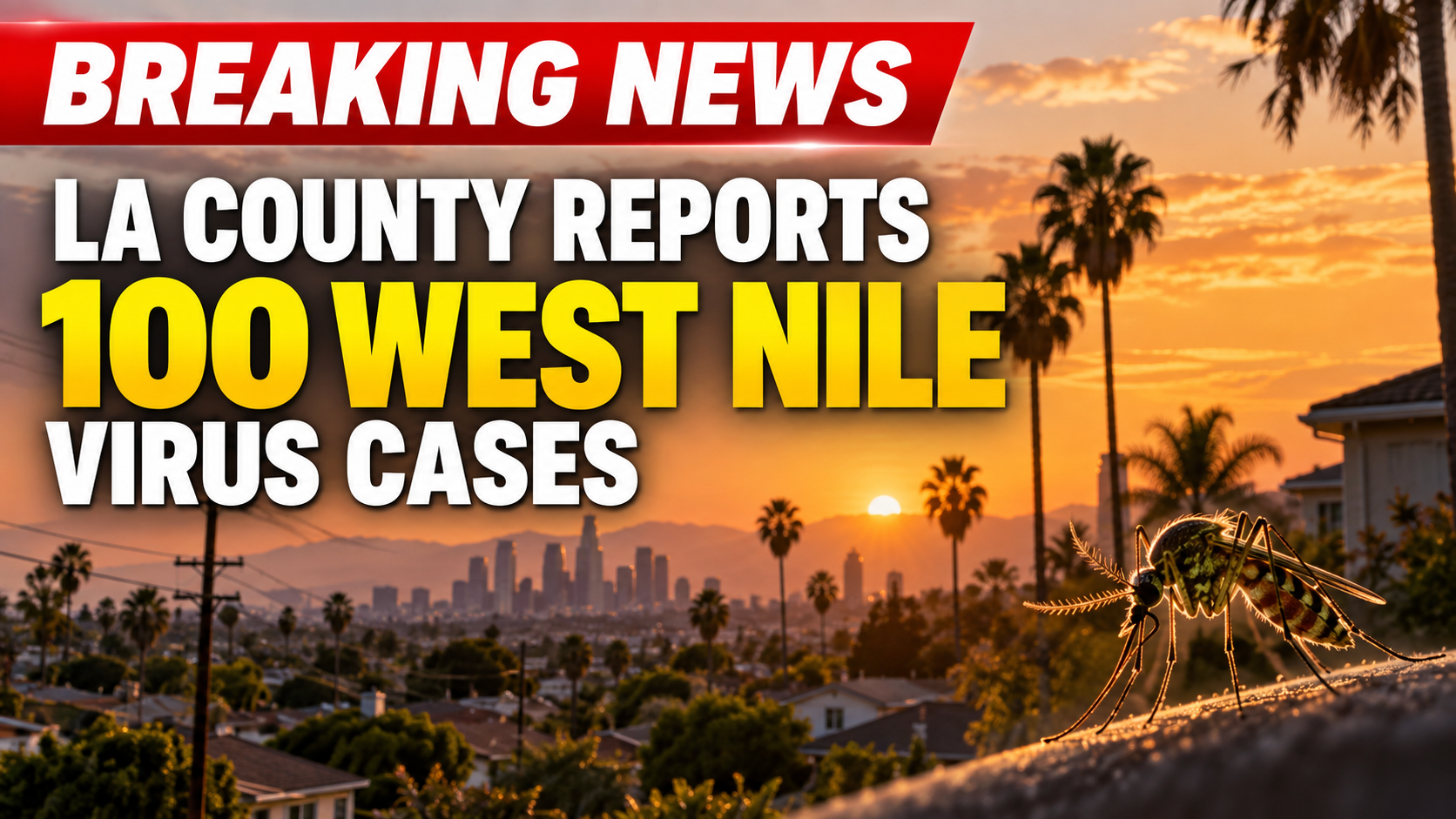
LA County Reports 100 West Nile Virus Cases as health officials warn that infections are running at their highest level this early in the mosquito season in nearly a decade. The Los Angeles County Department of Public Health announced the milestone Monday, September 21, saying 100 West Nile virus infections have now been reported in 2026. County surveillance data show 94 of those patients were hospitalized and five have died. The last year Los Angeles County recorded more cases was 2017, when 268 infections were reported over the full season.
Cases Have Climbed Quickly
The numbers stand out because Los Angeles County began the season with relatively few reported human infections. The county announced its first human case in July, involving an Antelope Valley resident who was hospitalized with West Nile encephalitis. By August 20, California health officials were already warning that West Nile activity statewide had reached a five-year high. A little more than a month later, Los Angeles County alone has reached 100 confirmed infections. According to the county’s West Nile surveillance data, the current total is more than four times the 22 infections reported during all of 2025 and already exceeds the county totals recorded in each year from 2018 through 2025.
Most Reported Patients Have Been Hospitalized
The hospitalization numbers show why health officials are taking the increase seriously. Of the 100 infections currently listed by the county, 94 involved hospitalization. Five deaths have been recorded. West Nile infections do not always produce symptoms, and many people who become infected may never know they had the virus. A smaller percentage develop fever, headache, body aches or other symptoms, while severe cases can involve inflammation of the brain or surrounding tissues and, in some patients, paralysis. Older adults and people with certain underlying health conditions face a greater risk of serious illness.
California Was Already Seeing Elevated Activity
Los Angeles County’s surge comes during a year when West Nile activity has been elevated across California. On August 20, the California Department of Public Health reported the state’s highest West Nile activity in five years. At that point, 30 human cases and three deaths had been reported statewide, while signs of the virus had been detected in 32 counties through mosquito, bird, chicken and horse surveillance. State officials also reported higher-than-average rates of positive mosquito samples and dead birds. August and September are typically among the most active periods for West Nile transmission in California, meaning mosquito exposure can remain a concern even as summer winds down.
West Nile Spreads Through Infected Mosquitoes
West Nile virus circulates mainly between birds and mosquitoes. Mosquitoes become infected after feeding on infected birds and can later transmit the virus when they bite people or other animals. It does not normally spread from person to person through everyday contact. The mosquitoes capable of spreading West Nile are found throughout Los Angeles County, so officials are urging residents across the region to take precautions rather than assuming the risk is limited to neighborhoods where human cases have already been identified.
Small Amounts of Water Can Keep Mosquitoes Breeding
Public-health officials continue to emphasize that mosquito prevention starts around the home. Buckets, plant saucers, clogged drains, toys, neglected pools and other containers can collect enough water for mosquitoes to reproduce. Residents are advised to empty standing water regularly, maintain pools and spas, repair damaged window and door screens and use an EPA-registered insect repellent when mosquitoes are active. For homeowners looking for more detail on mosquito identification, breeding sites and control options, PestMarket’s Mosquito Control Guide explains practical steps that can reduce mosquito activity around a property.
The Season Is Not Over Yet
Reaching 100 cases in September does not necessarily represent the final total for 2026. West Nile activity in Southern California can continue into the fall as long as temperatures remain favorable for mosquitoes. Health officials are asking residents to continue taking precautions and to report significant mosquito problems to their local vector-control agency. Anyone who develops concerning symptoms after mosquito exposure, particularly severe headache, confusion, weakness or other neurological symptoms, should seek medical care. For Los Angeles County, the latest numbers make one thing clear: this has already become one of the county’s most active West Nile seasons in years.