
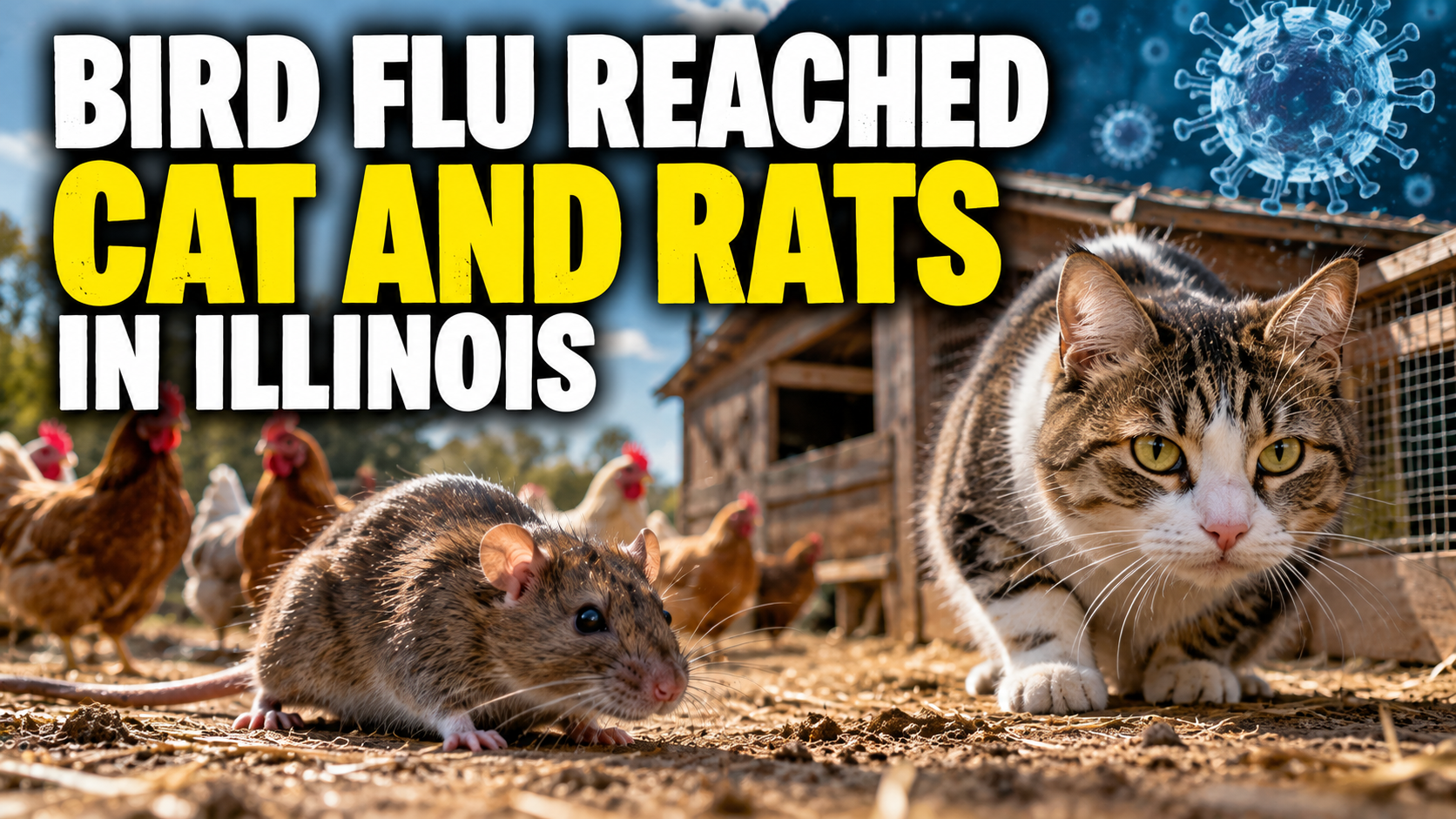
Study Finds Bird Flu Reached Cat and Rats in Illinois after researchers analyzed a backyard poultry outbreak that nearly wiped out an entire flock. The outbreak itself occurred in southern Illinois in March 2025, but the new analysis was highlighted by the University of Illinois on October 6, 2026. Researchers found the same H5N1 subtype in poultry, a domestic cat and a rat from the property, raising new questions about how small mammals may fit into the spread of highly pathogenic avian influenza around farms.
Nearly the Entire Backyard Flock Died
According to the University of Illinois News Bureau, the farm lost 100 of its 105 backyard birds during the outbreak. The property was about two miles from a large reservoir within the Mississippi Flyway, creating a plausible route for introduction from infected wild waterfowl. The farm housed chickens, turkeys, guinea fowl and a goose, along with cattle, cats and dogs. After the sudden bird deaths, samples were submitted for testing and H5N1 was confirmed in the flock.
A Cat and Rat Tested Positive Too
Researchers later examined a 13-year-old domestic cat and a feral rat found dead on the same farm. Testing confirmed H5N1 in both animals. The cat showed widespread infection, with all 12 tested tissue samples positive for influenza A virus. Eleven of 15 rat tissues were also positive, and viral RNA was detected in the rat’s urine. The researchers also found evidence of infection in respiratory and brain tissues, showing that the virus had spread beyond a superficial exposure.
The Virus Sequences Were Closely Related
The detailed Emerging Infectious Diseases study reported that virus sequences from the chicken, cat and rat were closely related, supporting the idea that the mammals were infected during the same farm outbreak. The researchers said the most likely explanation was spillover associated with infected poultry or exposure to contaminated material. They did not show that the rat or cat infected each other, and they did not prove mammal-to-mammal transmission on the property.
The Rat Was the Bigger Surprise
H5N1 infections in cats have already been documented in the United States and elsewhere, particularly after exposure to infected birds, raw milk or contaminated environments. Rats are more complicated. They live close to poultry houses, feed, barns and people, yet their potential role in H5N1 ecology is still not well understood. The Illinois research team said the rat finding was especially important because rodents can be difficult to completely exclude from farm environments.
A Mammalian-Adaptation Marker Was Present
Genetic sequencing found a mutation known as PB2 E627K in viruses from the chicken, cat and rat. This mutation has been associated with adaptation of avian influenza viruses to mammalian hosts. Importantly, the researchers said the marker was already present in the bird virus, meaning the virus did not necessarily need to acquire that change after entering the mammals. That does not mean the strain had become efficiently transmissible between mammals, but it was a feature the researchers considered worth watching.
Could Rats Spread Bird Flu?
That remains an open question. The study found viral RNA in rat urine and extensive infection in multiple rat tissues, which raises the possibility that infected rodents could contaminate farm environments. However, detecting viral RNA does not by itself prove that rats are efficiently shedding infectious virus or transmitting it to other animals. The researchers specifically called for additional work to determine whether rodents can act as an important intermediate host between infected birds and other mammals.
USDA Already Tracks H5N1 in Mammals
The USDA Animal and Plant Health Inspection Service maintains a national list of H5N1 detections in mammals and notes that many mammal species can become infected. Cats are among the species that have repeatedly tested positive. The Illinois findings add to evidence that farms with active poultry outbreaks need to think beyond the birds themselves when assessing exposure risks.
What Backyard Flock Owners Should Do
Researchers involved in the Illinois case recommend keeping poultry away from wild waterfowl, quickly reporting sudden bird deaths, controlling rodents and preventing cats from scavenging dead birds. Rodent control is especially relevant because rats and mice can move between feed areas, barns, sheds and coops. PestMarket’s Rodent Control Guide covers common signs of rodent activity and practical steps for reducing access to food and shelter around a property.
What This Study Does Not Show
The findings are important, but they should not be interpreted as proof that ordinary rats are now widely spreading H5N1 to people or livestock. This was an investigation of one farm outbreak, and the researchers themselves said more work is needed to understand the role of rodents. No evidence from this study showed transmission to humans. What the case does show is that when H5N1 is circulating heavily in poultry, nearby mammals can become infected too, and rodents may deserve more attention in farm biosecurity plans.
Why This Matters
The strongest takeaway from the Illinois case is not that rats have suddenly become a proven new source of bird flu. It is that an avian virus outbreak reached multiple mammal species living around the same farm environment. That broadens the list of animals farmers and veterinarians may need to consider during H5N1 outbreaks and reinforces the importance of controlling wildlife and rodents around poultry.